ABB Distributed Control Systems

China's PLC Market in 2025: Traditional Landscapes and Emerging Forces Advance Simultaneously, with Localization Accelerating

July 14,2025

Introduction
Programmable logic controllers (PLCs) play a vital role in industrial automation systems, known as the "core brain" of manufacturing. They precisely control equipment and processes, ensuring efficient and stable production. Entering 2025, the Chinese PLC market is exhibiting new development trajectories and characteristics, amidst the dual backdrop of global economic uncertainty and accelerating technological innovation. In-depth research into this market provides valuable guidance for corporate strategic planning, capital investment, and government policymaking.

Market Size: Continued Growth, Demand Continues to Unleash
In recent years, the advancement of industrial digitalization and intelligentization has driven the continuous expansion of the PLC market. Data shows that China's PLC industry will reach RMB 17.66 billion in 2024, a year-on-year increase of 14.45%, demonstrating robust market vitality. This growth momentum is expected to continue into 2025.

Renewable energy is one of the key drivers. Whether it's wind turbine converters, photovoltaic power plants, or energy storage systems, they all rely on the precision control of PLCs. Taking wind power as an example, in the first half of 2025, China's newly installed wind power capacity increased significantly compared to the previous year, and each wind turbine requires a PLC to ensure stable operation and grid connection.

Municipal construction also generates demand. In recent years, the number of sewage treatment plants has continued to increase. PLCs enable automated adjustments in aeration, sedimentation, and chemical dosing, making the treatment process more precise and ensuring that emissions meet standards.

Looking ahead, the industry predicts that the PLC market will maintain positive growth between 2025 and 2027, with a stable compound annual growth rate. In addition to support from traditional industries, emerging application scenarios such as the Industrial Internet and smart factories are continuously generating new demand, further driving the expansion of the industry.

Competitive Landscape: Foreign companies have a clear advantage, while local brands are rapidly breaking through.
For a long time, European, American, and Japanese brands have dominated the Chinese PLC market, particularly in mid- to high-end products. Manufacturers such as Siemens and Rockwell hold over 70% of the market share in industries like automotive and aviation, which require extremely high control precision and stability.

However, domestic manufacturers have seen a significant rise in recent years. In the small PLC market, local companies such as Inovance Technology and Xinjie Electric have gained widespread adoption among small and medium-sized enterprises thanks to their high cost-effectiveness, flexible customization, and fast service. According to industry reports, Inovance's small PLC business has maintained a growth rate of over 20% in recent years, with its application in industries such as textiles and packaging continuing to expand.

In the mid-to-large PLC market, domestic brands are also gradually making breakthroughs. For example, Zhongkong Technology has successfully implemented multiple projects in the petrochemical and power industries, increasing its market share year by year. With national policy support and increased R&D investment, domestic manufacturers are expected to gradually narrow the gap with foreign manufacturers and achieve wider substitution.

Driving Factors: Policy Support and Industrial Upgrading in Parallel
Policy Guidance Accelerates Localization
The Ministry of Industry and Information Technology has clearly stated that the localization rate of key industrial control equipment must reach 40% by 2027. This policy has encouraged companies to increase R&D efforts and improve the technical level of domestic PLCs. Some local governments have also set up special funds to provide subsidies of up to 15% to companies that adopt domestically produced PLCs, effectively reducing procurement costs and increasing market acceptance.

Demand from emerging industries is growing rapidly
Emerging industries are becoming important drivers of the PLC market. In new energy vehicle production lines, battery module assembly, motor manufacturing, and vehicle assembly all require PLCs for automated control. By 2024, China's new energy vehicle production is expected to exceed 9 million units, creating a massive increase in demand for PLCs.

In semiconductor manufacturing, processes like photolithography and etching require extremely high stability and precision. With China investing over 200 billion yuan annually, PLCs have become the core control units of chip production equipment.

Furthermore, the penetration rate of industrial robots continues to increase, and PLCs are indispensable for motion control, process management, and safety assurance. The combination of these two is driving a comprehensive upgrade in production methods.

Technology Trends: Intelligence, Interconnection, and Integration
Intelligence
With the widespread adoption of artificial intelligence and data analytics, PLCs are no longer just "controllers" but are gradually transforming into platforms for predictive maintenance and energy efficiency management. For example, by analyzing equipment operating parameters to predict potential failures, companies can reduce downtime and lower maintenance costs by approximately 15%.

Openness and Compatibility
The new generation of PLCs is widely compatible with protocols such as EtherCAT, Profinet, and OPC UA, enabling seamless collaboration with sensors, robots, and cloud systems. This openness significantly enhances production line integration. In pilot projects in some electronics factories, production efficiency has increased by over 20%.

Integration
There is a clear trend toward integrating PLCs with servo drives and industrial Internet platforms. This integrated design reduces wiring complexity and improves system reliability. Furthermore, with the help of cloud platforms, managers can remotely monitor equipment operation and adjust production in real time, significantly improving management efficiency and flexibility.

Application Expansion: Emerging Scenarios Become Growth Highlights
Renewable Energy and Energy Storage
Hydrogen energy and new energy storage technologies are becoming new application areas for PLCs. In water electrolysis for hydrogen production, PLCs control current flow and hydrogen purity; in energy storage systems, PLCs regulate charging and discharging, as well as battery balancing, to ensure grid stability. The PLC market in this sector is expected to maintain double-digit growth through 2030.

Smart Transportation
PLCs have become increasingly common in rail transit and smart parking. For example, during the Shenzhen Metro expansion project, over 500 PLCs were deployed on new lines between 2024 and 2025, enabling automated upgrades to ticketing and dispatching systems. In smart parking lots, PLCs control gates and parking space management, significantly improving traffic efficiency.

Environmental Governance
With increasingly stringent environmental protection policies, the application of PLCs in wastewater treatment and waste gas management is accelerating. For example, by 2025, Jiangsu Province will have built 30 new wastewater treatment plants, all of which will adopt PLC automation control to achieve dynamic emission regulation and compliant operation.

Conclusion
In 2025, the Chinese PLC market will be driven by a triple combination of growing demand, favorable policies, and technological breakthroughs, providing unprecedented development opportunities for domestic companies. However, facing competition from multinational manufacturers, domestic companies still need to continuously improve their R&D and brand influence.

In the future, those who can combine technological innovation with localized services and seize opportunities in emerging industries such as new energy, transportation, and environmental protection will gain a more advantageous position in the competition. With the continued expansion of application scenarios, the landscape of the Chinese PLC market will be rapidly reshaped in the coming years.

News & Blogs

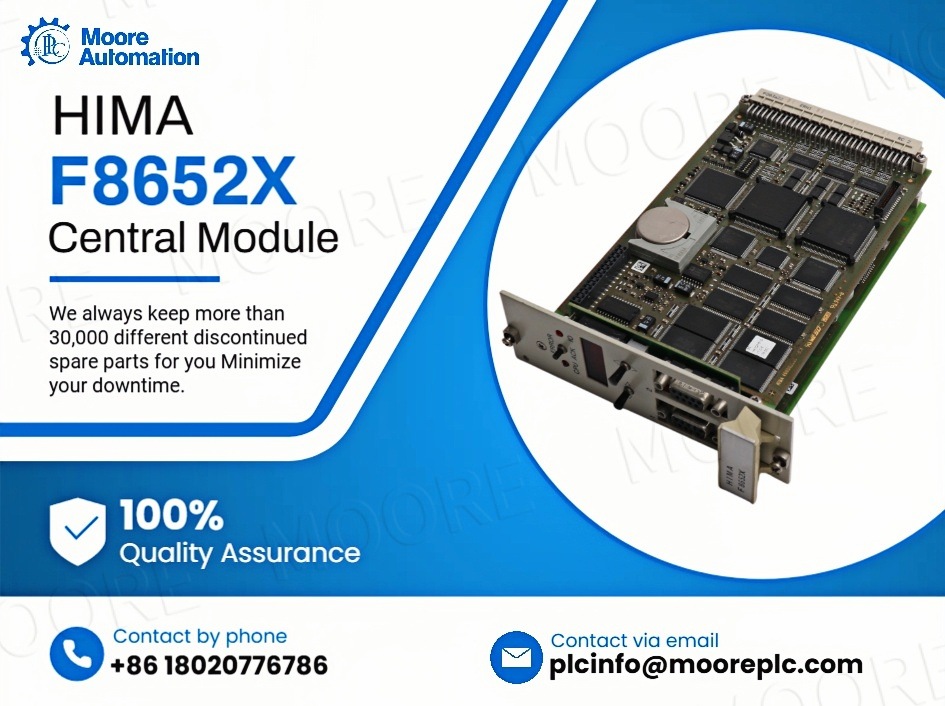
  • Why Are More Industrial Buyers Choosing HIMA F8652X Central Module for DCS System Upgrades? 16/05

    2026

    Why Are More Industrial Buyers Choosing HIMA F8652X Central Module for DCS System Upgrades?
    The Growing Demand for HIMA Automation Solutions Industrial companies are facing increasing pressure to maintain stable production while dealing with aging automation systems. In many factories, outdated controllers and unavailable spare parts create unexpected delays during maintenance planning. The HIMA F8652X Central Module has become a practical choice for customers searching for compatible DCS spare parts and long-term automation support. For plant managers and procurement teams, the biggest concern is finding replacement modules that can work within existing control structures. Instead of rebuilding the entire automation platform, many facilities now prefer using Distributed Control System replacement parts to simplify modernization projects. This approach allows customers to continue operations while gradually updating important system components. At the same time, industrial users also expect faster spare part sourcing from a trusted DCS module supplier. Quick access to automation modules can help companies manage shutdown schedules more effectively and avoid unnecessary project delays. How Does the HIMA F8652X Help Customers Simplify System Maintenance? The HIMA F8652X Central Module is widely used in process automation environments where centralized communication between industrial equipment is required. Customers often select this module when replacing older control hardware in distributed automation systems. Many industrial operators are looking for practical ways to extend the lifecycle of existing installations. Instead of replacing the complete DCS platform, they prefer sourcing Distributed Control System replacement parts that fit current engineering layouts. This helps maintenance teams reduce integration complexity during scheduled plant upgrades. Another important issue for customers is spare part availability. Working with an experienced DCS module supplier can simplify procurement procedures and improve spare inventory planning. This becomes especially valuable for industries operating continuous production processes where maintenance windows are limited. Where Can the HIMA F8652X Central Module Be Applied? The HIMA F8652X Central Module is commonly installed in industrial sectors requiring stable control management and coordinated process communication. It is frequently integrated into control cabinets, safety systems, and distributed automation architectures. Oil refineries, power plants, and chemical production facilities often rely on DCS spare parts to support ongoing system maintenance projects. In many cases, customers choose phased upgrade strategies that combine existing infrastructure with newer automation modules. This helps engineering teams manage budgets while minimizing operational interruptions. In addition, multinational companies operating several production sites usually require support from a global DCS module supplier. Access to compatible Distributed Control System replacement parts across multiple locat...
    All News
  • How Honeywell FC-TSFIRE-1624 Field Termination Assembly Module Simplifies DCS Spare Parts Replacement Strategy 09/05

    2026

    How Honeywell FC-TSFIRE-1624 Field Termination Assembly Module Simplifies DCS Spare Parts Replacement Strategy
    Overview of FC-TSFIRE-1624 in Honeywell DCS Ecosystem The Honeywell FC-TSFIRE-1624 Field Termination Assembly Module is designed to support structured signal interfacing within industrial automation architectures. From a customer perspective, it is often evaluated as part of a broader DCS spare parts strategy, where consistent connectivity and organized field wiring are essential for stable system maintenance planning. In a typical Honeywell distributed control environment, this module is positioned as a bridge between field instrumentation and control system I/O layers. It helps operators standardize wiring layouts, which is particularly valuable when managing legacy upgrades or maintaining Distributed Control System replacement parts inventories across multiple plant sites. Role in Distributed Control System Replacement Parts Planning For plant engineers and procurement teams, long-term availability of Distributed Control System replacement parts is a critical concern. The FC-TSFIRE-1624 supports structured replacement planning by providing a repeatable termination architecture that simplifies module interchangeability during maintenance cycles. Instead of redesigning field connections during every upgrade, customers can align this assembly with existing Honeywell DCS configurations. This reduces complexity in spare part classification and allows teams to forecast DCS spare parts requirements more accurately across shutdown schedules and lifecycle planning. Benefits from a System Integration Perspective From a system integration standpoint, the FC-TSFIRE-1624 helps unify field signal organization within distributed automation projects. Engineering teams often prioritize reducing wiring ambiguity, especially in large-scale process facilities where multiple subsystems interact. By standardizing termination points, the module supports cleaner documentation and easier fault isolation during maintenance. This becomes especially useful for customers working with a DCS module supplier, as it allows consistent part mapping and simplifies coordination between procurement and engineering departments without redesigning existing control logic structures. Sourcing from a Reliable DCS Module Supplier Selecting a dependable DCS module supplier is an important part of lifecycle asset management. The FC-TSFIRE-1624 is typically sourced through authorized industrial automation channels that specialize in Honeywell ecosystems, ensuring compatibility with existing Distributed Control System frameworks. Customers often prioritize suppliers that can support both active installations and legacy system extensions. This ensures that DCS spare parts like termination assemblies remain available throughout system expansion phases, reducing delays in maintenance planning and helping maintain consistent inventory management practices. Integration Considerations in Field Termination Architecture When integrating the FC-TSFIRE-1624 into an existing control environment, engin...
    All News
  • How Does GE IC693CPU374 CPU Module Support Industrial Spare Parts Management Optimization? 30/04

    2026

    How Does GE IC693CPU374 CPU Module Support Industrial Spare Parts Management Optimization?
    Understanding the GE IC693CPU374 CPU Module The GE IC693CPU374 CPU Module is developed to meet the needs of structured industrial automation systems. It operates with a 133 MHz processor and offers 240KB of user memory, allowing users to handle control programs and data organization across multiple production stages. From a user standpoint, this module supports clear system coordination and simplifies integration into existing setups. With over 2,000 timers and counters, it enables precise sequencing, helping businesses manage different industrial automation parts within complex workflows. Why Efficiency Matters in Industrial Automation Parts In industrial environments, coordination between industrial automation parts directly impacts production flow. The GE IC693CPU374 CPU Module requires 7.4 watts at 5VDC, helping users plan energy usage within their systems. As production requirements increase, many companies look for solutions that allow system expansion without major redesign. This module supports higher workload handling, making it easier for customers to improve process efficiency while keeping current system structures. Improving Spare Parts Management Efficiency Spare parts management is essential for maintaining smooth operations and reducing downtime risks. The GE IC693CPU374 CPU Module helps standardize important components within industrial spare parts inventories, making purchasing and storage more straightforward. By including this module in spare parts planning, businesses can simplify replacement processes and reduce the number of different components they need to manage. This contributes to more organized industrial spare parts handling and better inventory visibility. System Flexibility and Integration The GE IC693CPU374 CPU Module can support up to 8 baseplates within a single system, allowing users to design configurations that match their operational needs. This makes it easier to adjust system layouts as production demands evolve. For companies working with various industrial automation parts, this flexibility reduces system complexity and supports consistent configurations across multiple production lines, improving overall coordination. Optimizing Cost and Resource Allocation Controlling costs is a key concern when managing industrial spare parts. The GE IC693CPU374 CPU Module supports better planning by combining processing capability with controlled power usage. When integrated into spare parts management strategies, it helps businesses maintain balanced inventory levels and avoid excess stock. This approach allows for more efficient allocation of resources while supporting continuous system operation. Application Areas Municipal engineering: Water supply pumping stations, sewage treatment systems, auxiliary equipment for urban rail transit. Energy and power: Control of power generation units in power plants, monitoring of substations, control of waste heat boilers. Petrochemicals: Monitoring of oil pipelines in refiner...
    All News
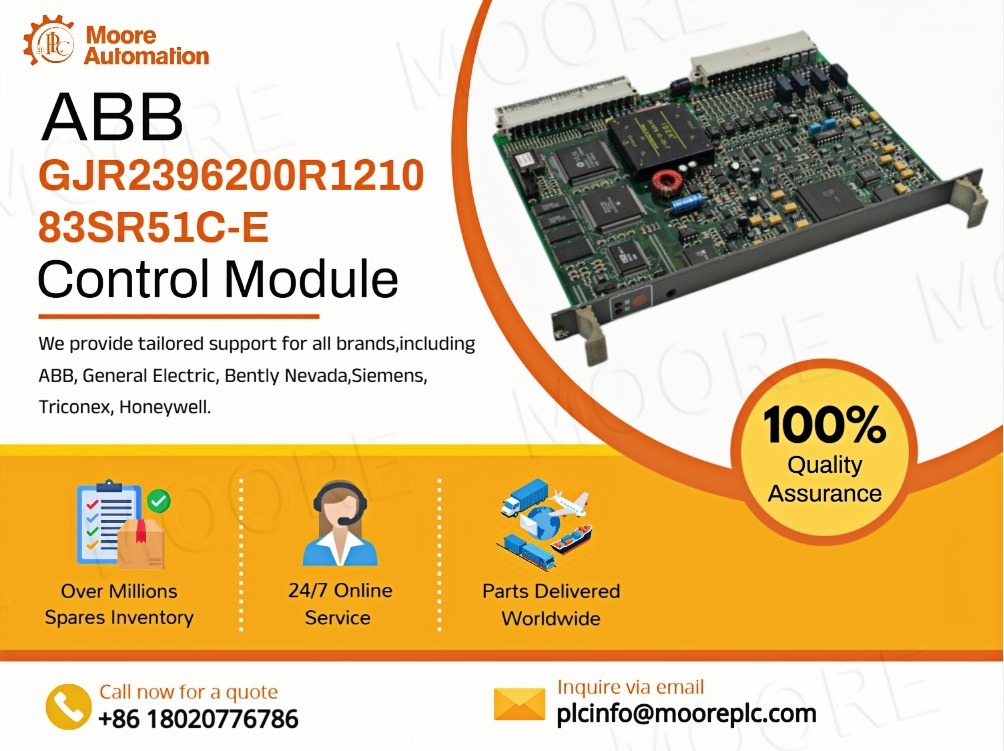
  • How ABB Enhances Reliability with the GJR2396200R1210 83SR51R1210 Control Module in Modern Industrial Systems 24/04

    2026

    How ABB Enhances Reliability with the GJR2396200R1210 83SR51R1210 Control Module in Modern Industrial Systems
    Understanding the Core Value of the ABB Control Module From an end-user standpoint, system dependability is critical to maintaining uninterrupted production. The ABB GJR2396200R1210 83SR51R1210 Control Module addresses this need with a practical and efficient design. Featuring 12 input channels and 2 output channels, it enables accurate signal acquisition and control without adding unnecessary system complexity. Another advantage is its minimal power consumption of only 5 W, which helps reduce energy usage over time. For customers sourcing DCS spare parts or optimizing turbine monitoring solutions, this module offers stable performance and dependable signal processing, making it a reliable addition to modern automation systems. Why Technical Specifications Matter in Real-World Applications In real industrial environments, choosing the right components goes beyond basic compatibility. As part of Distributed Control System replacement parts, the ABB 83SR51R1210 provides 500 V DC isolation, helping protect systems from electrical interference and ensuring accurate data transmission. The module also supports operation in temperatures ranging from –20 °C to +60 °C, allowing it to function reliably across different working conditions. Its extended storage range of –40 °C to +85 °C adds flexibility for inventory management. For buyers working with a DCS module supplier, these specifications translate into reduced risk and improved long-term stability. Where This Module Fits in Turbine Supervisory Systems In turbine supervisory instrumentation components, compatibility and durability are often key concerns. This ABB control module integrates efficiently into existing systems, making it suitable for both retrofitting older setups and implementing new configurations. Its design supports applications such as vibration analysis, process monitoring, and auxiliary protection systems. By including this unit in DCS spare parts planning, operators can minimize unexpected downtime and ensure faster maintenance response, which is essential in high-demand industrial environments. When to Choose ABB 83SR51R1210 for Your System Upgrade Upgrading control systems at the right time can significantly improve operational performance. This module becomes a strong candidate when existing components show signs of instability or when maintenance costs begin to rise. Its ability to handle humidity levels from 5% to 95% (non-condensing) ensures consistent operation even in challenging conditions. For industries that run continuously, such as energy production or process manufacturing, introducing reliable Distributed Control System replacement parts like this ABB module can enhance system resilience and reduce unplanned interruptions. How This Module Supports Cost-Effective Maintenance Strategies Cost control remains a major concern for most facilities. The ABB 83SR51R1210 helps address this by combining durability with low energy requirements. Its long service life reduces the ...
    All News
  • How Are ICS Triplex Spare Parts Supporting Long-Term Industrial Maintenance Strategies? 13/05

    2026

    How Are ICS Triplex Spare Parts Supporting Long-Term Industrial Maintenance Strategies?
    Why Industrial Facilities Are Prioritizing Spare Parts Planning Modern industrial plants are under constant pressure to maintain continuous operations while controlling maintenance budgets. For many companies, one of the biggest challenges is managing aging automation infrastructure without causing unexpected production interruptions. This is why more plant operators are focusing on strategic spare parts management, especially for critical control systems. In recent years, demand for DCS spare parts and Distributed Control System replacement parts has increased across industries such as oil and gas, power generation, chemical processing, and manufacturing automation. Customers are no longer looking only for emergency replacements. Instead, they want long-term sourcing strategies that support future maintenance schedules and system expansion projects. How ICS Triplex Modules Help Simplify Maintenance Planning Many industrial customers continue operating legacy automation systems that require compatible replacement modules. Instead of replacing entire control platforms, companies are increasingly choosing practical upgrade solutions using existing infrastructure. This approach helps reduce engineering complexity and allows maintenance teams to manage plant shutdown schedules more effectively. The ICS Triplex T8193 is frequently included in maintenance inventory programs because customers need reliable access to control system components during planned outages. By securing important Distributed Control System replacement parts in advance, industrial operators can avoid long procurement delays during critical maintenance periods. At the same time, companies are also searching for experienced DCS module supplier partners that can support technical coordination, spare inventory planning, and international logistics management. The Growing Importance of Distributed Control System Replacement Parts As industrial automation systems continue operating for decades, sourcing compatible replacement modules becomes more difficult. Many factories still rely on older DCS architectures that require ongoing maintenance support. For this reason, Distributed Control System replacement parts have become essential for long-term operational planning. The ICS Triplex T9833 is often selected by facilities that are modernizing automation systems in stages. Rather than replacing all equipment at once, customers prefer gradual migration strategies that help maintain production continuity while updating key control components. This phased upgrade model has become especially common in industries where production downtime directly affects supply chain commitments. By working with a specialized DCS module supplier, customers can secure replacement modules that match existing system configurations without requiring large-scale redesigns. How Customers Benefit from Strategic Spare Parts Inventory For many industrial companies, maintenance planning is no longer reactive. Customers...
    All Blogs
  • When Is the Right Time to Replace TSI Industrial Automation Spare Parts in Plant Operations? 08/05

    2026

    When Is the Right Time to Replace TSI Industrial Automation Spare Parts in Plant Operations?
    Understanding the Right Timing for Replacing TSI Spare Parts in Industrial Plants For most plant operators, the biggest challenge is not whether TSI spare parts will eventually wear out, but when they should be replaced without disrupting production. From a customer’s perspective, the goal is simple: avoid unplanned downtime while keeping asset performance stable. In real operations, waiting for a complete failure is rarely a cost-effective strategy, especially for critical Turbine Supervisory Instrumentation components. Many plants now rely on condition-based maintenance and digital monitoring of TSI modules to identify early warning signs. Instead of following a fixed replacement schedule, operators increasingly focus on performance trends such as signal drift, unstable readings, or intermittent communication errors. These subtle indicators often signal that replacement should be planned rather than delayed. Common Failure Indicators in Turbine Supervisory Instrumentation Components In industrial environments, Turbine Supervisory Instrumentation components play a critical role in ensuring turbine safety and efficiency. However, these systems often degrade gradually, making early detection essential. Customers frequently report issues such as inconsistent vibration readings, temperature inaccuracies, or alarm delays as early warning signs. From a maintenance perspective, these symptoms should never be ignored. In modern facilities, engineers also track degradation patterns in TSI modules through diagnostic tools integrated into control systems. When performance deviation becomes consistent, it is often more economical to replace TSI spare parts rather than recalibrate repeatedly. This approach reduces operational risk and improves long-term reliability. Operational Risks of Delayed Replacement in Critical Systems Delaying replacement of aging components can significantly increase operational risk, especially in high-load turbine environments. A failing sensor or module can lead to incorrect supervisory data, which directly impacts safety decisions and plant efficiency. In some cases, even a minor delay can escalate into unplanned shutdowns or expensive repairs. For example, systems using GE UR7KH protection and monitoring modules rely heavily on accurate input from surrounding instrumentation. If connected TSI modules begin to degrade, the entire protective logic chain may become less responsive. From a customer standpoint, the cost of unexpected downtime often far exceeds the investment in proactive replacement of TSI spare parts, making timely action a critical business decision. Evaluating Lifecycle Strategy for TSI Modules and Plant Assets A well-structured lifecycle strategy helps plant operators avoid reactive maintenance. Instead of focusing only on failures, many facilities now analyze usage cycles, environmental conditions, and historical performance of TSI modules. This allows maintenance teams to forecast when replacement should occur...
    All Blogs
  • Why are global plants accelerating upgrades to HIMA safety automation spare parts? 28/04

    2026

    Why are global plants accelerating upgrades to HIMA safety automation spare parts?
    Aging assets pushing safety systems closer to operational limits Across many process industries, existing automation systems are reaching or exceeding their intended service life. From an operator’s perspective, the concern is no longer only maintenance cost, but the increasing probability of unexpected downtime or safety loop instability. Even minor performance deviations can lead to costly interruptions in continuous production. This situation is driving more attention toward DCS spare parts planning at the plant level. Instead of handling failures when they occur, engineering teams are building structured replacement schedules. The objective is to secure long-term reliability and reduce unplanned shutdown risks in critical operations. Obsolescence challenges in legacy control environments One of the key issues plant engineers face today is hardware obsolescence. As automation platforms age, sourcing compatible components becomes more difficult, and delivery times are often unpredictable. This creates pressure on maintenance teams who must balance uptime requirements with limited spare availability. To manage this risk, many operators are adopting a lifecycle-based approach using Distributed Control System replacement parts. Rather than replacing individual failed items in isolation, they are aligning spare strategies with system-wide upgrades. This helps reduce compatibility issues and improves maintenance predictability during scheduled outages. Preference for HIMA systems in safety-critical modernization projects In safety automation upgrades, many end users continue to rely on HIMA due to its established track record in high-integrity applications. From a customer standpoint, the key advantage is system stability combined with long-term upgrade flexibility. Platforms such as HIMA HIMAX are often selected as part of phased modernization projects. Instead of replacing entire control architectures, plants upgrade selected layers while maintaining overall system structure. This minimizes engineering disruption while still improving diagnostics, reliability, and safety performance in critical processes. Selecting the right modules for stable system performance Spare part selection is a critical factor in ensuring uninterrupted operation of safety systems. Engineers typically evaluate compatibility, redundancy behavior, and long-term support availability before finalizing replacement components. Commonly used modules such as HIMAX X-AO1601, HIMAX X-DI3201, and HIMAX X-CPU01 are often chosen for upgrade consistency. These components help maintain system alignment while simplifying integration work. For maintenance teams, standardization also reduces configuration effort and improves troubleshooting efficiency during plant turnaround periods. Supply reliability and the role of trusted sourcing channels Global supply chain instability has made procurement planning more complex for industrial operators. Delays in receiving critical automation compone...
    All Blogs
  • How Digitalization Is Transforming PLC Spare Parts Management 22/04

    2026

    How Digitalization Is Transforming PLC Spare Parts Management
    The Growing Challenge of Managing Industrial Spare Parts Running a modern production facility means dealing with constant pressure. The old ways of handling industrial spare parts no longer work—unexpected machine stops, long shipping waits, and poor team coordination create daily headaches. These issues drain budgets and push deadlines back. Too many shops still rely on paper logs or basic spreadsheets, leaving them stuck in a reactive mode. Without solid forecasting, they either hoard too much stock or face desperate shortages when a key part is needed. Why Digitalization Matters in Spare Parts Management Bringing digital tools into spare parts management changes the game by shifting decisions from guesswork to real data. Connected platforms let firms track part usage, monitor how components hold up, and set up automatic reorder points. For the customer, this means far fewer unexpected events and a much clearer maintenance schedule. Digital methods help stretch the life of industrial automation parts, so teams can fix issues before a breakdown stops the line. Real-Time Inventory Visibility and Control Knowing your inventory down to the minute gives any operation a serious edge. Modern digital dashboards offer live tracking of industrial spare parts, showing exactly what is on the shelf and which bin it sits in. This speed makes emergency response much smoother. For example, when a critical SIEMENS 6SL3055-0AA00-4CA5 fails, the team can instantly spot a replacement and get production rolling again. Good visibility also keeps different shifts and warehouses on the same page. Smart Procurement and Supplier Integration Buying parts has gotten smarter thanks to digital links between buyers and sellers. These systems simplify how companies source industrial automation parts and remove a lot of old paperwork. With a connected platform, ordering something like 6SL3320-1TE33-1AA3 takes just a few clicks. These tools also shine a light on real pricing, honest delivery dates, and which suppliers actually deliver on time, helping buyers avoid bad deals and unexpected delays. Predictive Maintenance and Reduced Downtime One of the strongest gains from going digital is catching equipment trouble before it stops work. Smart sensors and analysis software spot small warning signs in industrial spare parts long before a crash happens. Take a drive like 6SL3210-1PE31-8UL0—tracking its temperature and vibration lets a crew swap it during a planned stop, not at 2 AM on a Sunday. This forward-looking method kills surprise breakdowns, keeps output high, and trims repair bills over time. Building a Future-Ready Spare Parts Strategy Staying ahead means rethinking how you handle spare parts management from the ground up. Rolling out digital systems, cleaning up messy workflows, and teaching staff new skills are all must-dos. From the customer’s chair, the goal stays simple: get reliability, cut downtime, and hold the line on costs. By putting digital technology to work, ...
    All Blogs
leave a message
If you are interested in our products and want to know more details,please leave a message here,we will reply you as soon as we can.
submit

Our hours

Mon 11/21 - Wed 11/23: 9 AM - 8 PM
Thu 11/24: closed - Happy Thanksgiving!
Fri 11/25: 8 AM - 10 PM
Sat 11/26 - Sun 11/27: 10 AM - 9 PM
(all hours are Eastern Time)
Contact Us:+86 18030235313

Home

Products

whatsApp

Contact Us