CompactLogix Communication Modules

News

  • A new choice for precise control: the value of Yokogawa ADV551-P00 S2 digital output module in industrial automation
    A new choice for precise control: the value of Yokogawa ADV551-P00 S2 digital output module in industrial automation
    June 23, 2025

    Introduction In modern industrial systems, digital output modules are the key bridge for distributed control systems (DCS) to execute control commands to field devices. Yokogawa ADV551-P00 S2 digital output module is a high-performance component designed for reliable signal output and control in automation environments. Its structure meets the multiple requirements of today's process control systems for efficiency, precision and modular flexibility.   Reliable output control in critical applications The ADV551-P00 S2 module belongs to Yokogawa's well-known CENTUM VP DCS series and provides 16 digital outputs, supports 24V DC signal output, and can control a variety of field devices such as solenoid valves, relays and contactors. Its design has excellent anti-interference ability and fast response characteristics, which is particularly suitable for time-sensitive or safety-critical scenarios such as refining, chemical and power industries. The module has self-diagnosis and fault detection functions, which helps to achieve fail-safe operation and reduce the risk of process interruption.   Modular integration builds scalable system architecture Another major advantage of the ADV551-P00 S2 is its modular structure, which can be easily integrated into existing DCS cabinets or expansion systems. It supports hot swapping, which is convenient for maintenance without interrupting system operation, effectively reducing downtime and improving production capacity. In addition, the module complies with multiple international standards and is compatible with Yokogawa's I/O bus architecture, suitable for new or retrofit automation projects.   Improving factory reliability through stable output communication The digital output module is the final link of "execution" in the control loop. The ADV551-P00 S2 can stably output isolated control signals to ensure the accurate implementation of control logic. Its efficient communication with field actuators helps to improve the overall stability of the factory, reduce equipment failure rates, and support predictive maintenance strategies. This reliability is particularly important in industries that require continuous operation and highly precise control.   Conclusion Yokogawa ADV551-P00 S2 digital output module provides a reliable, accurate and scalable output control solution in the field of industrial automation. Its design advantages in safety, integration flexibility and maintenance convenience make it a key device for achieving operational excellence. With the continuous digital upgrade of industrial facilities, the deployment of high-performance modules such as ADV551-P00 S2 will be the core path to ensure competitiveness and system resilience.

    Read More
  • Yokogawa ADV161-P00 S2 digital input module: the perfect combination of precision and reliability
    Yokogawa ADV161-P00 S2 digital input module: the perfect combination of precision and reliability
    June 20, 2025

    Introduction In the rapidly developing field of industrial automation, it is particularly important to achieve high-precision signal acquisition and stable communication between field devices and control systems. As an important channel connecting field devices and control systems, digital input modules play a core role in monitoring switch states, sensor binary output signals, etc. The ADV161-P00 S2 digital input module launched by Yokogawa is a high-performance product designed to meet the demanding needs of modern process control systems. It not only improves the accuracy of input signal processing, but also ensures efficient coordination with distributed control systems.   Combination of rugged design and multifunctional performance ADV161-P00 S2 continues Yokogawa's consistent high standards and durability in industrial automation equipment. This module belongs to the widely acclaimed CENTUM VP control system series and has the characteristics of strong stability, long life cycle and reliable structure. The module supports 16 digital inputs, each of which can detect the on-off state at high speed and high precision, suitable for harsh industrial field environments. Its hardware design follows strict industrial standards and has good anti-interference capabilities. Isolation protection is provided between channels and between channels and the system bus to effectively prevent equipment failures caused by surges or electrical interference. The module is compact and well-planned, which not only saves control cabinet space, but also facilitates quick installation and maintenance. These advantages make it widely used in multiple industries such as petrochemical, power, manufacturing, and water treatment.   Seamless integration with distributed control systems One of the outstanding advantages of ADV161-P00 S2 is its high compatibility with advanced control systems such as Yokogawa's CENTUM VP. The module can be easily connected to the system's I/O network to achieve real-time acquisition and monitoring of field digital signals. All channels are continuously scanned and status data is transmitted to the central controller with extremely low latency, so as to quickly respond to process changes. The module has built-in diagnostic functions, which helps to detect line breaks, signal anomalies, or channel failures in a timely manner, facilitating preventive maintenance and troubleshooting. At the same time, it supports hot swapping, which means that the module can be replaced without downtime, which is particularly important for critical application scenarios where interruptions cannot be accepted.   High reliability and safe operation guarantee In high-risk and high-demand industrial occasions, system reliability is crucial. ADV161-P00 S2 undergoes rigorous factory testing and quality verification to ensure long-term operational stability. The module can be configured with a redundant architecture to enhance the system's fault toleranc...

    Read More
  • The key to ensuring power stability in industrial automation: Yokogawa PW101 S2 power module
    The key to ensuring power stability in industrial automation: Yokogawa PW101 S2 power module
    June 19, 2025

    Introduction In modern industrial automation systems, stable power output is a key element to ensure continuous operation, reduce equipment downtime and ensure safe operation. Yokogawa's PW101 S2 power module is a high-performance power supply device that provides reliable DC power support for control systems. Tailored for Yokogawa's CENTUM VP and ProSafe-RS platforms, the module plays the role of a power hub in a distributed control architecture, providing continuous energy for control units and input/output modules.   Professional design for critical conditions The PW101 S2 is made of high-durability industrial components to maintain stable operation in complex and harsh working environments. Its power supply capacity covers 5VDC and other regulated DC voltages to ensure uninterrupted operation of various modules in the field control station (FCS). In its design, it is endowed with a wide range of input voltage compatibility and redundancy support functions, which greatly reduces the possibility of power outages in critical business environments. PW101 S2 can not only perform hot-swap operations during equipment operation, but also realize non-interruptible replacement during maintenance, thereby shortening the maintenance cycle and improving the continuous availability of the system. More importantly, its compact structure takes up very little space, making it particularly suitable for large-scale automation control systems with strict requirements on the layout of the cabinet.   High-performance performance and multiple intelligent protection mechanisms Whether it is improving energy efficiency or preventing electrical risks, PW101 S2 has shown extraordinary performance. The efficient energy conversion rate not only reduces unnecessary power loss, but also reduces module heating, thereby extending the service life of itself and surrounding components. The module has built-in multiple safety mechanisms including overcurrent protection, overvoltage protection and temperature control shutdown, so that the system can remain under control under abnormal conditions. After being integrated into Yokogawa's overall architecture, the module can work with diagnostic tools to support predictive maintenance strategies. The status and fault signals that can be read by the engineering station enable potential problems to be discovered and handled in time before they cause major accidents.   System compatibility and certification standards The ability to quickly access existing DCS systems and ensure coordinated power supply and communication is a major advantage of the PW101 S2. It fully complies with industrial standards such as electromagnetic compatibility (EMC) and insulation reliability, and is particularly suitable for high-standard industries such as chemicals, energy, and oil and gas. In situations where highly reliable power supply is required, the 1+1 or N+1 redundant configuration schemes it supports are particularly critical. With...

    Read More
  • Improving digital signal acquisition accuracy: Yokogawa ADV141-S12 S1 digital input module
    Improving digital signal acquisition accuracy: Yokogawa ADV141-S12 S1 digital input module
    June 18, 2025

    Introduction In industrial automation systems, digital input modules serve as an important interface between field devices and control systems, playing a key role in signal acquisition. Yokogawa ADV141-S12 S1 digital input module is designed to accurately acquire signals from discrete devices such as switches, relays and sensors. The module can be seamlessly integrated into Yokogawa's CENTUM VP and ProSafe-RS platforms, and has efficient data processing capabilities, making it ideal for application scenarios where control and safety are critical.   Rugged structure and functional reliability The ADV141-S12 S1 is designed for harsh industrial environments, emphasizing the module's structural strength, electrical insulation and signal integrity. Each of its input channels uses an optoelectronic isolation design to effectively prevent electrical noise interference and ensure stable operation of the equipment under complex working conditions. The module is usually equipped with 16 input channels and supports standard DC voltage input to ensure compatibility with various field devices. At the same time, the module has extremely high signal recognition accuracy and is equipped with a de-jitter filter function, which can stably collect clear switch signals, which is particularly critical in emergency shutdown systems (ESD) and safety instrument systems (SIS). The LED indicator on the front of the module can display the channel status in real time, greatly simplifying the fault diagnosis and daily maintenance process.   System Adaptation and Flexible Configuration The ADV141-S12 S1 module is designed with full consideration of the convenience of system integration, and can be easily matched with the Yokogawa control system architecture to reduce the time cost of engineering deployment and debugging. The module transmits the collected signal data to the field control station (FCS) quickly and stably through the internal bus. Its input voltage range is wide (typically 24VDC) and meets the insulation standards between channels, field wiring and systems. It can be installed on a standard I/O baseboard with other digital or analog modules to support flexible system structure design. At the same time, its hot-swappable capability allows maintenance personnel to replace modules without downtime, effectively improving the ability to support the continuity of key processes.   Self-diagnosis function, reliability and certification guarantee ADV141-S12 S1 not only performs well in performance, but also has powerful self-diagnosis function, which improves the level of system visualization. The module can automatically identify channel abnormalities, disconnections and short circuits, and promptly feedback the status to the central control system, helping operators to quickly respond to on-site problems and avoid equipment downtime. The module meets many international reliability standards and is certified by CE, UL and other certifications. It is suit...

    Read More
  • Yokogawa PC10031-AAA0 Servo Drive: A Highly Reliable Choice in Precision Motion Control
    Yokogawa PC10031-AAA0 Servo Drive: A Highly Reliable Choice in Precision Motion Control
    June 17, 2025

    Introduction Against the backdrop of the rapid development of modern industrial automation, system design has become increasingly demanding in terms of high precision, high efficiency, and strong stability. As a key actuator, the servo drive is responsible for ensuring the smooth and efficient operation of the equipment. The Yokogawa PC10031-AAA0 servo drive is a high-performance control product designed for complex industrial applications, fully embodying the integration of precise control and continuous reliability.   Solid structure and powerful functions To achieve seamless collaboration with high-end servo motors, the PC10031-AAA0 is designed as an intelligent drive with fast response and closed-loop control capabilities, capable of finely controlling key parameters such as position, speed, and torque. With high-resolution feedback devices, the drive significantly improves the response speed and synchronization performance of the control system. It is equipped with a high-speed digital signal processor (DSP), which enables real-time control and dynamic adaptation. The device incorporates advanced PID algorithms, enabling it to maintain excellent control accuracy even when the load fluctuates drastically. At the same time, it provides compatibility with a variety of industrial communication methods, such as integration with DCS (distributed control system) and PLC (programmable controller) systems. Not only does it excel in functionality, it also excels in physical construction. Made of highly durable industrial components, the PC10031-AAA0 can withstand vibration, electromagnetic interference and temperature fluctuations, and is particularly suitable for long-term operation in harsh environments.   Excellent performance in a wide range of applications This device, known for its flexibility, is suitable for a variety of motor types - whether it is synchronous AC, asynchronous motors or brushless DC systems, it can achieve precise drive. Robot control, CNC machining centers, high-speed conveyors and precision automated chemical cells are all its typical application areas. Because its feedback speed is in the microsecond level, it can provide extremely high consistency in repetitive tasks, effectively reducing errors and waste. Particularly noteworthy is that its automatic gain adjustment function greatly simplifies the initial setting process, making debugging fast and convenient, and adapting to the requirements of modern production for deployment efficiency. In addition, its comprehensive protection mechanism, including overload protection, overheating shutdown and current abnormality protection, fully guarantees the safety of equipment operation. Not only that, the high compatibility with Yokogawa FA-M3 series PLC makes its integration in the control system fast and easy, realizing true plug-and-play.   Excellent system integration and communication capabilities The interoperability advantage of this driver is particularly wo...

    Read More
  • Performance Analysis of Yokogawa AFV10D-S41201 S2 Field Control Unit
    Performance Analysis of Yokogawa AFV10D-S41201 S2 Field Control Unit
    June 16, 2025

    Introduction In the field of industrial process automation, the demand for high-precision, high-reliability and scalable control solutions is increasing. Yokogawa has launched a number of high-performance field control units (FCUs) based on its technical accumulation in the field of industrial control and instrumentation. Among them, the AFV10D-S41201 S2 model has attracted much attention in the industry due to its robust architecture, flexible integration capabilities and wide compatibility in DCS systems. This article will introduce the core design, control functions and advantages of this FCU in practical applications in detail, and demonstrate its key role in improving system stability and operating efficiency.   High-performance architecture and system design The Yokogawa AFV10D-S41201 S2 has a compact and powerful hardware architecture that can handle control tasks under various complex working conditions. As an important part of the CENTUM VP distributed control system, the unit is equipped with a high-speed processor and supports redundant design to achieve high availability and fault tolerance. The device supports flexible combinations of multiple I/O modules and has good modularity and scalability. Its fanless design reduces the risk of mechanical failure, while the rugged and durable housing is also suitable for harsh industrial sites. AFV10D-S41201 S2 follows international standards such as IEC and ISA, ensuring extensive protocol compatibility and engineering interface docking capabilities. The internal bus system enables high-speed communication between modules, while the dual-power input design ensures uninterrupted operation of the system. These structural advantages enable it to efficiently execute real-time control algorithms to meet the control requirements of continuous or intermittent processes.   Powerful control functions Highly compatible with system integration The FCU provides comprehensive control functions, including analog and digital signal processing, PID regulation, sequential logic control, and safety interlock management. It has high-speed data acquisition and low-latency response capabilities, making it very suitable for industries such as petrochemicals, power, and environmental protection that have extremely high requirements for real-time control. Another significant advantage is its deep integration with the Yokogawa DCS system. Native support for Vnet/IP control networks enables it to communicate seamlessly with upper-level operation stations, engineering workstations, and other systems. In addition, AFV10D-S41201 S2 also supports hot-swap function, allowing modules to be replaced or added without interrupting system operation. It is compatible with fieldbus protocols such as FOUNDATION Fieldbus and HART, which facilitates the interoperability and status maintenance of intelligent field devices. The engineering configuration of the equipment can be carried out through Yokogawa's CDT graphical tool...

    Read More
  • Yokogawa ADV161-P00 S2 digital input module: high-precision signal acquisition for industrial control
    Yokogawa ADV161-P00 S2 digital input module: high-precision signal acquisition for industrial control
    June 13, 2025

    Introduction In industrial control systems, accurate acquisition and real-time response of digital signals are the key to ensuring stable operation. As an important component of modern automation architecture, Yokogawa ADV161-P00 S2 digital input module is widely integrated in CENTUM VP distributed control system (DCS). It has excellent anti-interference ability, reliable channel isolation and high-speed signal response. It is designed for critical process control scenarios, especially for industries with strict requirements on equipment stability and continuous system operation.   High-performance digital input design The ADV161-P00 S2 module is equipped with 16 opto-isolated input channels, which can stably acquire switch signals (such as on/off status). It supports 24 VDC nominal input voltage (voltage range is 18–32 VDC) and is compatible with various field devices, including limit switches, push button switches, proximity sensors, and dry contact signal sources.   The main technical parameters are as follows: Number of channels: 16 channels per module Input type: voltage input (supports source and drain logic) Signal form: supports both dry contact and open collector Isolation characteristics: provides electrical isolation between channels and between channels and ground Redundancy support: redundant configuration can be achieved to improve system reliability   Hot-swap capability: modules can be replaced without stopping the system Adopting optoelectronic isolation technology, it greatly improves the ability to resist electromagnetic interference, effectively prevents damage caused by signal distortion and electrical transients, and ensures the stability and accuracy of data acquisition.   High integration with CENTUM VP system ADV161-P00 S2 is suitable for Yokogawa's N-IO network module architecture and seamlessly connects to the CENTUM VP platform. The module communicates through the control station (FCS) and can be configured, monitored and diagnosed on a unified engineering software platform. Supporting hot-swap characteristics allows maintenance personnel to replace modules without stopping the system, which has extremely high practical value for industries that require uninterrupted operation such as oil and gas, chemicals, electricity and pharmaceuticals. In addition, the module has powerful diagnostic capabilities, supporting real-time monitoring of input status, identification of wiring faults, and detection of module operating status, thereby significantly improving maintenance efficiency and reducing system downtime.   Wide range of industrial application scenarios ADV161-P00 S2 digital input module is widely used in various industrial control occasions that require high-reliability digital input. Typical applications include: Monitoring of safety interlocks and emergency stop circuits Tracking of equipment operating status in MCC motor control centers Connecting to relay or PLC output interface Position ...

    Read More
  • ER5*C sensor input card - guarantee of accurate and reliable performance
    ER5*C sensor input card - guarantee of accurate and reliable performance
    June 12, 2025

    Introduction In the field of industrial automation and process control, sensor input cards are the key bridge between field sensors and control systems, and their importance cannot be ignored. Developed by Yokogawa, the ER5*C sensor input card achieves accurate and stable data acquisition in complex automation environments with its high performance and versatility. The module is compatible with Yokogawa distributed control systems (DCS), effectively improving signal integrity and system response speed. This article will analyze in depth why this module has become a core component of advanced automation systems from the aspects of structural design, functional characteristics and application areas. High-precision data acquisition and signal processing capabilities Meeting strict industrial standards and ensuring data accuracy and signal quality are the significant advantages of the ER5*C sensor input card. It not only supports a variety of sensor types such as thermocouples, platinum resistance (RTD) and analog voltage/current input, adapting to the diverse measurement needs of multiple industries such as petrochemicals, power, and pharmaceuticals, but also equipped with advanced signal conditioning circuits. Through noise filtering, cold end compensation and high-resolution analog-to-digital conversion, this module minimizes measurement errors and ensures that the control system can receive clear and accurate real-time data. In harsh industrial environments, the signal isolation function prevents ground loops and significantly reduces electrical interference. As a result, the card can maintain high signal fidelity even in conditions with frequent fluctuations in electromagnetic noise, helping operators make quick and accurate decisions. Efficient integration with distributed control systems As an important component of Yokogawa CENTUM and ProSafe-RS systems, the ER5*C sensor input card achieves seamless integration within distributed control systems. It supports high-speed and stable data transmission and inter-module synchronization through Yokogawa's proprietary Vnet/IP or FOUNDATION™ Fieldbus networks. The hot-swappable card allows maintenance personnel to replace or upgrade modules without stopping the system, greatly improving system availability and operational continuity. At the same time, it is compatible with the configuration and diagnostic functions of Yokogawa engineering tools, greatly simplifying the debugging process and reducing maintenance costs. It is worth mentioning that the firmware of ER5*C has been optimized to work highly with Yokogawa control logic and alarm management systems. In addition to collecting sensor data, it can also actively participate in the management of process safety and automation logic to ensure the stability and safety of industrial applications. Multi-field applications and significant operational advantages The wide range of applications is another outstanding feature of the Yokogawa ER5*C sensor inp...

    Read More
1 ... 8 9 10 11 12 ... 33
A total of  33  pages

News & Blogs

  • How Honeywell FC-TSFIRE-1624 Field Termination Assembly Module Simplifies DCS Spare Parts Replacement Strategy 09/05

    2026

    How Honeywell FC-TSFIRE-1624 Field Termination Assembly Module Simplifies DCS Spare Parts Replacement Strategy
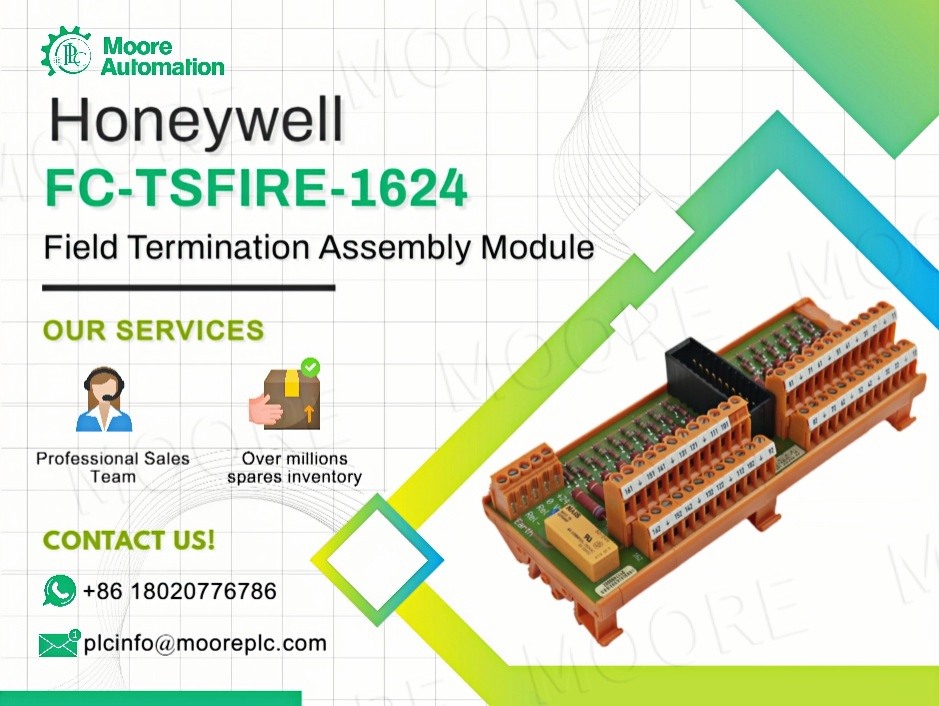
    Overview of FC-TSFIRE-1624 in Honeywell DCS Ecosystem The Honeywell FC-TSFIRE-1624 Field Termination Assembly Module is designed to support structured signal interfacing within industrial automation architectures. From a customer perspective, it is often evaluated as part of a broader DCS spare parts strategy, where consistent connectivity and organized field wiring are essential for stable system maintenance planning. In a typical Honeywell distributed control environment, this module is positioned as a bridge between field instrumentation and control system I/O layers. It helps operators standardize wiring layouts, which is particularly valuable when managing legacy upgrades or maintaining Distributed Control System replacement parts inventories across multiple plant sites. Role in Distributed Control System Replacement Parts Planning For plant engineers and procurement teams, long-term availability of Distributed Control System replacement parts is a critical concern. The FC-TSFIRE-1624 supports structured replacement planning by providing a repeatable termination architecture that simplifies module interchangeability during maintenance cycles. Instead of redesigning field connections during every upgrade, customers can align this assembly with existing Honeywell DCS configurations. This reduces complexity in spare part classification and allows teams to forecast DCS spare parts requirements more accurately across shutdown schedules and lifecycle planning. Benefits from a System Integration Perspective From a system integration standpoint, the FC-TSFIRE-1624 helps unify field signal organization within distributed automation projects. Engineering teams often prioritize reducing wiring ambiguity, especially in large-scale process facilities where multiple subsystems interact. By standardizing termination points, the module supports cleaner documentation and easier fault isolation during maintenance. This becomes especially useful for customers working with a DCS module supplier, as it allows consistent part mapping and simplifies coordination between procurement and engineering departments without redesigning existing control logic structures. Sourcing from a Reliable DCS Module Supplier Selecting a dependable DCS module supplier is an important part of lifecycle asset management. The FC-TSFIRE-1624 is typically sourced through authorized industrial automation channels that specialize in Honeywell ecosystems, ensuring compatibility with existing Distributed Control System frameworks. Customers often prioritize suppliers that can support both active installations and legacy system extensions. This ensures that DCS spare parts like termination assemblies remain available throughout system expansion phases, reducing delays in maintenance planning and helping maintain consistent inventory management practices. Integration Considerations in Field Termination Architecture When integrating the FC-TSFIRE-1624 into an existing control environment, engin...
    All News
  • How Does GE IC693CPU374 CPU Module Support Industrial Spare Parts Management Optimization? 30/04

    2026

    How Does GE IC693CPU374 CPU Module Support Industrial Spare Parts Management Optimization?
    Understanding the GE IC693CPU374 CPU Module The GE IC693CPU374 CPU Module is developed to meet the needs of structured industrial automation systems. It operates with a 133 MHz processor and offers 240KB of user memory, allowing users to handle control programs and data organization across multiple production stages. From a user standpoint, this module supports clear system coordination and simplifies integration into existing setups. With over 2,000 timers and counters, it enables precise sequencing, helping businesses manage different industrial automation parts within complex workflows. Why Efficiency Matters in Industrial Automation Parts In industrial environments, coordination between industrial automation parts directly impacts production flow. The GE IC693CPU374 CPU Module requires 7.4 watts at 5VDC, helping users plan energy usage within their systems. As production requirements increase, many companies look for solutions that allow system expansion without major redesign. This module supports higher workload handling, making it easier for customers to improve process efficiency while keeping current system structures. Improving Spare Parts Management Efficiency Spare parts management is essential for maintaining smooth operations and reducing downtime risks. The GE IC693CPU374 CPU Module helps standardize important components within industrial spare parts inventories, making purchasing and storage more straightforward. By including this module in spare parts planning, businesses can simplify replacement processes and reduce the number of different components they need to manage. This contributes to more organized industrial spare parts handling and better inventory visibility. System Flexibility and Integration The GE IC693CPU374 CPU Module can support up to 8 baseplates within a single system, allowing users to design configurations that match their operational needs. This makes it easier to adjust system layouts as production demands evolve. For companies working with various industrial automation parts, this flexibility reduces system complexity and supports consistent configurations across multiple production lines, improving overall coordination. Optimizing Cost and Resource Allocation Controlling costs is a key concern when managing industrial spare parts. The GE IC693CPU374 CPU Module supports better planning by combining processing capability with controlled power usage. When integrated into spare parts management strategies, it helps businesses maintain balanced inventory levels and avoid excess stock. This approach allows for more efficient allocation of resources while supporting continuous system operation. Application Areas Municipal engineering: Water supply pumping stations, sewage treatment systems, auxiliary equipment for urban rail transit. Energy and power: Control of power generation units in power plants, monitoring of substations, control of waste heat boilers. Petrochemicals: Monitoring of oil pipelines in refiner...
    All News
  • How ABB Enhances Reliability with the GJR2396200R1210 83SR51R1210 Control Module in Modern Industrial Systems 24/04

    2026

    How ABB Enhances Reliability with the GJR2396200R1210 83SR51R1210 Control Module in Modern Industrial Systems
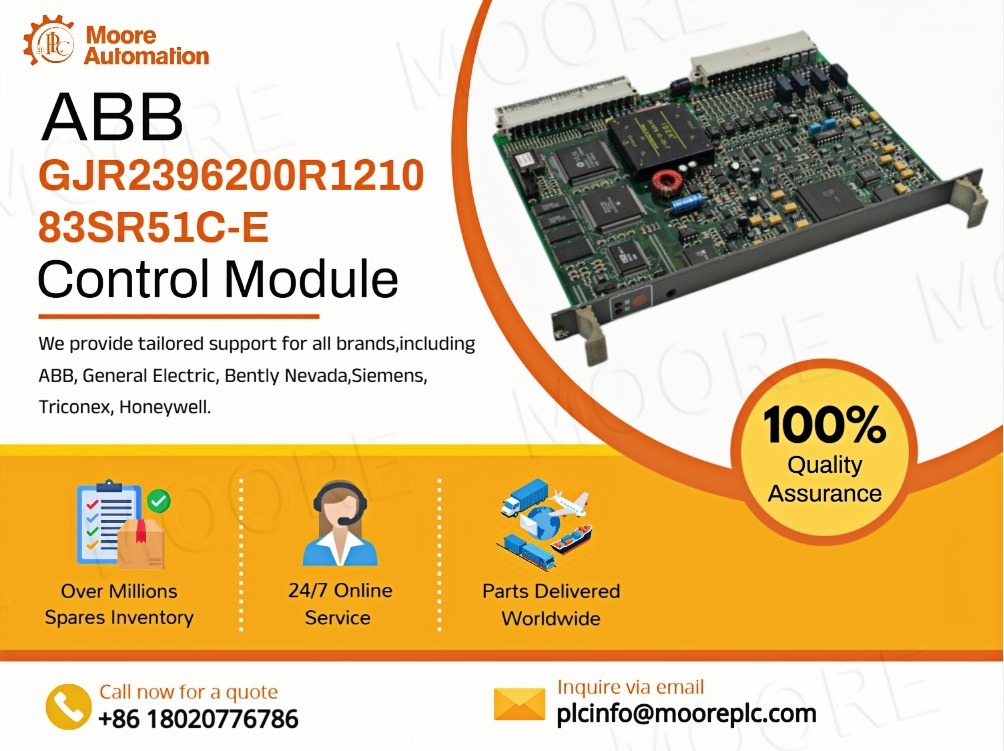
    Understanding the Core Value of the ABB Control Module From an end-user standpoint, system dependability is critical to maintaining uninterrupted production. The ABB GJR2396200R1210 83SR51R1210 Control Module addresses this need with a practical and efficient design. Featuring 12 input channels and 2 output channels, it enables accurate signal acquisition and control without adding unnecessary system complexity. Another advantage is its minimal power consumption of only 5 W, which helps reduce energy usage over time. For customers sourcing DCS spare parts or optimizing turbine monitoring solutions, this module offers stable performance and dependable signal processing, making it a reliable addition to modern automation systems. Why Technical Specifications Matter in Real-World Applications In real industrial environments, choosing the right components goes beyond basic compatibility. As part of Distributed Control System replacement parts, the ABB 83SR51R1210 provides 500 V DC isolation, helping protect systems from electrical interference and ensuring accurate data transmission. The module also supports operation in temperatures ranging from –20 °C to +60 °C, allowing it to function reliably across different working conditions. Its extended storage range of –40 °C to +85 °C adds flexibility for inventory management. For buyers working with a DCS module supplier, these specifications translate into reduced risk and improved long-term stability. Where This Module Fits in Turbine Supervisory Systems In turbine supervisory instrumentation components, compatibility and durability are often key concerns. This ABB control module integrates efficiently into existing systems, making it suitable for both retrofitting older setups and implementing new configurations. Its design supports applications such as vibration analysis, process monitoring, and auxiliary protection systems. By including this unit in DCS spare parts planning, operators can minimize unexpected downtime and ensure faster maintenance response, which is essential in high-demand industrial environments. When to Choose ABB 83SR51R1210 for Your System Upgrade Upgrading control systems at the right time can significantly improve operational performance. This module becomes a strong candidate when existing components show signs of instability or when maintenance costs begin to rise. Its ability to handle humidity levels from 5% to 95% (non-condensing) ensures consistent operation even in challenging conditions. For industries that run continuously, such as energy production or process manufacturing, introducing reliable Distributed Control System replacement parts like this ABB module can enhance system resilience and reduce unplanned interruptions. How This Module Supports Cost-Effective Maintenance Strategies Cost control remains a major concern for most facilities. The ABB 83SR51R1210 helps address this by combining durability with low energy requirements. Its long service life reduces the ...
    All News
  • Why and How Does Honeywell CC-PAOH01 51405039-175 Analog Output Module Strengthen DCS Spare Parts Strategy and Industrial Reliability? 16/04

    2026

    Why and How Does Honeywell CC-PAOH01 51405039-175 Analog Output Module Strengthen DCS Spare Parts Strategy and Industrial Reliability?
    Understanding the Role of CC-PAOH01 in Modern DCS Environments From a customer’s perspective, the Honeywell CC-PAOH01 51405039-175 Analog Output Module is not just a hardware component—it is a critical execution point within a Distributed Control System (DCS). In many industrial plants, stable analog output determines whether field actuators respond accurately to process demands. When operators evaluate DCS spare parts, this module often becomes a priority due to its direct impact on process continuity. For facilities relying on aging infrastructure, securing reliable Distributed Control System replacement parts is a strategic decision rather than a simple maintenance task. The CC-PAOH01 provides 16-channel 4–20 mA output capability, enabling scalable control across multiple loops while reducing downtime risks associated with legacy system failure. Technical Strength Behind Stable 4–20 mA Output Performance The CC-PAOH01 module is designed around industry-standard 4–20 mA output, ensuring compatibility with a wide range of industrial actuators and instrumentation. Its ability to support 16 output channels makes it suitable for medium to large-scale process automation environments where output density matters. From a technical standpoint, features like <100 mV ripple, ±0.35% calibrated accuracy at 25°C, and low temperature drift (0.005% FS/°C) contribute to stable field performance. These parameters reduce signal noise and improve process predictability, especially in high-precision operations. For engineers sourcing from a DCS module supplier, such stability directly translates into fewer calibration cycles and lower long-term maintenance cost, which is critical for industries operating 24/7. Reliability, Drift Control, and Lifecycle Maintenance Value In real-world plant operations, reliability is often more important than peak performance. The CC-PAOH01 module is engineered to minimize output deviation over time, ensuring that process control remains consistent even under thermal and electrical stress conditions. Customers managing DCS spare parts inventories often prioritize modules with predictable drift behavior and strong readback diagnostics. With a ±4% full-scale readback accuracy, operators can detect anomalies early and prevent system-wide disruptions. This reliability reduces emergency shutdown risks and supports long-term lifecycle maintenance planning. For aging systems, maintaining a stock of Distributed Control System replacement parts like this module ensures operational resilience and reduces dependency on last-minute procurement. Integration into Existing DCS Architectures and Replacement Strategy The CC-PAOH01 module is designed for seamless integration into Honeywell-based control architectures, making it a preferred choice when upgrading or replacing legacy output modules. Its compatibility ensures minimal configuration changes during system refurbishment. From a procurement standpoint, companies often rely on a qualified D...
    All News
  • How Are ICS Triplex Spare Parts Supporting Long-Term Industrial Maintenance Strategies? 13/05

    2026

    How Are ICS Triplex Spare Parts Supporting Long-Term Industrial Maintenance Strategies?
    Why Industrial Facilities Are Prioritizing Spare Parts Planning Modern industrial plants are under constant pressure to maintain continuous operations while controlling maintenance budgets. For many companies, one of the biggest challenges is managing aging automation infrastructure without causing unexpected production interruptions. This is why more plant operators are focusing on strategic spare parts management, especially for critical control systems. In recent years, demand for DCS spare parts and Distributed Control System replacement parts has increased across industries such as oil and gas, power generation, chemical processing, and manufacturing automation. Customers are no longer looking only for emergency replacements. Instead, they want long-term sourcing strategies that support future maintenance schedules and system expansion projects. How ICS Triplex Modules Help Simplify Maintenance Planning Many industrial customers continue operating legacy automation systems that require compatible replacement modules. Instead of replacing entire control platforms, companies are increasingly choosing practical upgrade solutions using existing infrastructure. This approach helps reduce engineering complexity and allows maintenance teams to manage plant shutdown schedules more effectively. The ICS Triplex T8193 is frequently included in maintenance inventory programs because customers need reliable access to control system components during planned outages. By securing important Distributed Control System replacement parts in advance, industrial operators can avoid long procurement delays during critical maintenance periods. At the same time, companies are also searching for experienced DCS module supplier partners that can support technical coordination, spare inventory planning, and international logistics management. The Growing Importance of Distributed Control System Replacement Parts As industrial automation systems continue operating for decades, sourcing compatible replacement modules becomes more difficult. Many factories still rely on older DCS architectures that require ongoing maintenance support. For this reason, Distributed Control System replacement parts have become essential for long-term operational planning. The ICS Triplex T9833 is often selected by facilities that are modernizing automation systems in stages. Rather than replacing all equipment at once, customers prefer gradual migration strategies that help maintain production continuity while updating key control components. This phased upgrade model has become especially common in industries where production downtime directly affects supply chain commitments. By working with a specialized DCS module supplier, customers can secure replacement modules that match existing system configurations without requiring large-scale redesigns. How Customers Benefit from Strategic Spare Parts Inventory For many industrial companies, maintenance planning is no longer reactive. Customers...
    All Blogs
  • When Is the Right Time to Replace TSI Industrial Automation Spare Parts in Plant Operations? 08/05

    2026

    When Is the Right Time to Replace TSI Industrial Automation Spare Parts in Plant Operations?
    Understanding the Right Timing for Replacing TSI Spare Parts in Industrial Plants For most plant operators, the biggest challenge is not whether TSI spare parts will eventually wear out, but when they should be replaced without disrupting production. From a customer’s perspective, the goal is simple: avoid unplanned downtime while keeping asset performance stable. In real operations, waiting for a complete failure is rarely a cost-effective strategy, especially for critical Turbine Supervisory Instrumentation components. Many plants now rely on condition-based maintenance and digital monitoring of TSI modules to identify early warning signs. Instead of following a fixed replacement schedule, operators increasingly focus on performance trends such as signal drift, unstable readings, or intermittent communication errors. These subtle indicators often signal that replacement should be planned rather than delayed. Common Failure Indicators in Turbine Supervisory Instrumentation Components In industrial environments, Turbine Supervisory Instrumentation components play a critical role in ensuring turbine safety and efficiency. However, these systems often degrade gradually, making early detection essential. Customers frequently report issues such as inconsistent vibration readings, temperature inaccuracies, or alarm delays as early warning signs. From a maintenance perspective, these symptoms should never be ignored. In modern facilities, engineers also track degradation patterns in TSI modules through diagnostic tools integrated into control systems. When performance deviation becomes consistent, it is often more economical to replace TSI spare parts rather than recalibrate repeatedly. This approach reduces operational risk and improves long-term reliability. Operational Risks of Delayed Replacement in Critical Systems Delaying replacement of aging components can significantly increase operational risk, especially in high-load turbine environments. A failing sensor or module can lead to incorrect supervisory data, which directly impacts safety decisions and plant efficiency. In some cases, even a minor delay can escalate into unplanned shutdowns or expensive repairs. For example, systems using GE UR7KH protection and monitoring modules rely heavily on accurate input from surrounding instrumentation. If connected TSI modules begin to degrade, the entire protective logic chain may become less responsive. From a customer standpoint, the cost of unexpected downtime often far exceeds the investment in proactive replacement of TSI spare parts, making timely action a critical business decision. Evaluating Lifecycle Strategy for TSI Modules and Plant Assets A well-structured lifecycle strategy helps plant operators avoid reactive maintenance. Instead of focusing only on failures, many facilities now analyze usage cycles, environmental conditions, and historical performance of TSI modules. This allows maintenance teams to forecast when replacement should occur...
    All Blogs
  • Why are global plants accelerating upgrades to HIMA safety automation spare parts? 28/04

    2026

    Why are global plants accelerating upgrades to HIMA safety automation spare parts?
    Aging assets pushing safety systems closer to operational limits Across many process industries, existing automation systems are reaching or exceeding their intended service life. From an operator’s perspective, the concern is no longer only maintenance cost, but the increasing probability of unexpected downtime or safety loop instability. Even minor performance deviations can lead to costly interruptions in continuous production. This situation is driving more attention toward DCS spare parts planning at the plant level. Instead of handling failures when they occur, engineering teams are building structured replacement schedules. The objective is to secure long-term reliability and reduce unplanned shutdown risks in critical operations. Obsolescence challenges in legacy control environments One of the key issues plant engineers face today is hardware obsolescence. As automation platforms age, sourcing compatible components becomes more difficult, and delivery times are often unpredictable. This creates pressure on maintenance teams who must balance uptime requirements with limited spare availability. To manage this risk, many operators are adopting a lifecycle-based approach using Distributed Control System replacement parts. Rather than replacing individual failed items in isolation, they are aligning spare strategies with system-wide upgrades. This helps reduce compatibility issues and improves maintenance predictability during scheduled outages. Preference for HIMA systems in safety-critical modernization projects In safety automation upgrades, many end users continue to rely on HIMA due to its established track record in high-integrity applications. From a customer standpoint, the key advantage is system stability combined with long-term upgrade flexibility. Platforms such as HIMA HIMAX are often selected as part of phased modernization projects. Instead of replacing entire control architectures, plants upgrade selected layers while maintaining overall system structure. This minimizes engineering disruption while still improving diagnostics, reliability, and safety performance in critical processes. Selecting the right modules for stable system performance Spare part selection is a critical factor in ensuring uninterrupted operation of safety systems. Engineers typically evaluate compatibility, redundancy behavior, and long-term support availability before finalizing replacement components. Commonly used modules such as HIMAX X-AO1601, HIMAX X-DI3201, and HIMAX X-CPU01 are often chosen for upgrade consistency. These components help maintain system alignment while simplifying integration work. For maintenance teams, standardization also reduces configuration effort and improves troubleshooting efficiency during plant turnaround periods. Supply reliability and the role of trusted sourcing channels Global supply chain instability has made procurement planning more complex for industrial operators. Delays in receiving critical automation compone...
    All Blogs
  • How Digitalization Is Transforming PLC Spare Parts Management 22/04

    2026

    How Digitalization Is Transforming PLC Spare Parts Management
    The Growing Challenge of Managing Industrial Spare Parts Running a modern production facility means dealing with constant pressure. The old ways of handling industrial spare parts no longer work—unexpected machine stops, long shipping waits, and poor team coordination create daily headaches. These issues drain budgets and push deadlines back. Too many shops still rely on paper logs or basic spreadsheets, leaving them stuck in a reactive mode. Without solid forecasting, they either hoard too much stock or face desperate shortages when a key part is needed. Why Digitalization Matters in Spare Parts Management Bringing digital tools into spare parts management changes the game by shifting decisions from guesswork to real data. Connected platforms let firms track part usage, monitor how components hold up, and set up automatic reorder points. For the customer, this means far fewer unexpected events and a much clearer maintenance schedule. Digital methods help stretch the life of industrial automation parts, so teams can fix issues before a breakdown stops the line. Real-Time Inventory Visibility and Control Knowing your inventory down to the minute gives any operation a serious edge. Modern digital dashboards offer live tracking of industrial spare parts, showing exactly what is on the shelf and which bin it sits in. This speed makes emergency response much smoother. For example, when a critical SIEMENS 6SL3055-0AA00-4CA5 fails, the team can instantly spot a replacement and get production rolling again. Good visibility also keeps different shifts and warehouses on the same page. Smart Procurement and Supplier Integration Buying parts has gotten smarter thanks to digital links between buyers and sellers. These systems simplify how companies source industrial automation parts and remove a lot of old paperwork. With a connected platform, ordering something like 6SL3320-1TE33-1AA3 takes just a few clicks. These tools also shine a light on real pricing, honest delivery dates, and which suppliers actually deliver on time, helping buyers avoid bad deals and unexpected delays. Predictive Maintenance and Reduced Downtime One of the strongest gains from going digital is catching equipment trouble before it stops work. Smart sensors and analysis software spot small warning signs in industrial spare parts long before a crash happens. Take a drive like 6SL3210-1PE31-8UL0—tracking its temperature and vibration lets a crew swap it during a planned stop, not at 2 AM on a Sunday. This forward-looking method kills surprise breakdowns, keeps output high, and trims repair bills over time. Building a Future-Ready Spare Parts Strategy Staying ahead means rethinking how you handle spare parts management from the ground up. Rolling out digital systems, cleaning up messy workflows, and teaching staff new skills are all must-dos. From the customer’s chair, the goal stays simple: get reliability, cut downtime, and hold the line on costs. By putting digital technology to work, ...
    All Blogs
leave a message
If you are interested in our products and want to know more details,please leave a message here,we will reply you as soon as we can.
submit

Our hours

Mon 11/21 - Wed 11/23: 9 AM - 8 PM
Thu 11/24: closed - Happy Thanksgiving!
Fri 11/25: 8 AM - 10 PM
Sat 11/26 - Sun 11/27: 10 AM - 9 PM
(all hours are Eastern Time)
Contact Us:+86 18030235313

Home

Products

whatsApp

Contact Us