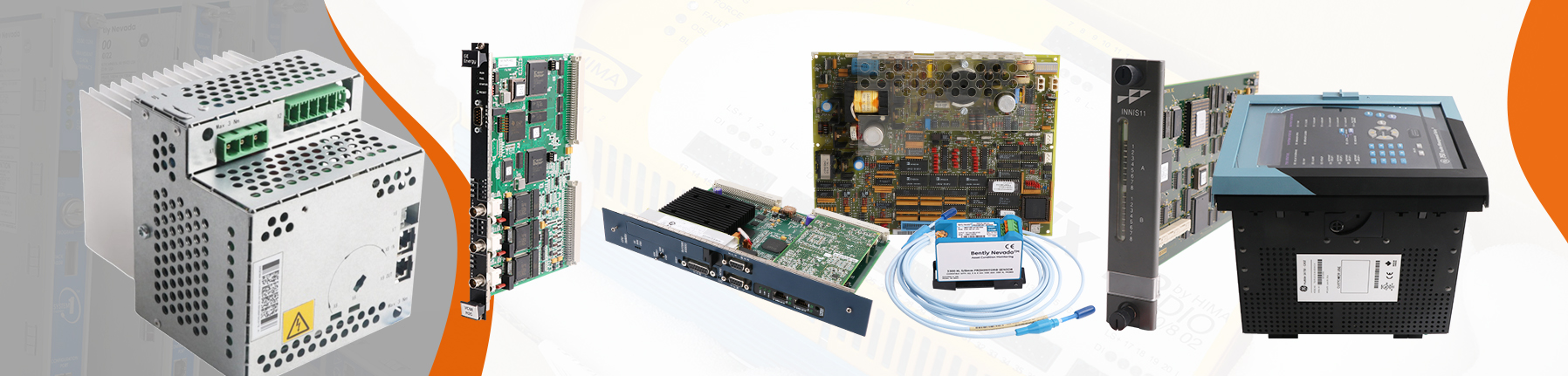
CompactLogix Communication Modules

News

  • Yokogawa ADV161-P00 S2 digital input module: high-precision signal acquisition for industrial control
    Yokogawa ADV161-P00 S2 digital input module: high-precision signal acquisition for industrial control
    June 13, 2025

    Introduction In industrial control systems, accurate acquisition and real-time response of digital signals are the key to ensuring stable operation. As an important component of modern automation architecture, Yokogawa ADV161-P00 S2 digital input module is widely integrated in CENTUM VP distributed control system (DCS). It has excellent anti-interference ability, reliable channel isolation and high-speed signal response. It is designed for critical process control scenarios, especially for industries with strict requirements on equipment stability and continuous system operation.   High-performance digital input design The ADV161-P00 S2 module is equipped with 16 opto-isolated input channels, which can stably acquire switch signals (such as on/off status). It supports 24 VDC nominal input voltage (voltage range is 18–32 VDC) and is compatible with various field devices, including limit switches, push button switches, proximity sensors, and dry contact signal sources.   The main technical parameters are as follows: Number of channels: 16 channels per module Input type: voltage input (supports source and drain logic) Signal form: supports both dry contact and open collector Isolation characteristics: provides electrical isolation between channels and between channels and ground Redundancy support: redundant configuration can be achieved to improve system reliability   Hot-swap capability: modules can be replaced without stopping the system Adopting optoelectronic isolation technology, it greatly improves the ability to resist electromagnetic interference, effectively prevents damage caused by signal distortion and electrical transients, and ensures the stability and accuracy of data acquisition.   High integration with CENTUM VP system ADV161-P00 S2 is suitable for Yokogawa's N-IO network module architecture and seamlessly connects to the CENTUM VP platform. The module communicates through the control station (FCS) and can be configured, monitored and diagnosed on a unified engineering software platform. Supporting hot-swap characteristics allows maintenance personnel to replace modules without stopping the system, which has extremely high practical value for industries that require uninterrupted operation such as oil and gas, chemicals, electricity and pharmaceuticals. In addition, the module has powerful diagnostic capabilities, supporting real-time monitoring of input status, identification of wiring faults, and detection of module operating status, thereby significantly improving maintenance efficiency and reducing system downtime.   Wide range of industrial application scenarios ADV161-P00 S2 digital input module is widely used in various industrial control occasions that require high-reliability digital input. Typical applications include: Monitoring of safety interlocks and emergency stop circuits Tracking of equipment operating status in MCC motor control centers Connecting to relay or PLC output interface Position ...

    Read More
  • ER5*C sensor input card - guarantee of accurate and reliable performance
    ER5*C sensor input card - guarantee of accurate and reliable performance
    June 12, 2025

    Introduction In the field of industrial automation and process control, sensor input cards are the key bridge between field sensors and control systems, and their importance cannot be ignored. Developed by Yokogawa, the ER5*C sensor input card achieves accurate and stable data acquisition in complex automation environments with its high performance and versatility. The module is compatible with Yokogawa distributed control systems (DCS), effectively improving signal integrity and system response speed. This article will analyze in depth why this module has become a core component of advanced automation systems from the aspects of structural design, functional characteristics and application areas. High-precision data acquisition and signal processing capabilities Meeting strict industrial standards and ensuring data accuracy and signal quality are the significant advantages of the ER5*C sensor input card. It not only supports a variety of sensor types such as thermocouples, platinum resistance (RTD) and analog voltage/current input, adapting to the diverse measurement needs of multiple industries such as petrochemicals, power, and pharmaceuticals, but also equipped with advanced signal conditioning circuits. Through noise filtering, cold end compensation and high-resolution analog-to-digital conversion, this module minimizes measurement errors and ensures that the control system can receive clear and accurate real-time data. In harsh industrial environments, the signal isolation function prevents ground loops and significantly reduces electrical interference. As a result, the card can maintain high signal fidelity even in conditions with frequent fluctuations in electromagnetic noise, helping operators make quick and accurate decisions. Efficient integration with distributed control systems As an important component of Yokogawa CENTUM and ProSafe-RS systems, the ER5*C sensor input card achieves seamless integration within distributed control systems. It supports high-speed and stable data transmission and inter-module synchronization through Yokogawa's proprietary Vnet/IP or FOUNDATION™ Fieldbus networks. The hot-swappable card allows maintenance personnel to replace or upgrade modules without stopping the system, greatly improving system availability and operational continuity. At the same time, it is compatible with the configuration and diagnostic functions of Yokogawa engineering tools, greatly simplifying the debugging process and reducing maintenance costs. It is worth mentioning that the firmware of ER5*C has been optimized to work highly with Yokogawa control logic and alarm management systems. In addition to collecting sensor data, it can also actively participate in the management of process safety and automation logic to ensure the stability and safety of industrial applications. Multi-field applications and significant operational advantages The wide range of applications is another outstanding feature of the Yokogawa ER5*C sensor inp...

    Read More
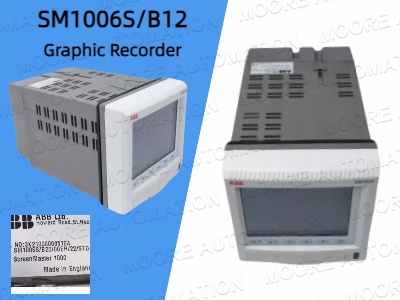
  • ABB SM1006S/B12 graphic recorder improves industrial data recording capabilities
    ABB SM1006S/B12 graphic recorder improves industrial data recording capabilities
    June 11, 2025

    Introduction In data-centric industrial environments, real-time monitoring, visualization and recording of process variables are key to ensuring efficient operations. Designed to meet this need, the ABB SM1006S/B12 graphic recorder can accurately record a variety of key parameters such as temperature, pressure, flow, etc. With its stable performance and chart visualization capabilities, the device has become an ideal tool for data tracking and archiving in various industries, especially for scenarios with strict requirements on data traceability and tamper-proofing.   High-precision chart recording and visualization ABB SM1006S/B12 provides accurate data acquisition through a multi-channel recording system. Unlike digital displays, graphic recorders can record monitoring data in real time on paper charts in a physical way, providing engineers and operators with a continuous operating history track without relying on electronic storage devices. The device supports multiple analog inputs, each of which can be assigned to a separate drawing pen. Its clear scale and precise synchronization of paper chart rotation enable users to easily identify parameter fluctuations and offsets. In industries such as pharmaceuticals, power, and petrochemicals that require extremely high process data recording, the SM1006S/B12 can help companies meet compliance standards for verification logging.   Rugged design built for industrial environments This model features a high-strength housing that resists dust, mechanical vibration, and temperature changes. Its modular structure allows for easy maintenance and flexible installation, and it can operate stably in both control rooms and field panels. The recorder is equipped with a high-precision servo-controlled pen system and a stable chart drive mechanism to ensure clear and uninterrupted writing even for long periods of time. Whether recording slow trend changes or fast process fluctuations, ABB SM1006S can maintain data continuity and trace consistency, greatly improving the efficiency of fault investigations and quality audits.   Integration, configuration flexibility, and ease of operation One of the biggest advantages of the SM1006S/B12 is its high flexibility. It supports a variety of signal input types, such as 4-20mA current loop, thermocouples, and RTD temperature sensors. Users can customize the range, alarm thresholds, and recording cycles according to process requirements. Although it is essentially an analog device, it can also be linked to a digital system through an auxiliary interface or synchronized to a host monitoring system. In addition, the recorder allows manual marking and timestamp annotations to facilitate later data interpretation. Its intuitive and concise front panel operation interface makes configuration adjustments more efficient and reduces operator training time.   Conclusion ABB SM1006S/B12 graphic recorder provides a stable and accurate solution for industrial enviro...

    Read More
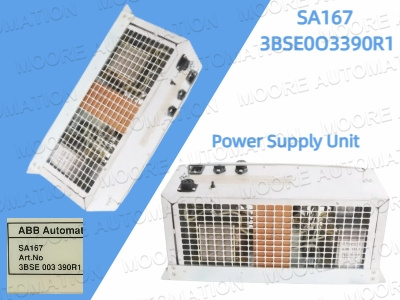
  • ABB SA167 3BSE003390R1 power module helps upgrade the reliability of industrial power supply system
    ABB SA167 3BSE003390R1 power module helps upgrade the reliability of industrial power supply system
    June 10, 2025

    Introduction In highly integrated automation systems, continuous and stable power supply is essential. The SA167 3BSE003390R1 power module launched by ABB is designed to meet the complex needs of industrial control systems. With high performance, rugged structure and reliable output capacity, this power supply unit provides stable power supply for key equipment and ensures the continuity and stability of production processes.   Industrial-grade power supply stability and high efficiency performance The core advantage of SA167 is that it can continuously output a stable 24V DC voltage under various input fluctuations. The device supports a wide range of AC input voltage, effectively preventing output instability caused by grid fluctuations, and providing an ideal power supply environment for precision automation equipment. Its high conversion efficiency not only reduces energy loss and heat generation, but also extends the service life of the equipment and reduces the operating cost of the system. The low electromagnetic interference (EMI) characteristics ensure that the equipment does not interfere with the operation of other key components, including PLCs, I/O modules and field instruments, while complying with industrial standards. In addition, the excellent load regulation performance and short-circuit protection design enable SA167 to effectively prevent equipment damage caused by voltage mutation and current shock, providing solid protection for application environments with extremely high stability requirements.   Rugged and durable, suitable for harsh working conditions ABB has equipped SA167 with a highly durable housing and an efficient thermal management system, enabling it to cope with harsh environmental conditions such as large temperature fluctuations, strong vibrations, and high humidity. The passive cooling mechanism without fans avoids wear on mechanical parts and improves equipment stability and quiet operation. Whether in indoor control cabinets or outdoor process sites, the power module can operate stably, and its wide operating temperature range makes it suitable for a variety of industrial scenarios. The compact structure and DIN rail compatibility ensure that it can be quickly integrated into new or existing control systems. The clear terminal layout and intuitive status indicator light enable technicians to quickly complete installation, commissioning and maintenance operations, greatly improving system deployment efficiency.   Adapt to DCS system to achieve intelligent power supply A major advantage of ABB SA167 is that it can be seamlessly connected to distributed control systems (DCS) including 800xA. In these systems, the power module must not only provide stable output, but also support modular structure and system-level diagnostic functions. SA167 can continuously power core subsystems such as controllers, communication modules and field instruments to ensure the operational stability of the entire fac...

    Read More
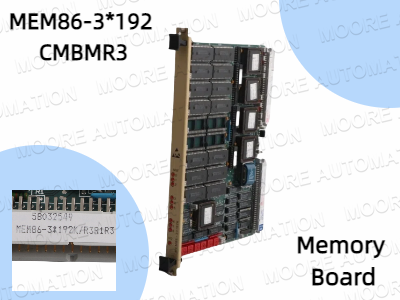
  • ABB MEM86-3*192 CMBMR3 memory board: a key component for optimizing industrial memory performance
    ABB MEM86-3*192 CMBMR3 memory board: a key component for optimizing industrial memory performance
    June 09, 2025

    Introduction In the rapidly developing field of industrial automation, memory modules are key to ensuring system stability, data integrity and high-speed communication between controllers and field devices. As a core component in the control system, ABB's MEM86-3*192 CMBMR3 memory board provides reliable and scalable memory support for complex industrial applications. Its high reliability design makes it play an important role in real-time control and system diagnostics in harsh environments.   High reliability memory architecture The MEM86-3*192 CMBMR3 memory board is designed with fault tolerance and stability as the core concept. It uses non-volatile memory technology to keep data intact even in the event of sudden power outages or system restarts. The "3x192" configuration means that it has a segmented memory structure that supports distributed data access and optimized memory mapping. The module's built-in advanced error correction code (ECC) technology can automatically detect and repair minor memory errors to prevent system crashes or data corruption. This feature makes it very suitable for scenarios with extremely high requirements for system stability and data accuracy, such as energy distribution systems, manufacturing plants and process automation systems.   Seamless integration with ABB control systems Another major advantage of the MEM86-3*192 CMBMR3 memory board is that it can work seamlessly with the ABB automation platform. It is particularly suitable for integration with ABB's controller system (such as AC 800M, etc.) to achieve fast configuration, data synchronization and efficient debugging. Because ABB uses standardized hardware interfaces, the installation and replacement of this module does not require special tools, and maintenance operations are simple and fast. In addition, firmware upgrades can be performed uniformly through a centralized management system, significantly reducing maintenance time and improving the flexibility of system upgrades.   Industrial applications and performance advantages In actual applications, the MEM86-3*192 CMBMR3 is widely used in multiple industrial fields. Its rugged industrial design and excellent memory capacity enable it to perform well in performing complex logic processing and real-time data acquisition. Whether it is a high-speed packaging line or a critical power grid monitoring system, the module can support high-frequency read and write operations without performance degradation. At the same time, the memory board has the advantages of compact structure and low power consumption, which helps to build an efficient system architecture and reduce energy consumption for large-scale applications. Its support for deterministic control also makes it critical in time-sensitive scenarios such as robotic automation and safety interlocking.   Conclusion ABB MEM86-3*192 CMBMR3 memory board is an indispensable core component in modern industrial automation systems. With ex...

    Read More
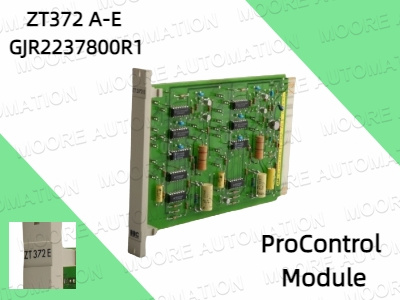
  • ABB ZT372 A-E GJR2237800R1 ProControl module promotes industrial automation
    ABB ZT372 A-E GJR2237800R1 ProControl module promotes industrial automation
    June 06, 2025

    Introduction As industrial systems increasingly pursue higher efficiency, flexibility and intelligence, the demand for high-performance modular automation hardware continues to grow. The ABB ZT372 A-E GJR2237800R1 ProControl module is a key product to meet this trend. With its precise control capabilities, stable communication performance and excellent system compatibility, it plays a core role in many key industries. This module is designed for the ABB ProControl system architecture to improve process stability and simplify control system configuration.   Key role in the ABB ProControl system The ZT372 A-E module is the core processing and interface unit in the ABB ProControl automation platform. It is responsible for transmitting high-speed signals between I/O modules, communication processors and control logic modules to ensure the determinism and responsiveness of data transmission in key processes. This feature is particularly critical in power generation, chemical refining and large-scale manufacturing. It supports distributed intelligent control and can delegate some decision-making tasks to the module side for execution, thereby improving the system response speed and reducing the burden on the central processor. In addition, the module supports flexible configuration, allowing engineers to customize the control logic according to process requirements. The module is compatible with ABB's powerful bus communication protocol, ensuring reliable data transmission in industrial environments with severe electromagnetic interference or high noise, thereby improving the overall stability and diagnostic efficiency of the system.   Hardware structure, signal processing and functional characteristics The ZT372 A-E module is made of high-quality industrial components, and the multi-layer PCB design can effectively reduce electromagnetic interference and optimize heat distribution. It is particularly suitable for use in harsh environments, such as high temperature or strong electric field areas. The module supports a variety of I/O interfaces and integrates signal conditioning circuits, which are suitable for the access of analog and digital signals. At the same time, it has built-in logic execution capabilities, which can realize real-time control loops and closed-loop feedback. Other features include status indicators, error record memory and firmware self-test functions, which all help to achieve rapid fault location and predictive maintenance. It supports redundant configuration and can continue to maintain uninterrupted control process when some hardware fails.   Lifecycle, maintainability and operational efficiency Another major advantage of the ZT372 A-E module is its excellent lifecycle performance. Designed for continuous full-load operation, it meets high MTBF (mean time between failures) standards and can significantly reduce unplanned downtime. The modular plug-in structure facilitates installation and replacement, supports ...

    Read More
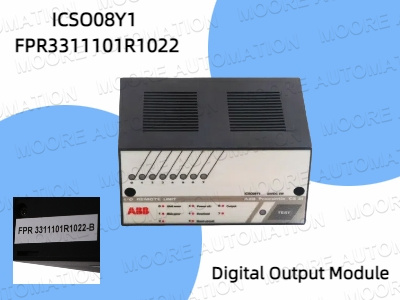
  • ABB ICSO08Y1 FPR3311101R1022 digital output module assistance industry automation unit
    ABB ICSO08Y1 FPR3311101R1022 digital output module assistance industry automation unit
    June 05, 2025

    Introduction In the current industrial automation area, the precision of control and execution, the ability to move quickly and efficiently is impossible or impossible. ABB ICSO08Y1 FPR3311101R1022 numeric output model is correct, so it has a small special quality option, has a large number digit output ability, and has completed the demand for extreme automation. The imitation of the ABB control system is complete and complete, and the system has achieved operational efficiency and control precision. In-depth exploration of the core features of the main text, technical references and practical applications for industrial automation.   Industrial control system that guarantees reliable numerical output performance ICSO08Y1 model mainly provides eight routes with high performance numerical output, each route can be realized at high speed, and precise development control system. Supports rapid fire, full time control, secure power supply, electricity and other export equipment, and timely delivery confirmation signals. In addition, the model has a short route, safety function, system safety, and low wind speed. It is designed to be highly efficient and effective within the control system.   ABB automation flat platform unlimited capacity ICSO08Y1 is a model with great performance and ABB various automation control devices and system compatibility. Support standardization communication collaboration, simplify the process of building the industry. Various types of interoperability can be used to achieve ABB automation, creating centralized control systems and improving organizational control structures. More important is that the model has the ability to check the performance, the actual time of delivery and failure information, the lack of assistance, and the reduction of unexpected stoppages.   Multi-functionality for various industrial buildings ABB numbers are modeled after installation, durable and suitable for use in industrial workplaces. There is no need to worry about the production line, the energy management system, the control system that can be imitated, the electric magnet, the indicator lamp, the electric machine, etc., and many kinds of output equipment. The next step is to show how the temperature changes in the industrial environment and the ability to adapt to the sound of the electricity. Therefore, ICSO08Y1 model helps to make the power more effective, further improves the automatic solution solution, and proposes a solution for the productivity of various industries.   Conclusion As stated above, the ABB ICSO08Y1 FPR3311101R1022 number output model is a key part of the promotion industry automation exhibition. Its flexible export performance, unlimited capacity for automation, and ability to operate in the existing industrial environment, makes it the best choice for commercial automation engineering professionals. In order to improve the efficiency of the business, improve the efficiency of the company, impr...

    Read More
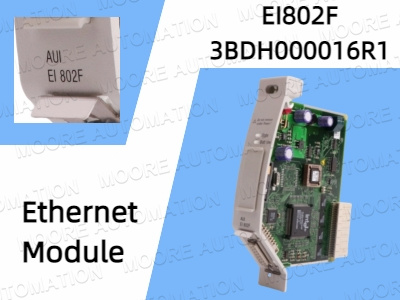
  • ABB EI802F 3BDH000016R1 to help make the industry better
    ABB EI802F 3BDH000016R1 to help make the industry better
    June 04, 2025

    Introduction In today's industrial automation sector, the continuous communication of the production control system is extremely important. ABB EI802F 3BDH000016R1 is designed for small demand requirements, provides fast and precise communication, and can be used in ABB automation environment. In order to improve the convenience and control of the structure, we offer network performance and support for advanced industrial communication collaboration. Main text details: EI802F has the mechanical characteristics, technical performance, and practical performance for use in the existing industry.   Demand for high performance, connectivity and automation of the foot industry The EI802F model can provide a fast and fast communication interface, which will improve the industrial environment. The model supports automatic communication, ensures automatic operation, and provides fast, low-latency communications. The ability to control the time control system is especially important, ensuring highly effective process management. In addition, the design of industrial hard parts for imitations, power resistance, electric noise, temperature limits and machine vibrations, etc. may be affected by adverse environmental conditions, and the maintenance of fixed operations.   The combination of ABB and ABB series The biggest advantage of the ABB EI802F model is that it has unlimited compatibility with ABB controlled products, and its functionality is now within the automatic frame. The model supports TCP/IP and UDP communication, and provides many types of industrial equipment and flatbed communications. This interoperability has been simplified, the system has been developed, and in the course of the compilation, the system has been provided for use by users, and the system has been adjusted and the system has been reorganized without any need for large-scale remodeling. An internal diagnostic tool can be used to check the health status, reduce the risk of damage, and prevent the machine from dropping.   Multi-industry versatility EI802F model is durable, has multiple connection options, and can be used in multiple industries. There is no need to worry about the production of cars, electric power supply, process engineering, imitation control, human-mechanical interface and other network systems, and integrated control systems. It supports many types of networks, as well as network development and development, and can be used as a base for demand-seeking, as well as for environmental and wire-type networks. In addition to this, it is possible to design a simulated performance that can be maintained in a practical manner, and guarantee performance at the same time.   Conclusion As stated above, ABB EI802F 3BDH000016R1 is an important component for the basic design of the factory. It provides high-speed communication capability and ABB automation system with complete compatibility, supports easy operation, and strengthens the number of installati...

    Read More
1 ... 9 10 11 12 13 ... 33
A total of  33  pages

News & Blogs

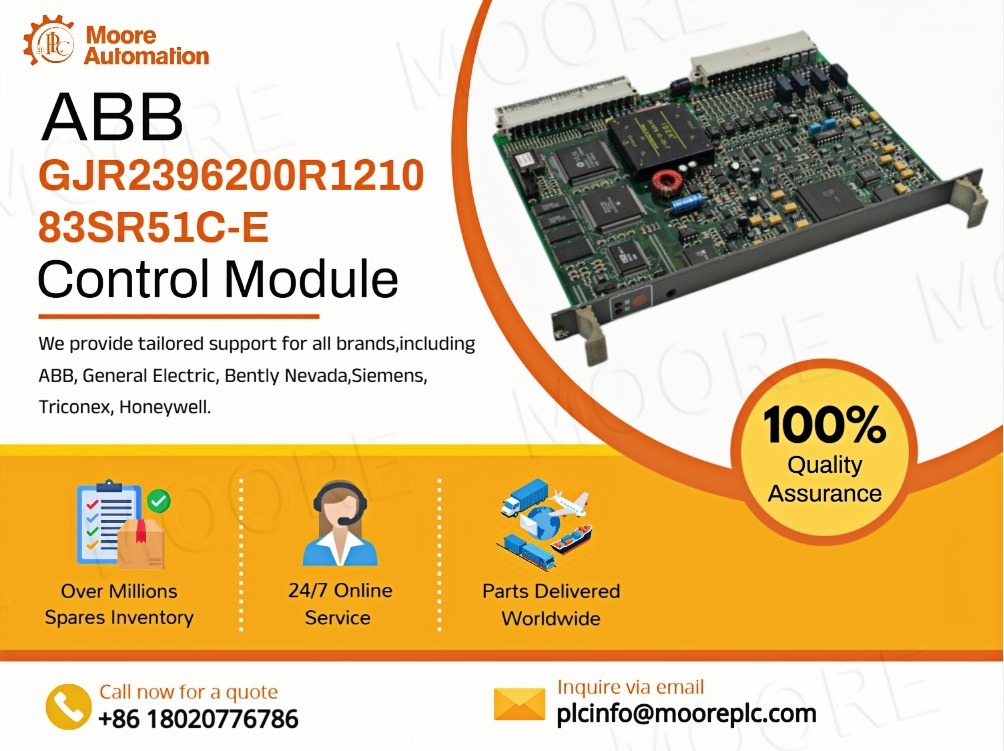
  • Why is ABB GJR2396200R1210 83SR51C-E Control Module a Key Choice for DCS Spare Parts in Modern Distributed Control System Replacement Parts Strategy? 19/05

    2026

    Why is ABB GJR2396200R1210 83SR51C-E Control Module a Key Choice for DCS Spare Parts in Modern Distributed Control System Replacement Parts Strategy?
    ABB 83SR51C-E Module Overview from a Customer Perspective In industrial automation projects, system continuity often depends on how effectively replacement components are selected and integrated. The ABB GJR2396200R1210 83SR51C-E Control Module from ABB is commonly referenced in maintenance planning for Distributed Control System environments, especially when operators evaluate DCS spare parts and lifecycle extension strategies. From a user standpoint, this module is typically applied in configurations where mixed signal handling and compact I/O distribution are required. It supports AX|DX channel types and is positioned as part of a broader Distributed Control System replacement parts framework, helping engineers align legacy systems with current operational requirements without redesigning the full architecture. Technical Configuration and Channel Structure The ABB GJR2396200R1210 83SR51C-E Control Module is defined by a structured I/O arrangement that supports multiple signal categories within a single unit. It includes 12 input channels and 2 output channels, designed to handle mixed signal environments commonly found in industrial automation setups. Additionally, the module contains 4 digital inputs and 1 digital output, with a total configuration of 2 channels in the system architecture. This combination allows integration into existing Distributed Control System layouts where channel density and signal separation are important planning elements. For engineers sourcing DCS spare parts, this configuration simplifies mapping during system expansion or partial replacement tasks. Role in DCS Spare Parts and System Continuity Planning In many industrial sites, DCS spare parts management is not only about replacement but also about ensuring compatibility with installed infrastructures. The ABB GJR2396200R1210 83SR51C-E Control Module is frequently selected as part of Distributed Control System replacement parts inventories due to its structured I/O design. When integrated into maintenance cycles, it helps reduce the need for large-scale system redesign. Instead, operators can replace targeted modules while maintaining existing control logic. This approach is particularly relevant for plants managing long-term operational continuity strategies where DCS module supplier selection directly affects maintenance scheduling and system downtime planning. Sourcing Strategy from a DCS Module Supplier Selecting a dependable DCS module supplier is a critical factor in procurement decisions involving ABB control components. For the ABB GJR2396200R1210 83SR51C-E Control Module, supply chain consistency and part traceability are often prioritized by procurement teams. Suppliers specializing in Distributed Control System replacement parts typically maintain inventories that support legacy and current system architectures simultaneously. This allows customers to source ABB DCS spare parts in a more structured way, ensuring compatibility checks are completed befor...
    All News
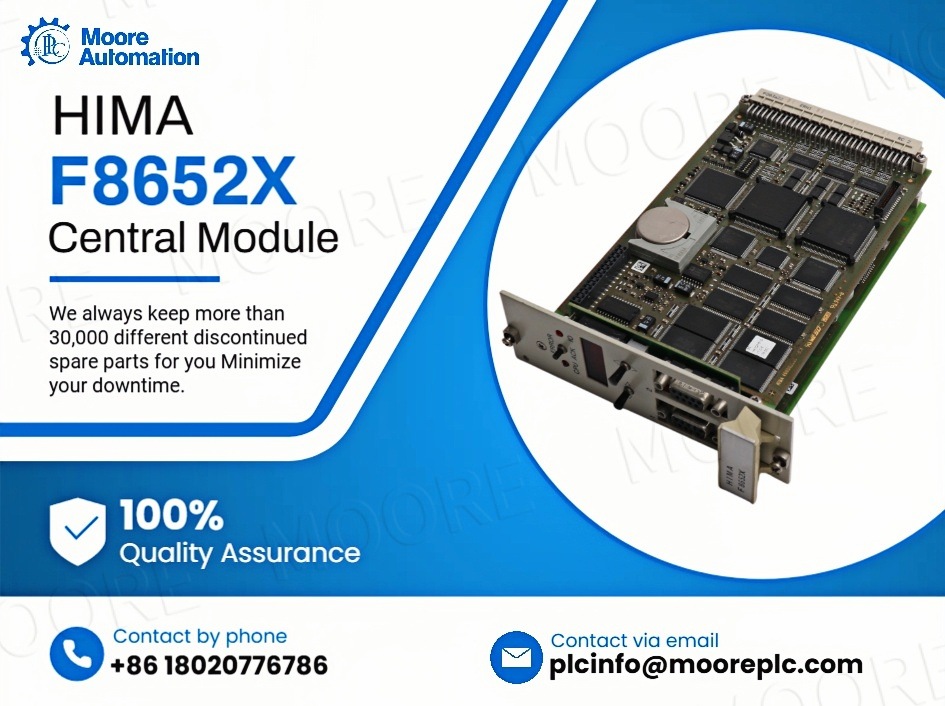
  • Why Are More Industrial Buyers Choosing HIMA F8652X Central Module for DCS System Upgrades? 16/05

    2026

    Why Are More Industrial Buyers Choosing HIMA F8652X Central Module for DCS System Upgrades?
    The Growing Demand for HIMA Automation Solutions Industrial companies are facing increasing pressure to maintain stable production while dealing with aging automation systems. In many factories, outdated controllers and unavailable spare parts create unexpected delays during maintenance planning. The HIMA F8652X Central Module has become a practical choice for customers searching for compatible DCS spare parts and long-term automation support. For plant managers and procurement teams, the biggest concern is finding replacement modules that can work within existing control structures. Instead of rebuilding the entire automation platform, many facilities now prefer using Distributed Control System replacement parts to simplify modernization projects. This approach allows customers to continue operations while gradually updating important system components. At the same time, industrial users also expect faster spare part sourcing from a trusted DCS module supplier. Quick access to automation modules can help companies manage shutdown schedules more effectively and avoid unnecessary project delays. How Does the HIMA F8652X Help Customers Simplify System Maintenance? The HIMA F8652X Central Module is widely used in process automation environments where centralized communication between industrial equipment is required. Customers often select this module when replacing older control hardware in distributed automation systems. Many industrial operators are looking for practical ways to extend the lifecycle of existing installations. Instead of replacing the complete DCS platform, they prefer sourcing Distributed Control System replacement parts that fit current engineering layouts. This helps maintenance teams reduce integration complexity during scheduled plant upgrades. Another important issue for customers is spare part availability. Working with an experienced DCS module supplier can simplify procurement procedures and improve spare inventory planning. This becomes especially valuable for industries operating continuous production processes where maintenance windows are limited. Where Can the HIMA F8652X Central Module Be Applied? The HIMA F8652X Central Module is commonly installed in industrial sectors requiring stable control management and coordinated process communication. It is frequently integrated into control cabinets, safety systems, and distributed automation architectures. Oil refineries, power plants, and chemical production facilities often rely on DCS spare parts to support ongoing system maintenance projects. In many cases, customers choose phased upgrade strategies that combine existing infrastructure with newer automation modules. This helps engineering teams manage budgets while minimizing operational interruptions. In addition, multinational companies operating several production sites usually require support from a global DCS module supplier. Access to compatible Distributed Control System replacement parts across multiple locat...
    All News
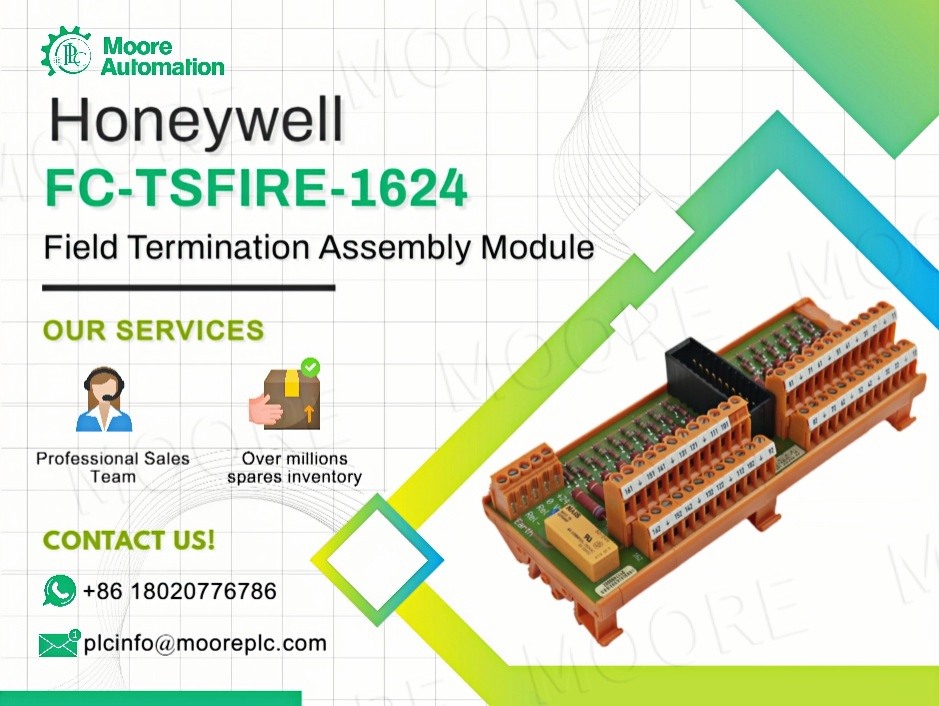
  • How Honeywell FC-TSFIRE-1624 Field Termination Assembly Module Simplifies DCS Spare Parts Replacement Strategy 09/05

    2026

    How Honeywell FC-TSFIRE-1624 Field Termination Assembly Module Simplifies DCS Spare Parts Replacement Strategy
    Overview of FC-TSFIRE-1624 in Honeywell DCS Ecosystem The Honeywell FC-TSFIRE-1624 Field Termination Assembly Module is designed to support structured signal interfacing within industrial automation architectures. From a customer perspective, it is often evaluated as part of a broader DCS spare parts strategy, where consistent connectivity and organized field wiring are essential for stable system maintenance planning. In a typical Honeywell distributed control environment, this module is positioned as a bridge between field instrumentation and control system I/O layers. It helps operators standardize wiring layouts, which is particularly valuable when managing legacy upgrades or maintaining Distributed Control System replacement parts inventories across multiple plant sites. Role in Distributed Control System Replacement Parts Planning For plant engineers and procurement teams, long-term availability of Distributed Control System replacement parts is a critical concern. The FC-TSFIRE-1624 supports structured replacement planning by providing a repeatable termination architecture that simplifies module interchangeability during maintenance cycles. Instead of redesigning field connections during every upgrade, customers can align this assembly with existing Honeywell DCS configurations. This reduces complexity in spare part classification and allows teams to forecast DCS spare parts requirements more accurately across shutdown schedules and lifecycle planning. Benefits from a System Integration Perspective From a system integration standpoint, the FC-TSFIRE-1624 helps unify field signal organization within distributed automation projects. Engineering teams often prioritize reducing wiring ambiguity, especially in large-scale process facilities where multiple subsystems interact. By standardizing termination points, the module supports cleaner documentation and easier fault isolation during maintenance. This becomes especially useful for customers working with a DCS module supplier, as it allows consistent part mapping and simplifies coordination between procurement and engineering departments without redesigning existing control logic structures. Sourcing from a Reliable DCS Module Supplier Selecting a dependable DCS module supplier is an important part of lifecycle asset management. The FC-TSFIRE-1624 is typically sourced through authorized industrial automation channels that specialize in Honeywell ecosystems, ensuring compatibility with existing Distributed Control System frameworks. Customers often prioritize suppliers that can support both active installations and legacy system extensions. This ensures that DCS spare parts like termination assemblies remain available throughout system expansion phases, reducing delays in maintenance planning and helping maintain consistent inventory management practices. Integration Considerations in Field Termination Architecture When integrating the FC-TSFIRE-1624 into an existing control environment, engin...
    All News
  • How Does GE IC693CPU374 CPU Module Support Industrial Spare Parts Management Optimization? 30/04

    2026

    How Does GE IC693CPU374 CPU Module Support Industrial Spare Parts Management Optimization?
    Understanding the GE IC693CPU374 CPU Module The GE IC693CPU374 CPU Module is developed to meet the needs of structured industrial automation systems. It operates with a 133 MHz processor and offers 240KB of user memory, allowing users to handle control programs and data organization across multiple production stages. From a user standpoint, this module supports clear system coordination and simplifies integration into existing setups. With over 2,000 timers and counters, it enables precise sequencing, helping businesses manage different industrial automation parts within complex workflows. Why Efficiency Matters in Industrial Automation Parts In industrial environments, coordination between industrial automation parts directly impacts production flow. The GE IC693CPU374 CPU Module requires 7.4 watts at 5VDC, helping users plan energy usage within their systems. As production requirements increase, many companies look for solutions that allow system expansion without major redesign. This module supports higher workload handling, making it easier for customers to improve process efficiency while keeping current system structures. Improving Spare Parts Management Efficiency Spare parts management is essential for maintaining smooth operations and reducing downtime risks. The GE IC693CPU374 CPU Module helps standardize important components within industrial spare parts inventories, making purchasing and storage more straightforward. By including this module in spare parts planning, businesses can simplify replacement processes and reduce the number of different components they need to manage. This contributes to more organized industrial spare parts handling and better inventory visibility. System Flexibility and Integration The GE IC693CPU374 CPU Module can support up to 8 baseplates within a single system, allowing users to design configurations that match their operational needs. This makes it easier to adjust system layouts as production demands evolve. For companies working with various industrial automation parts, this flexibility reduces system complexity and supports consistent configurations across multiple production lines, improving overall coordination. Optimizing Cost and Resource Allocation Controlling costs is a key concern when managing industrial spare parts. The GE IC693CPU374 CPU Module supports better planning by combining processing capability with controlled power usage. When integrated into spare parts management strategies, it helps businesses maintain balanced inventory levels and avoid excess stock. This approach allows for more efficient allocation of resources while supporting continuous system operation. Application Areas Municipal engineering: Water supply pumping stations, sewage treatment systems, auxiliary equipment for urban rail transit. Energy and power: Control of power generation units in power plants, monitoring of substations, control of waste heat boilers. Petrochemicals: Monitoring of oil pipelines in refiner...
    All News
  • How Are Factories Reducing Downtime with Smart PLC Spare Parts Strategies? 20/05

    2026

    How Are Factories Reducing Downtime with Smart PLC Spare Parts Strategies?
    The Shift Toward Smarter Spare Parts Planning in Modern Plants Factories today are under pressure to keep production lines moving while dealing with tighter maintenance windows. From a customer’s point of view, the biggest challenge is not just equipment issues, but how quickly industrial spare parts can be identified, located, and replaced when needed. This is where spare parts management is becoming a strategic priority rather than a back-office task. Many operations teams are now using data-driven planning tools to map out industrial automation parts usage patterns, helping them avoid last-minute procurement delays. In some control system environments, components like GE IS200TDBTH2ACD are pre-assigned in digital inventories so replacement decisions can be made faster during shutdown windows. Why Inventory Visibility Is Now a Core Production Requirement From the customer perspective, a lack of real-time visibility often leads to overstocking or unexpected shortages. This is especially critical for PLC environments where a single missing module can interrupt an entire sequence. Modern factories are improving industrial spare parts tracking by integrating cloud-based dashboards with procurement systems. This allows maintenance teams to align spare usage with operational demand instead of reacting after failures occur. For example, units such as IS200TDBTH2A are often categorized under high-priority lists in industrial automation parts catalogs, ensuring they are not delayed in internal approval workflows. Search trends like “PLC spare parts availability” and “automation downtime reduction” reflect how buyers are actively looking for more structured inventory strategies rather than reactive purchasing. Building Faster Response Systems for Critical Automation Components In many production environments, downtime cost is not only financial but also affects delivery schedules. Customers are increasingly expecting suppliers and internal teams to provide faster response systems for critical PLC modules. This has led to more structured spare parts management models where parts are grouped by function, lead time, and usage frequency. Within this framework, engineers often prepare backup lists for key control system components such as IS200VCMIH2CAA/IS215VCMIH2CA, ensuring that replacement planning is already defined before an issue occurs. This approach reduces decision delays during maintenance events and improves coordination between warehouse and engineering teams. Digital Tools Changing How Spare Parts Are Forecasted Factories are also shifting toward predictive planning tools that analyze historical consumption and maintenance logs. From a customer standpoint, this reduces uncertainty when ordering industrial automation parts, especially for systems that operate continuously. These tools often highlight trends like seasonal demand spikes or recurring replacement cycles. As a result, industrial spare parts forecasting becomes more structured, helping...
    All Blogs
  • How Are ICS Triplex Spare Parts Supporting Long-Term Industrial Maintenance Strategies? 13/05

    2026

    How Are ICS Triplex Spare Parts Supporting Long-Term Industrial Maintenance Strategies?
    Why Industrial Facilities Are Prioritizing Spare Parts Planning Modern industrial plants are under constant pressure to maintain continuous operations while controlling maintenance budgets. For many companies, one of the biggest challenges is managing aging automation infrastructure without causing unexpected production interruptions. This is why more plant operators are focusing on strategic spare parts management, especially for critical control systems. In recent years, demand for DCS spare parts and Distributed Control System replacement parts has increased across industries such as oil and gas, power generation, chemical processing, and manufacturing automation. Customers are no longer looking only for emergency replacements. Instead, they want long-term sourcing strategies that support future maintenance schedules and system expansion projects. How ICS Triplex Modules Help Simplify Maintenance Planning Many industrial customers continue operating legacy automation systems that require compatible replacement modules. Instead of replacing entire control platforms, companies are increasingly choosing practical upgrade solutions using existing infrastructure. This approach helps reduce engineering complexity and allows maintenance teams to manage plant shutdown schedules more effectively. The ICS Triplex T8193 is frequently included in maintenance inventory programs because customers need reliable access to control system components during planned outages. By securing important Distributed Control System replacement parts in advance, industrial operators can avoid long procurement delays during critical maintenance periods. At the same time, companies are also searching for experienced DCS module supplier partners that can support technical coordination, spare inventory planning, and international logistics management. The Growing Importance of Distributed Control System Replacement Parts As industrial automation systems continue operating for decades, sourcing compatible replacement modules becomes more difficult. Many factories still rely on older DCS architectures that require ongoing maintenance support. For this reason, Distributed Control System replacement parts have become essential for long-term operational planning. The ICS Triplex T9833 is often selected by facilities that are modernizing automation systems in stages. Rather than replacing all equipment at once, customers prefer gradual migration strategies that help maintain production continuity while updating key control components. This phased upgrade model has become especially common in industries where production downtime directly affects supply chain commitments. By working with a specialized DCS module supplier, customers can secure replacement modules that match existing system configurations without requiring large-scale redesigns. How Customers Benefit from Strategic Spare Parts Inventory For many industrial companies, maintenance planning is no longer reactive. Customers...
    All Blogs
  • When Is the Right Time to Replace TSI Industrial Automation Spare Parts in Plant Operations? 08/05

    2026

    When Is the Right Time to Replace TSI Industrial Automation Spare Parts in Plant Operations?
    Understanding the Right Timing for Replacing TSI Spare Parts in Industrial Plants For most plant operators, the biggest challenge is not whether TSI spare parts will eventually wear out, but when they should be replaced without disrupting production. From a customer’s perspective, the goal is simple: avoid unplanned downtime while keeping asset performance stable. In real operations, waiting for a complete failure is rarely a cost-effective strategy, especially for critical Turbine Supervisory Instrumentation components. Many plants now rely on condition-based maintenance and digital monitoring of TSI modules to identify early warning signs. Instead of following a fixed replacement schedule, operators increasingly focus on performance trends such as signal drift, unstable readings, or intermittent communication errors. These subtle indicators often signal that replacement should be planned rather than delayed. Common Failure Indicators in Turbine Supervisory Instrumentation Components In industrial environments, Turbine Supervisory Instrumentation components play a critical role in ensuring turbine safety and efficiency. However, these systems often degrade gradually, making early detection essential. Customers frequently report issues such as inconsistent vibration readings, temperature inaccuracies, or alarm delays as early warning signs. From a maintenance perspective, these symptoms should never be ignored. In modern facilities, engineers also track degradation patterns in TSI modules through diagnostic tools integrated into control systems. When performance deviation becomes consistent, it is often more economical to replace TSI spare parts rather than recalibrate repeatedly. This approach reduces operational risk and improves long-term reliability. Operational Risks of Delayed Replacement in Critical Systems Delaying replacement of aging components can significantly increase operational risk, especially in high-load turbine environments. A failing sensor or module can lead to incorrect supervisory data, which directly impacts safety decisions and plant efficiency. In some cases, even a minor delay can escalate into unplanned shutdowns or expensive repairs. For example, systems using GE UR7KH protection and monitoring modules rely heavily on accurate input from surrounding instrumentation. If connected TSI modules begin to degrade, the entire protective logic chain may become less responsive. From a customer standpoint, the cost of unexpected downtime often far exceeds the investment in proactive replacement of TSI spare parts, making timely action a critical business decision. Evaluating Lifecycle Strategy for TSI Modules and Plant Assets A well-structured lifecycle strategy helps plant operators avoid reactive maintenance. Instead of focusing only on failures, many facilities now analyze usage cycles, environmental conditions, and historical performance of TSI modules. This allows maintenance teams to forecast when replacement should occur...
    All Blogs
  • Why are global plants accelerating upgrades to HIMA safety automation spare parts? 28/04

    2026

    Why are global plants accelerating upgrades to HIMA safety automation spare parts?
    Aging assets pushing safety systems closer to operational limits Across many process industries, existing automation systems are reaching or exceeding their intended service life. From an operator’s perspective, the concern is no longer only maintenance cost, but the increasing probability of unexpected downtime or safety loop instability. Even minor performance deviations can lead to costly interruptions in continuous production. This situation is driving more attention toward DCS spare parts planning at the plant level. Instead of handling failures when they occur, engineering teams are building structured replacement schedules. The objective is to secure long-term reliability and reduce unplanned shutdown risks in critical operations. Obsolescence challenges in legacy control environments One of the key issues plant engineers face today is hardware obsolescence. As automation platforms age, sourcing compatible components becomes more difficult, and delivery times are often unpredictable. This creates pressure on maintenance teams who must balance uptime requirements with limited spare availability. To manage this risk, many operators are adopting a lifecycle-based approach using Distributed Control System replacement parts. Rather than replacing individual failed items in isolation, they are aligning spare strategies with system-wide upgrades. This helps reduce compatibility issues and improves maintenance predictability during scheduled outages. Preference for HIMA systems in safety-critical modernization projects In safety automation upgrades, many end users continue to rely on HIMA due to its established track record in high-integrity applications. From a customer standpoint, the key advantage is system stability combined with long-term upgrade flexibility. Platforms such as HIMA HIMAX are often selected as part of phased modernization projects. Instead of replacing entire control architectures, plants upgrade selected layers while maintaining overall system structure. This minimizes engineering disruption while still improving diagnostics, reliability, and safety performance in critical processes. Selecting the right modules for stable system performance Spare part selection is a critical factor in ensuring uninterrupted operation of safety systems. Engineers typically evaluate compatibility, redundancy behavior, and long-term support availability before finalizing replacement components. Commonly used modules such as HIMAX X-AO1601, HIMAX X-DI3201, and HIMAX X-CPU01 are often chosen for upgrade consistency. These components help maintain system alignment while simplifying integration work. For maintenance teams, standardization also reduces configuration effort and improves troubleshooting efficiency during plant turnaround periods. Supply reliability and the role of trusted sourcing channels Global supply chain instability has made procurement planning more complex for industrial operators. Delays in receiving critical automation compone...
    All Blogs
leave a message
If you are interested in our products and want to know more details,please leave a message here,we will reply you as soon as we can.
submit

Our hours

Mon 11/21 - Wed 11/23: 9 AM - 8 PM
Thu 11/24: closed - Happy Thanksgiving!
Fri 11/25: 8 AM - 10 PM
Sat 11/26 - Sun 11/27: 10 AM - 9 PM
(all hours are Eastern Time)
Contact Us:+86 18020776786

Home

Products

whatsApp

Contact Us