CompactLogix Communication Modules

News

  • ABB TC520 3BSE001449R1 System Status Collector Optimized Application in Industrial Monitoring
    ABB TC520 3BSE001449R1 System Status Collector Optimized Application in Industrial Monitoring
    May 19, 2025

    Introduction In today's rapidly developing industrial environment, accurate system diagnosis and real-time status monitoring capabilities are essential. ABB's TC520 3BSE001449R1 System Status Collector plays an important role in ensuring stable equipment operation by collecting and analyzing operating data in the control system. Designed for high availability, transparent diagnosis and seamless integration, the module is widely used in ABB Symphony Plus and other automation platforms. Smart Diagnosis for Industrial Automation TC520 System Status Collector is a gateway with integrated communication and diagnostic functions, which is used to collect status signals of distributed devices and control modules. Its core function is to effectively transmit information to the control center or human-machine interface (HMI) after obtaining system operating status and fault codes in real time. Through intelligent fault identification function, TC520 supports predictive maintenance, reduces unexpected downtime, and improves factory response speed. ABB has equipped the TC520 with powerful signal processing and scalable communication functions, which are compatible with various field interfaces and support redundant configuration to ensure the reliability of critical systems. Its wide operating temperature range and modular design make it suitable for a variety of harsh environments. System architecture and integration capabilities One of the major advantages of the TC520 is its high compatibility with ABB Symphony Plus and other distributed control systems. It acts as a central node to collect system-wide diagnostic information and transmit it through fieldbus protocols. The module is mounted on a DIN rail and complies with industrial electrical and communication interface standards. With its plug-and-play design and automatic identification function, the TC520 can immediately identify connected devices and start data logging after installation without complex configuration. This simplified process significantly reduces engineering time and accelerates the deployment of new or retrofit projects. Its built-in diagnostic interface can clearly identify the type of fault, including power supply abnormality, communication failure, sensor failure, etc., which allows engineers to quickly locate the problem and shorten the mean time to repair (MTTR). Reliability, safety and long-term value In industrial scenarios with extremely high requirements for system stability, the reliability of the TC520 is particularly outstanding. The module is made of industrial-grade components and has anti-electromagnetic interference, temperature difference resistance and shock resistance, and can operate stably for a long time under high load conditions. The module also supports safety mechanisms, and responds to critical events through real-time alarms and status relay functions. When used in conjunction with centralized monitoring software, it can visualize the health status of the ...

    Read More
  • ABB GJR2385100R1041 88TV01K-E control module: improving the stability of industrial automation systems
    ABB GJR2385100R1041 88TV01K-E control module: improving the stability of industrial automation systems
    May 16, 2025

    Introduction In the ever-evolving field of industrial automation, there is a growing demand for control modules with high performance, strong stability and precise data communication. As a leading global supplier of power and automation technology, ABB provides a series of advanced control components designed for key application scenarios. Among them, the GJR2385100R1041 88TV01K-E control module is an important part of ABB's distributed control system (DCS) system. It is widely used in industries such as petrochemicals, power, pharmaceuticals and water treatment to ensure the real-time nature of process control and seamless integration of the system.   Functional highlights and technical features The 88TV01K-E module (material number GJR2385100R1041) is specially designed for ABB Symphony™ or INFI 90 systems. It has high-speed input/output (I/O) processing capabilities and can achieve fast and accurate signal transmission between field devices and control networks. The module supports analog and digital communication protocols and is suitable for a variety of industrial control environments. The module has a built-in self-diagnosis function that can alarm in advance before the system fails, thereby effectively reducing the risk of downtime. Its hardware structure adopts fault-tolerant circuit design and channel isolation to improve system safety and reduce electromagnetic interference. At the same time, it supports hot-swap function, and operation and maintenance personnel can replace or upgrade the module without stopping the machine, which is particularly critical for continuously running production lines.   Integration capability with ABB DCS system One of the biggest advantages of the 88TV01K-E module is its high compatibility with ABB distributed control systems. Whether deployed in the traditional INFI 90 system or in the new generation of Symphony Plus platform, the module can achieve stable and real-time data interaction to ensure the consistency of control strategies and the reliability of system operation. With ABB's Composer and Control Builder configuration tools, engineers can easily program, set parameters and address map the module. The system also supports online firmware upgrades and logic debugging, which greatly improves configuration efficiency. Its excellent memory management mechanism can retain I/O setting information in the event of power failure, enhancing the system's disaster recovery capability.   Application scenarios and industry cases The GJR2385100R1041 88TV01K-E module is widely used in multiple industries that require high availability and real-time control. In the oil and gas industry, it can achieve precise control of valves and sensors in hazardous areas; in power systems, it is used for turbine control, boiler management and substation automation; in the water treatment industry, it is used for pump control, dosing system and SCADA communication. The module adopts a compact design and a sturdy ...

    Read More
  • Reliable power supply for critical systems: ABB SAFT111POW power module
    Reliable power supply for critical systems: ABB SAFT111POW power module
    May 15, 2025

    Introduction In the field of industrial automation, power continuity is the core element for stable system operation. Especially in industries with strict process requirements, the ABB SAFT111POW power module plays an irreplaceable role as the basic component of system power supply. This module provides stable and reliable DC voltage for systems such as the ABB Advant Controller 400 series, which is a strong guarantee for the normal operation of key equipment. This article will introduce the working principle, application value and key role of this module in high-reliability industrial systems.   High-performance design and technical parameters ABB SAFT111POW is a high-performance, compact power module, mainly used to provide stable 24V DC voltage for ABB's process control systems. This module is often used in DCS control systems in high-demand industries such as power, petrochemical, and pharmaceuticals. The main technical parameters include: Output voltage: 24 VDC (nominal value) Power output: meets high load requirements and supports multi-channel power supply Cooling method: natural convection cooling Redundancy support: supports dual-channel redundant configuration Installation method: DIN rail or panel installation Protection function: with overvoltage, short circuit and overtemperature protection The module uses industrial-grade devices and can operate stably in harsh environments such as high temperature and electromagnetic interference, greatly improving system reliability and service life.   System compatibility and integration capabilities The SAFT111POW module is highly compatible with ABB automation platforms and is widely used in Advant and Symphony Plus system architectures. It not only provides stable power for CPU, I/O modules and communication interfaces, but also has good scalability and flexible configuration capabilities. The module supports multiple power supply voltage inputs, and the standard interface facilitates wiring and installation, which helps reduce the complexity of the power distribution system. Its fault diagnosis functions such as LED indicators and alarm signals also improve fault response speed.   Reliability and safety in industrial environments Another major advantage of the SAFT111POW is its stability under high load conditions. Whether it is powering multiple I/O modules or ensuring the continuous operation of the controller, the module can ensure that the output voltage does not fluctuate or drop. Its design complies with industrial safety certifications such as CE and UL, and the built-in electrical isolation design effectively prevents external interference from affecting the operation of downstream equipment. At the same time, it supports hot swapping, and there is no need to shut down for maintenance or replacement, which greatly improves the maintainability and operating efficiency of the system.   Summary The ABB SAFT111POW power module is not only a high-performance power suppl...

    Read More
  • ABB YXU149 YT296000-RX Pulse Transformer Unit Analysis: Functional Features and Applications
    ABB YXU149 YT296000-RX Pulse Transformer Unit Analysis: Functional Features and Applications
    May 14, 2025

    Introduction ABB YXU149 YT296000-RX pulse transformer unit is an indispensable key component in industrial automation and high-voltage switch systems. As a special component, the device can achieve accurate electrical signal transmission in complex control circuits. As a leader in automation technology, ABB's YXU149 series has attracted much attention due to its precision manufacturing, durability and wide applicability. This article will explore the core functions, design advantages and applications of this pulse transformer unit in various industrial scenarios.   Pulse Transformer Technology and Its Importance The pulse transformer is an electrical component specially designed for transmitting high-speed, short-duration pulse signals. It is widely used in trigger circuits, digital logic interfaces, power conversion and signal isolation. The YT296000-RX model is a high-performance pulse transformer designed for high-precision timing and signal isolation, especially for industrial control and electrical switch operation. It has the ability to process high-frequency and high-voltage signals, effectively reducing interference and signal distortion, which is particularly important in industrial environments with strict requirements on accuracy and safety. The pulse transformer uses a ferrite core, which has excellent magnetic efficiency and low loss characteristics. At the same time, it realizes effective electrical isolation between the control circuit and the power circuit to ensure safe and stable operation of the system.   Main features and design advantages The YXU149 YT296000-RX pulse transformer unit fully reflects ABB's strict requirements for industrial quality in design, and has the following key features: High insulation withstand voltage capability: It can withstand higher isolation voltage and is suitable for industrial environments with frequent voltage shocks. Low leakage inductance design: It greatly reduces leakage inductance and improves the fidelity and rise time accuracy of the pulse. Compact structure design: It is small in size and easy to install in control cabinets and modular systems. Strong thermal stability: It can maintain stable operation in a wide temperature range and adapt to harsh working conditions. Durability and long life: The rugged packaging design is moisture-proof, dust-proof and vibration-proof. In addition, the optimized winding structure and material selection improve the coupling efficiency, further improving the conversion efficiency and circuit response speed.   Industrial Application and Integration Method ABB YT296000-RX pulse transformers are widely used in scenarios with high requirements for signal integrity and system reliability, including: High-voltage switch control system: Realize accurate transmission of pulse control signals in high-voltage switches to ensure reliable switch action. Power plant automation: Applied to circuit isolation signal transmission in turbine control and ...

    Read More
  • HITACHI   LPT060A analog input module: accurate acquisition, injecting efficient power into industrial automation
    HITACHI LPT060A analog input module: accurate acquisition, injecting efficient power into industrial automation
    May 13, 2025

    HITACHI  LPT060A analog input module: accurate acquisition, injecting efficient power into industrial automation In the context of the rapid development of today's intelligent manufacturing, the requirements for accuracy, stability and data processing capabilities of industrial automation systems are increasing. As a world-renowned automation brand, HITACHI continues to launch high-performance automation products to meet market demand. Recently, the highly anticipated HITACHI LPT060A analog input module has become the focus of many industrial users with its outstanding analog signal processing capabilities and excellent system compatibility. Accurate acquisition, stable operation HITACHI LPT060A is a high-performance analog input module (Analog Input Module), designed for analog signal acquisition such as voltage and current in industrial control systems. The module supports multi-channel input, has high resolution and sampling rate, and can accurately collect and digitally convert analog signals from sensors or transmitters, and then transmit them to the main control system to achieve precise process control. Its high-precision ADC conversion circuit ensures that the signal is almost lossless during the conversion process, thereby providing a more stable and realistic data foundation for industrial systems. Whether in automated production lines, energy monitoring systems, or in water treatment, power plants and other scenarios, LPT060A can stably exert its efficient performance. Strong compatibility, flexible deployment The HITACHI LPT060A module adopts a standard interface design and can be seamlessly connected with a variety of automation control platforms such as Hitachi PLC and DCS. It supports a variety of input signal types, including 4-20mA, 0-10V, ±10V, etc., with strong adaptability, and can easily cope with various complex industrial site requirements. In addition, LPT060A adopts a compact modular shell in structural design, which saves installation space and has good anti-interference performance. Its dustproof and shockproof design enables it to operate stably for a long time in harsh industrial environments, effectively reducing system maintenance costs. Multi-field applications to help build smart factories At present, LPT060A has been widely used in many industries such as power, metallurgy, petrochemicals, manufacturing, and water treatment. In the construction of smart factories, it can not only work with the IoT platform to achieve remote monitoring and data upload, but also cooperate with AI algorithms to optimize production processes through data analysis and improve operational efficiency. Especially in the field of precision manufacturing and environmental monitoring, the module's high sensitivity to collect tiny analog signals has become one of the key hardware for achieving refined control. High-quality service, global guarantee As one of the core products of the Hitachi Group, LPT060A not only has excellent technica...

    Read More
  • The important role of ABB 3EHL409055R0001 PPB622 B01 PCB control board in industrial automation
    The important role of ABB 3EHL409055R0001 PPB622 B01 PCB control board in industrial automation
    May 13, 2025

    Introduction In industrial control systems, ensuring stable operation of equipment and improving efficiency are the core goals of the automation field. ABB's 3EHL409055R0001 PPB622 B01 PCB board fully reflects its technical accumulation in the field of high-performance industrial components. This article will introduce the core functions, adaptability and practical application advantages of this product to help users better understand its value in modern automation systems. Product Introduction ABB 3EHL409055R0001 PPB622 B01 is an efficient control board suitable for a variety of distributed control system (DCS) architectures. It is compact (25.4 x 2.5 x 25.4 cm) and weighs only about 0.5 kg, making it easy to install in limited spaces. The product can operate stably in ambient temperatures from -40°C to +65°C and has good weather resistance and adaptability. Key technical parameters are as follows Auxiliary power input: +48 V DC Analog signal configuration: Switch current (0(4)-20 mA) or voltage (0(2)-10 V) input via jumpers S1 (AI1) and S2 (AI2) Communication interface type: RS-485 serial bus, connected via the X51 terminal on the control interface card These features enable PPB622 B01 to accurately process analog signals and efficiently transmit data throughout the system. System compatibility and integration capability The control module has good scalability and can be flexibly connected to the PLC system and SCADA platform to achieve efficient signal interaction. The RS-485 communication protocol it supports enables it to maintain high stability in long-distance data transmission, and is particularly suitable for application in large-scale factory automation layout. In addition, the diverse settings of analog inputs provide it with highly flexible access capabilities in different application scenarios, which is suitable for processing input signals of multiple types of sensors, greatly improving the system adaptability and response speed. Main advantages and application areas The use of the PPB622 B01 control board can bring the following advantages to industrial control systems: Power optimization management: The module can reasonably allocate power between multiple devices and improve the overall power efficiency of the system. Fault detection and protection mechanism: The module has excellent electrical anomaly recognition capabilities and can cut off short-circuit or overload lines in time to prevent equipment damage. Real-time data monitoring: Real-time feedback of electrical status is achieved, which helps to provide early warning, implement preventive maintenance, and reduce the risk of production interruption. Based on the above characteristics, this module is widely used in the following industries: Automated production line: Realize continuous monitoring and control of equipment operation status; Power and energy industry: Provide accurate grid management and load control support; Process manufacturing field: Including chemical, fo...

    Read More
  • ABB 1MRK000508-BDR02 1MRK000007-7 control module improves industrial automation performance
    ABB 1MRK000508-BDR02 1MRK000007-7 control module improves industrial automation performance
    May 12, 2025

    Introduction With the continuous advancement of industrial automation technology, enterprises are increasingly dependent on stable and efficient control equipment. The 1MRK000508-BDR02 1MRK000007-7 control module launched by ABB is a core product developed to meet this demand. This article will comprehensively analyze the module from multiple perspectives, including its functional features, technical parameters and actual application scenarios, fully reflecting its key role in the modern industrial system.   Introduction to ABB 1MRK000508-BDR02 1MRK000007-7 control module ABB 1MRK000508-BDR02 1MRK000007-7 module is a control component dedicated to binary signal input, which is widely used in ABB's power protection and automation systems. It has the ability to monitor and process switch signals, and can accurately reflect the operating status of field equipment, thereby providing support for the system to respond in real time. This module plays an irreplaceable role in ensuring the accuracy, safety and stability of industrial field monitoring.   Core parameters and main functions Number of input interfaces: Equipped with 16 binary input ports to meet complex monitoring needs. Voltage support: The operating voltage is 24 volts DC, which is suitable for most industrial power supply systems. System compatibility: It can work seamlessly with ABB's REx670 series and other protection devices. Working environment temperature: Reliable operation within the range of -25°C to +60°C. Storage environment temperature: It can be safely stored in a temperature difference of -40°C to +85°C. Protection level: Usually placed in an IP20 standard housing to effectively block the intrusion of foreign objects. Installation method: Supports DIN rail fixing to simplify the installation process in the control cabinet.   Practical Application and Advantage Analysis ABB 1MRK000508-BDR02 1MRK000007-7 control board is suitable for many industrial fields such as power, electrical equipment manufacturing, process control, etc. Its typical applications include: Switch signal management: Accurately collect digital input signals from sensors and equipment. System protection mechanism: Cooperate with relay protection unit to improve the operation safety of the entire power grid. Process automation control: Accurately adjust the production process with stable input response. Significant advantages High stability: Provide long-term trouble-free operation in various industrial environments. Easy to expand: Easy to incorporate into the existing control platform, and reserve interfaces for future expansion. High response efficiency: Realize high-speed data acquisition and processing, and improve the response speed of the control system.   Conclusion ABB 1MRK000508-BDR02 1MRK000007-7 control module is an indispensable intelligent component in industrial sites. Its excellent technical design and outstanding stability make it play an important role in various automation...

    Read More
  • Excellent Chemical Industry Control Board: ABB 3EHL409300R0001 PPB626B01 Control Board
    Excellent Chemical Industry Control Board: ABB 3EHL409300R0001 PPB626B01 Control Board
    May 10, 2025

    Introduction In the area of industrial automation, the control board is an important factor in ensuring the overall efficiency of the security system, and in terms of safety and stability. ABB 3EHL409300R0001 PPB626B01 control board production one subsection key structure, existing high industrial process control and automation ability has been expanded. In order to meet the long-term demands of today's modern industry, the control board has been assembled with advanced functionality, the operation performance has been completed, and the automation system has been guaranteed to have no other components. Main text search ABB 3EHL409300R0001 PPB626B01 control board features, functions and functions, key points and effects in the existing chemical industry process.   ABB 3EHL409300R0001 PPB626B01 control board main features ABB 3EHL409300R0001 PPB626B01 control plate has multiple advanced functions, and has important functions during industrial automation. Due to its small performance, it has a high operation precision, and it has a high level of performance. Preparation of tax deductions ABB 3EHL409300R0001 PPB626B01 The main performance of the control board is that it is capable of controlling the progress of the industry. Control board can be designed for many kinds of import input and output signals, suitable for various industrial machinery settings. There is no need to adjust the temperature, the power is the flow rate, the control board functions to ensure the actual time, precise adjustment, reduce the pressure, and increase the flow efficiency. A collection of various origins ABB 3EHL409300R0001 PPB626B01 control board with multi-species industrial automation system, high level of capacity, ideal choice for various control demands and industrial requirements. In addition to the other components (such as the sensor, the controller, and the control system (SCADA)), it is a part of the control system (SCADA) that is not integrated, and the control system is further increased. This system offers various types of interoperability, and under the circumstances of large-scale heavy new arrangement or extra hard work, the ability to expand its operation. Advanced diagnosis and failure elimination function ABB 3EHL409300R0001 PPB626B01 control board's one great point is its advanced testing function. The control board can be designed according to the actual health status of each system and the actual health status of each system. In the event of a malfunction or malfunction, the control board can quickly identify the root cause, provide detailed malfunction elimination information, and assist personnel to resolve the problem. This will reduce mechanical downtime, prevent malfunctions, and ensure normal operation.   ABB 3EHL409300R0001 PPB626B01 for control board ABB 3EHL409300R0001 PPB626B01 control plate is used for multiple operations, and is an important function in supporting automatic movement during the process. Its great durability a...

    Read More
1 ... 11 12 13 14 15 ... 33
A total of  33  pages

News & Blogs

  • How Honeywell FC-TSFIRE-1624 Field Termination Assembly Module Simplifies DCS Spare Parts Replacement Strategy 09/05

    2026

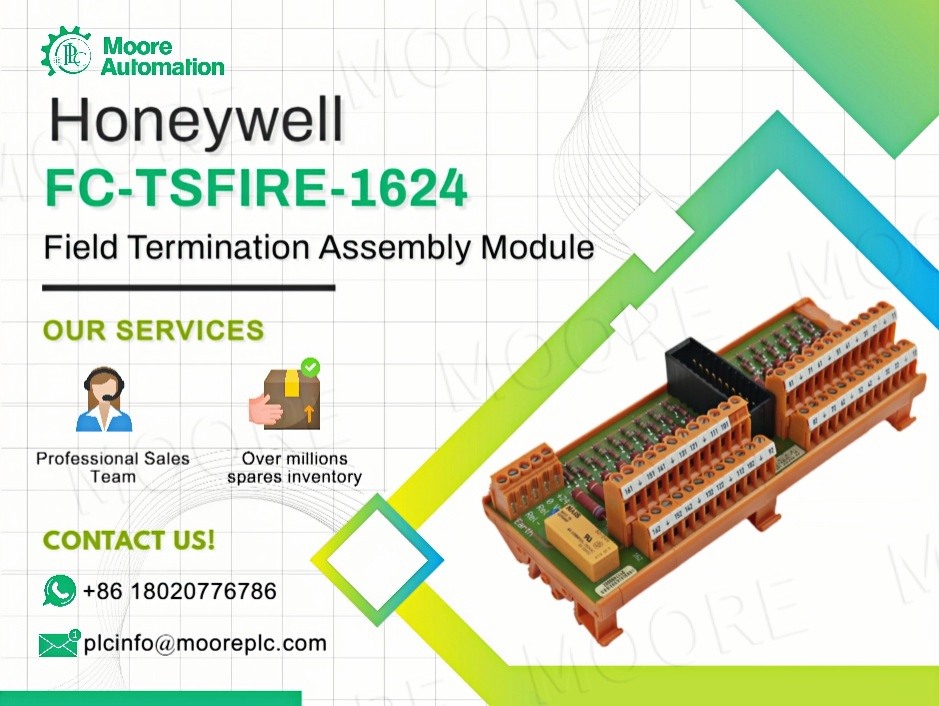
    How Honeywell FC-TSFIRE-1624 Field Termination Assembly Module Simplifies DCS Spare Parts Replacement Strategy
    Overview of FC-TSFIRE-1624 in Honeywell DCS Ecosystem The Honeywell FC-TSFIRE-1624 Field Termination Assembly Module is designed to support structured signal interfacing within industrial automation architectures. From a customer perspective, it is often evaluated as part of a broader DCS spare parts strategy, where consistent connectivity and organized field wiring are essential for stable system maintenance planning. In a typical Honeywell distributed control environment, this module is positioned as a bridge between field instrumentation and control system I/O layers. It helps operators standardize wiring layouts, which is particularly valuable when managing legacy upgrades or maintaining Distributed Control System replacement parts inventories across multiple plant sites. Role in Distributed Control System Replacement Parts Planning For plant engineers and procurement teams, long-term availability of Distributed Control System replacement parts is a critical concern. The FC-TSFIRE-1624 supports structured replacement planning by providing a repeatable termination architecture that simplifies module interchangeability during maintenance cycles. Instead of redesigning field connections during every upgrade, customers can align this assembly with existing Honeywell DCS configurations. This reduces complexity in spare part classification and allows teams to forecast DCS spare parts requirements more accurately across shutdown schedules and lifecycle planning. Benefits from a System Integration Perspective From a system integration standpoint, the FC-TSFIRE-1624 helps unify field signal organization within distributed automation projects. Engineering teams often prioritize reducing wiring ambiguity, especially in large-scale process facilities where multiple subsystems interact. By standardizing termination points, the module supports cleaner documentation and easier fault isolation during maintenance. This becomes especially useful for customers working with a DCS module supplier, as it allows consistent part mapping and simplifies coordination between procurement and engineering departments without redesigning existing control logic structures. Sourcing from a Reliable DCS Module Supplier Selecting a dependable DCS module supplier is an important part of lifecycle asset management. The FC-TSFIRE-1624 is typically sourced through authorized industrial automation channels that specialize in Honeywell ecosystems, ensuring compatibility with existing Distributed Control System frameworks. Customers often prioritize suppliers that can support both active installations and legacy system extensions. This ensures that DCS spare parts like termination assemblies remain available throughout system expansion phases, reducing delays in maintenance planning and helping maintain consistent inventory management practices. Integration Considerations in Field Termination Architecture When integrating the FC-TSFIRE-1624 into an existing control environment, engin...
    All News
  • How Does GE IC693CPU374 CPU Module Support Industrial Spare Parts Management Optimization? 30/04

    2026

    How Does GE IC693CPU374 CPU Module Support Industrial Spare Parts Management Optimization?
    Understanding the GE IC693CPU374 CPU Module The GE IC693CPU374 CPU Module is developed to meet the needs of structured industrial automation systems. It operates with a 133 MHz processor and offers 240KB of user memory, allowing users to handle control programs and data organization across multiple production stages. From a user standpoint, this module supports clear system coordination and simplifies integration into existing setups. With over 2,000 timers and counters, it enables precise sequencing, helping businesses manage different industrial automation parts within complex workflows. Why Efficiency Matters in Industrial Automation Parts In industrial environments, coordination between industrial automation parts directly impacts production flow. The GE IC693CPU374 CPU Module requires 7.4 watts at 5VDC, helping users plan energy usage within their systems. As production requirements increase, many companies look for solutions that allow system expansion without major redesign. This module supports higher workload handling, making it easier for customers to improve process efficiency while keeping current system structures. Improving Spare Parts Management Efficiency Spare parts management is essential for maintaining smooth operations and reducing downtime risks. The GE IC693CPU374 CPU Module helps standardize important components within industrial spare parts inventories, making purchasing and storage more straightforward. By including this module in spare parts planning, businesses can simplify replacement processes and reduce the number of different components they need to manage. This contributes to more organized industrial spare parts handling and better inventory visibility. System Flexibility and Integration The GE IC693CPU374 CPU Module can support up to 8 baseplates within a single system, allowing users to design configurations that match their operational needs. This makes it easier to adjust system layouts as production demands evolve. For companies working with various industrial automation parts, this flexibility reduces system complexity and supports consistent configurations across multiple production lines, improving overall coordination. Optimizing Cost and Resource Allocation Controlling costs is a key concern when managing industrial spare parts. The GE IC693CPU374 CPU Module supports better planning by combining processing capability with controlled power usage. When integrated into spare parts management strategies, it helps businesses maintain balanced inventory levels and avoid excess stock. This approach allows for more efficient allocation of resources while supporting continuous system operation. Application Areas Municipal engineering: Water supply pumping stations, sewage treatment systems, auxiliary equipment for urban rail transit. Energy and power: Control of power generation units in power plants, monitoring of substations, control of waste heat boilers. Petrochemicals: Monitoring of oil pipelines in refiner...
    All News
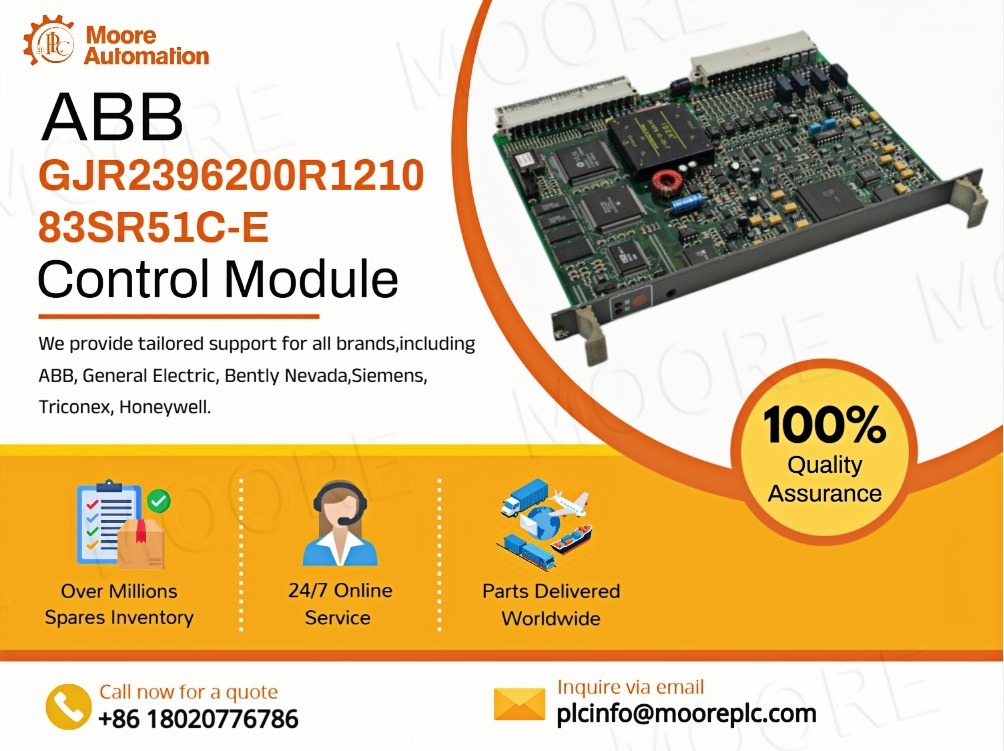
  • How ABB Enhances Reliability with the GJR2396200R1210 83SR51R1210 Control Module in Modern Industrial Systems 24/04

    2026

    How ABB Enhances Reliability with the GJR2396200R1210 83SR51R1210 Control Module in Modern Industrial Systems
    Understanding the Core Value of the ABB Control Module From an end-user standpoint, system dependability is critical to maintaining uninterrupted production. The ABB GJR2396200R1210 83SR51R1210 Control Module addresses this need with a practical and efficient design. Featuring 12 input channels and 2 output channels, it enables accurate signal acquisition and control without adding unnecessary system complexity. Another advantage is its minimal power consumption of only 5 W, which helps reduce energy usage over time. For customers sourcing DCS spare parts or optimizing turbine monitoring solutions, this module offers stable performance and dependable signal processing, making it a reliable addition to modern automation systems. Why Technical Specifications Matter in Real-World Applications In real industrial environments, choosing the right components goes beyond basic compatibility. As part of Distributed Control System replacement parts, the ABB 83SR51R1210 provides 500 V DC isolation, helping protect systems from electrical interference and ensuring accurate data transmission. The module also supports operation in temperatures ranging from –20 °C to +60 °C, allowing it to function reliably across different working conditions. Its extended storage range of –40 °C to +85 °C adds flexibility for inventory management. For buyers working with a DCS module supplier, these specifications translate into reduced risk and improved long-term stability. Where This Module Fits in Turbine Supervisory Systems In turbine supervisory instrumentation components, compatibility and durability are often key concerns. This ABB control module integrates efficiently into existing systems, making it suitable for both retrofitting older setups and implementing new configurations. Its design supports applications such as vibration analysis, process monitoring, and auxiliary protection systems. By including this unit in DCS spare parts planning, operators can minimize unexpected downtime and ensure faster maintenance response, which is essential in high-demand industrial environments. When to Choose ABB 83SR51R1210 for Your System Upgrade Upgrading control systems at the right time can significantly improve operational performance. This module becomes a strong candidate when existing components show signs of instability or when maintenance costs begin to rise. Its ability to handle humidity levels from 5% to 95% (non-condensing) ensures consistent operation even in challenging conditions. For industries that run continuously, such as energy production or process manufacturing, introducing reliable Distributed Control System replacement parts like this ABB module can enhance system resilience and reduce unplanned interruptions. How This Module Supports Cost-Effective Maintenance Strategies Cost control remains a major concern for most facilities. The ABB 83SR51R1210 helps address this by combining durability with low energy requirements. Its long service life reduces the ...
    All News
  • Why and How Does Honeywell CC-PAOH01 51405039-175 Analog Output Module Strengthen DCS Spare Parts Strategy and Industrial Reliability? 16/04

    2026

    Why and How Does Honeywell CC-PAOH01 51405039-175 Analog Output Module Strengthen DCS Spare Parts Strategy and Industrial Reliability?
    Understanding the Role of CC-PAOH01 in Modern DCS Environments From a customer’s perspective, the Honeywell CC-PAOH01 51405039-175 Analog Output Module is not just a hardware component—it is a critical execution point within a Distributed Control System (DCS). In many industrial plants, stable analog output determines whether field actuators respond accurately to process demands. When operators evaluate DCS spare parts, this module often becomes a priority due to its direct impact on process continuity. For facilities relying on aging infrastructure, securing reliable Distributed Control System replacement parts is a strategic decision rather than a simple maintenance task. The CC-PAOH01 provides 16-channel 4–20 mA output capability, enabling scalable control across multiple loops while reducing downtime risks associated with legacy system failure. Technical Strength Behind Stable 4–20 mA Output Performance The CC-PAOH01 module is designed around industry-standard 4–20 mA output, ensuring compatibility with a wide range of industrial actuators and instrumentation. Its ability to support 16 output channels makes it suitable for medium to large-scale process automation environments where output density matters. From a technical standpoint, features like <100 mV ripple, ±0.35% calibrated accuracy at 25°C, and low temperature drift (0.005% FS/°C) contribute to stable field performance. These parameters reduce signal noise and improve process predictability, especially in high-precision operations. For engineers sourcing from a DCS module supplier, such stability directly translates into fewer calibration cycles and lower long-term maintenance cost, which is critical for industries operating 24/7. Reliability, Drift Control, and Lifecycle Maintenance Value In real-world plant operations, reliability is often more important than peak performance. The CC-PAOH01 module is engineered to minimize output deviation over time, ensuring that process control remains consistent even under thermal and electrical stress conditions. Customers managing DCS spare parts inventories often prioritize modules with predictable drift behavior and strong readback diagnostics. With a ±4% full-scale readback accuracy, operators can detect anomalies early and prevent system-wide disruptions. This reliability reduces emergency shutdown risks and supports long-term lifecycle maintenance planning. For aging systems, maintaining a stock of Distributed Control System replacement parts like this module ensures operational resilience and reduces dependency on last-minute procurement. Integration into Existing DCS Architectures and Replacement Strategy The CC-PAOH01 module is designed for seamless integration into Honeywell-based control architectures, making it a preferred choice when upgrading or replacing legacy output modules. Its compatibility ensures minimal configuration changes during system refurbishment. From a procurement standpoint, companies often rely on a qualified D...
    All News
  • When Is the Right Time to Replace TSI Industrial Automation Spare Parts in Plant Operations? 08/05

    2026

    When Is the Right Time to Replace TSI Industrial Automation Spare Parts in Plant Operations?
    Understanding the Right Timing for Replacing TSI Spare Parts in Industrial Plants For most plant operators, the biggest challenge is not whether TSI spare parts will eventually wear out, but when they should be replaced without disrupting production. From a customer’s perspective, the goal is simple: avoid unplanned downtime while keeping asset performance stable. In real operations, waiting for a complete failure is rarely a cost-effective strategy, especially for critical Turbine Supervisory Instrumentation components. Many plants now rely on condition-based maintenance and digital monitoring of TSI modules to identify early warning signs. Instead of following a fixed replacement schedule, operators increasingly focus on performance trends such as signal drift, unstable readings, or intermittent communication errors. These subtle indicators often signal that replacement should be planned rather than delayed. Common Failure Indicators in Turbine Supervisory Instrumentation Components In industrial environments, Turbine Supervisory Instrumentation components play a critical role in ensuring turbine safety and efficiency. However, these systems often degrade gradually, making early detection essential. Customers frequently report issues such as inconsistent vibration readings, temperature inaccuracies, or alarm delays as early warning signs. From a maintenance perspective, these symptoms should never be ignored. In modern facilities, engineers also track degradation patterns in TSI modules through diagnostic tools integrated into control systems. When performance deviation becomes consistent, it is often more economical to replace TSI spare parts rather than recalibrate repeatedly. This approach reduces operational risk and improves long-term reliability. Operational Risks of Delayed Replacement in Critical Systems Delaying replacement of aging components can significantly increase operational risk, especially in high-load turbine environments. A failing sensor or module can lead to incorrect supervisory data, which directly impacts safety decisions and plant efficiency. In some cases, even a minor delay can escalate into unplanned shutdowns or expensive repairs. For example, systems using GE UR7KH protection and monitoring modules rely heavily on accurate input from surrounding instrumentation. If connected TSI modules begin to degrade, the entire protective logic chain may become less responsive. From a customer standpoint, the cost of unexpected downtime often far exceeds the investment in proactive replacement of TSI spare parts, making timely action a critical business decision. Evaluating Lifecycle Strategy for TSI Modules and Plant Assets A well-structured lifecycle strategy helps plant operators avoid reactive maintenance. Instead of focusing only on failures, many facilities now analyze usage cycles, environmental conditions, and historical performance of TSI modules. This allows maintenance teams to forecast when replacement should occur...
    All Blogs
  • Why are global plants accelerating upgrades to HIMA safety automation spare parts? 28/04

    2026

    Why are global plants accelerating upgrades to HIMA safety automation spare parts?
    Aging assets pushing safety systems closer to operational limits Across many process industries, existing automation systems are reaching or exceeding their intended service life. From an operator’s perspective, the concern is no longer only maintenance cost, but the increasing probability of unexpected downtime or safety loop instability. Even minor performance deviations can lead to costly interruptions in continuous production. This situation is driving more attention toward DCS spare parts planning at the plant level. Instead of handling failures when they occur, engineering teams are building structured replacement schedules. The objective is to secure long-term reliability and reduce unplanned shutdown risks in critical operations. Obsolescence challenges in legacy control environments One of the key issues plant engineers face today is hardware obsolescence. As automation platforms age, sourcing compatible components becomes more difficult, and delivery times are often unpredictable. This creates pressure on maintenance teams who must balance uptime requirements with limited spare availability. To manage this risk, many operators are adopting a lifecycle-based approach using Distributed Control System replacement parts. Rather than replacing individual failed items in isolation, they are aligning spare strategies with system-wide upgrades. This helps reduce compatibility issues and improves maintenance predictability during scheduled outages. Preference for HIMA systems in safety-critical modernization projects In safety automation upgrades, many end users continue to rely on HIMA due to its established track record in high-integrity applications. From a customer standpoint, the key advantage is system stability combined with long-term upgrade flexibility. Platforms such as HIMA HIMAX are often selected as part of phased modernization projects. Instead of replacing entire control architectures, plants upgrade selected layers while maintaining overall system structure. This minimizes engineering disruption while still improving diagnostics, reliability, and safety performance in critical processes. Selecting the right modules for stable system performance Spare part selection is a critical factor in ensuring uninterrupted operation of safety systems. Engineers typically evaluate compatibility, redundancy behavior, and long-term support availability before finalizing replacement components. Commonly used modules such as HIMAX X-AO1601, HIMAX X-DI3201, and HIMAX X-CPU01 are often chosen for upgrade consistency. These components help maintain system alignment while simplifying integration work. For maintenance teams, standardization also reduces configuration effort and improves troubleshooting efficiency during plant turnaround periods. Supply reliability and the role of trusted sourcing channels Global supply chain instability has made procurement planning more complex for industrial operators. Delays in receiving critical automation compone...
    All Blogs
  • How Digitalization Is Transforming PLC Spare Parts Management 22/04

    2026

    How Digitalization Is Transforming PLC Spare Parts Management
    The Growing Challenge of Managing Industrial Spare Parts Running a modern production facility means dealing with constant pressure. The old ways of handling industrial spare parts no longer work—unexpected machine stops, long shipping waits, and poor team coordination create daily headaches. These issues drain budgets and push deadlines back. Too many shops still rely on paper logs or basic spreadsheets, leaving them stuck in a reactive mode. Without solid forecasting, they either hoard too much stock or face desperate shortages when a key part is needed. Why Digitalization Matters in Spare Parts Management Bringing digital tools into spare parts management changes the game by shifting decisions from guesswork to real data. Connected platforms let firms track part usage, monitor how components hold up, and set up automatic reorder points. For the customer, this means far fewer unexpected events and a much clearer maintenance schedule. Digital methods help stretch the life of industrial automation parts, so teams can fix issues before a breakdown stops the line. Real-Time Inventory Visibility and Control Knowing your inventory down to the minute gives any operation a serious edge. Modern digital dashboards offer live tracking of industrial spare parts, showing exactly what is on the shelf and which bin it sits in. This speed makes emergency response much smoother. For example, when a critical SIEMENS 6SL3055-0AA00-4CA5 fails, the team can instantly spot a replacement and get production rolling again. Good visibility also keeps different shifts and warehouses on the same page. Smart Procurement and Supplier Integration Buying parts has gotten smarter thanks to digital links between buyers and sellers. These systems simplify how companies source industrial automation parts and remove a lot of old paperwork. With a connected platform, ordering something like 6SL3320-1TE33-1AA3 takes just a few clicks. These tools also shine a light on real pricing, honest delivery dates, and which suppliers actually deliver on time, helping buyers avoid bad deals and unexpected delays. Predictive Maintenance and Reduced Downtime One of the strongest gains from going digital is catching equipment trouble before it stops work. Smart sensors and analysis software spot small warning signs in industrial spare parts long before a crash happens. Take a drive like 6SL3210-1PE31-8UL0—tracking its temperature and vibration lets a crew swap it during a planned stop, not at 2 AM on a Sunday. This forward-looking method kills surprise breakdowns, keeps output high, and trims repair bills over time. Building a Future-Ready Spare Parts Strategy Staying ahead means rethinking how you handle spare parts management from the ground up. Rolling out digital systems, cleaning up messy workflows, and teaching staff new skills are all must-dos. From the customer’s chair, the goal stays simple: get reliability, cut downtime, and hold the line on costs. By putting digital technology to work, ...
    All Blogs
  • What’s New in Honeywell Automation Spare Parts for Smart Factories? 14/04

    2026

    What’s New in Honeywell Automation Spare Parts for Smart Factories?
    The Rising Demand for Reliable Automation Spare Parts Modern factories are built around continuous operation, where interruptions can quickly affect output and customer commitments. From the buyer’s perspective, securing stable and high-performing DCS spare parts is a direct way to safeguard production and reduce unexpected downtime. In parallel, procurement teams are paying closer attention to the quality of Distributed Control System replacement parts. Instead of focusing only on price, more businesses now prioritize long-term usability, system fit, and fast replacement cycles to keep operations steady. What’s New in Honeywell Automation Spare Parts Honeywell is evolving its spare parts offerings to better align with digital manufacturing needs. Newer components are designed to operate more reliably under continuous workloads while offering improved integration with existing automation platforms. For end users, these updates mean greater operational confidence and less reliance on emergency maintenance. Enhanced diagnostics also allow earlier detection of performance issues, helping teams act before failures impact production. Key Models Supporting Smart Factory Operations In practical applications, proven models remain essential for maintaining system consistency. Honeywell CC-PAIH02 51405038-376 and CC-PAOH01 51405039-175 are commonly deployed in environments that demand accurate control and stable performance. The DWR06 model is also frequently used to support dependable system functionality. To ensure these components perform as expected, many companies choose to work with a qualified DCS module supplier. This approach reduces the likelihood of counterfeit or incompatible parts entering the system and helps maintain smooth integration. How Spare Parts Improve Operational Efficiency Using reliable DCS spare parts can make a noticeable difference in daily operations. Stable components help maintain consistent signal processing and reduce the chances of system interruptions, allowing production lines to run more efficiently. Additionally, investing in durable Distributed Control System replacement parts can lower overall maintenance pressure. With fewer unexpected failures, businesses can shift toward planned servicing, which is typically more cost-effective and less disruptive. Choosing the Right DCS Module Supplier Partnering with the right DCS module supplier plays a critical role in long-term system performance. Customers should evaluate suppliers based on product authenticity, response speed, and their ability to provide ongoing support. A reliable supplier does more than deliver parts—they help ensure correct selection and smooth implementation. This reduces operational risks and supports consistent performance across the entire automation system. Future Trends in Automation Spare Parts Automation spare parts are becoming more aligned with intelligent manufacturing systems. With increasing use of connected technologies, components are ex...
    All Blogs
leave a message
If you are interested in our products and want to know more details,please leave a message here,we will reply you as soon as we can.
submit

Our hours

Mon 11/21 - Wed 11/23: 9 AM - 8 PM
Thu 11/24: closed - Happy Thanksgiving!
Fri 11/25: 8 AM - 10 PM
Sat 11/26 - Sun 11/27: 10 AM - 9 PM
(all hours are Eastern Time)
Contact Us:+86 18030235313

Home

Products

whatsApp

Contact Us