CompactLogix Communication Modules

News

  • Bently nevada 3500/22M 288055-01 Transient Data Interface
    Bently nevada 3500/22M 288055-01 Transient Data Interface
    October 09, 2024

    Product Description: The Bently Nevada 3500/22M 288055-01 Transient Data Interface is a high-performance device designed for monitoring and analyzing dynamic machine data. It captures transient data in real-time, providing critical insights into equipment health. This interface integrates seamlessly with Bently Nevada's monitoring systems, supporting various data acquisition and analysis functions to enhance equipment reliability and performance. Specifications: Inputs: Power Consumption :10.5 Watts Data Front Panel :USB-B 10Base-T/100Base-TX I/O: 10Base-T or 100Base-TX Ethernet, autosensing 100Base-FX I/O : 100Base-FX Fiber-Optic Ethernet Outputs: Front Panel LEDs OK LED : Indicates when the 3500/22M is operating properly TX/RX LED: Indicates when the 3500/22M is communicating with the other modules in the rack TM LED: Indicates when the 3500 rack is in Trip Multiply mode CONFIG OK LED:Indicates that the 3500 rack has a valid configuration Common questions about the Bently Nevada 3500/22M 288055-01 include: 1.What is its function? It captures and analyzes transient data in real-time for monitoring machine dynamics. 2.Is it compatible with other systems? Yes, it integrates seamlessly with various Bently Nevada monitoring systems. 3.What are the installation requirements? Follow the manufacturer's guidelines for proper installation and connections. 4.What is the data output format? It supports multiple data formats, depending on system configuration. 5.What is the maintenance schedule? Regular checks are recommended to ensure the device operates correctly. BENTLY NEVADA 330103-05-10-10-02-05 BENTLY NEVADA 330105-02-12-05-02-05 BENTLY NEVADA 82365-01 BENTLY NEVADA 330878-90-00 BENTLY NEVADA 330104-00-05-05-02-CN BENTLY NEVADA 21508-02-12-10-02 BENTLY NEVADA 146055-10-02-00 BENTLY NEVADA 330905-00-10-10-02-CN BENTLY NEVADA 990-04-70-02-00 BENTLY NEVADA 330103-00-08-05-02-CN BENTLY NEVADA 330130-030-01-CN BENTLY NEVADA 330104-06-14-50-02-00 BENTLY NEVADA 133827-01 BENTLY NEVADA 16710-06 BENTLY NEVADA 330104-00-15-10-02-00 BENTLY NEVADA PTQ-PDPMV1 BENTLY NEVADA 330101-00-50-10-02-00 BENTLY NEVADA 136711-02 BENTLY NEVADA 330102-00-35-10-02-00 BENTLY NEVADA 330105-02-12-10-02-00 BENTLY NEVADA 990-05-XX-03-CN 104M6732-01 BENTLY NEVADA 3500/94 145988-01 BENTLY NEVADA 991-06-XX-01-00 MOD:169955-01 BENTLY NEVADA 100M1554 BENTLY NEVADA 135137-01 BENTLY NEVADA 330130-045-02-00 BENTLY NEVADA 330901-11-25-10-01-00 BENTLY NEVADA 128031-01C 128031-01  BENTLY NEVADA 330103-00-16-10-02-05 BENTLY NEVADA 84661-10 BENTLY NEVADA 330180-92-05 BENTLY NEVADA 330103-00-09-05-02-00 BENTLY NEVADA 330130-070-00-05 BENTLY NEVADA 990-04-70-01-05 BENTLY NEVADA 330905-00-10-10-02-00 BENTLY NEVADA 3500/93 135799-01 BENTLY NEVADA 330103-06-13-10-02-00 BENTLY NEVADA 330130-040-01-00 BENTLY NEVADA 330103-10-20-10-02-00 BENTLY NEVADA 106M1081-01

    Read More
  • YOKOGAWA SDV144-S33 Input Module
    YOKOGAWA SDV144-S33 Input Module
    October 09, 2024

    YOKOGAWA SDV144-S33 Input Module Description: Manufacturer : Yokogawa Product No. : SDV144-S33 Product type : Digital Input Module Number of input channels : 16-channel, module isolation Input response time : 40 ms maximum External power supply : 24 V DC +20 % / -10 % Current consumption : 290 mA maximum (5 V DC) 140 mA maximum (24 V DC) Withstanding voltage : 2 kV AC between input signal and system for 1 minute, 16-input line collectively connected The YOKOGAWA SDV144S33 Input Module is a highperformance device designed for use in industrial automation and process control systems. This module provides reliable and precise input capabilities for various types of signals, including analog and digital inputs, making it suitable for a wide range of applications. Featuring advanced signal processing technology, the SDV144S33 ensures accurate data acquisition, enabling operators to monitor and control processes effectively. The module supports multiple input configurations, allowing for flexible integration into existing systems and facilitating the monitoring of different parameters simultaneously. Common Questions About the YOKOGAWA SDV144-S33 Input Module: 1.What is the primary function of the SDV144-S33 Input Module? The SDV144S33 Input Module is designed to provide reliable input capabilities for various signal types, including analog and digital inputs, in industrial automation and process control systems. 2.What types of signals can the SDV144-S33 handle? This module supports multiple input configurations, allowing it to process a variety of signals, making it versatile for monitoring different parameters in a system. 3.How does the SDV144-S33 ensure accurate data acquisition? The module utilizes advanced signal processing technology to ensure precise measurement...

    Read More
  • ABB Introduces the TB807 3BSE008538R1 Modulebus Terminator: Enhancing Reliability in Automation Systems
    ABB Introduces the TB807 3BSE008538R1 Modulebus Terminator: Enhancing Reliability in Automation Systems
    September 14, 2024

    ABB TB807 3BSE008538R1 advanced terminator is set to bolster the reliability and performance of automation systems by providing a robust solution for Modulebus communication networks. Enhancing System Stability and Performance The TB807 Modulebus Terminator is engineered to improve the integrity of Modulebus networks by ensuring stable and reliable communication between devices. It plays a crucial role in maintaining signal quality and preventing data transmission errors, which is essential for the seamless operation of automation systems. Key Features and Benefits Reliable Communication: The TB807 Modulebus Terminator ensures high-quality signal transmission, which minimizes the risk of communication failures and system downtime. Robust Design: Built with durability in mind, the terminator is designed to withstand the rigors of industrial environments, ensuring long-term reliability and performance. Ease of Integration: The TB807 is compatible with ABB’s extensive range of automation products, making it a versatile choice for enhancing existing systems or integrating into new setups. Applications and Use Cases The TB807 Modulebus Terminator is ideal for a variety of applications where reliable communication is critical. It is particularly well-suited for use in complex automation systems where multiple devices are connected via Modulebus networks. By improving communication stability, the TB807 helps ensure that system operations run smoothly and efficiently. What are the typical applications for the TB807 Modulebus Terminator? It is ideal for applications where reliable Modulebus communication is crucial, such as in complex automation systems with multiple connected devices. What industrial environments is the TB807 suitable for? The terminator is built to withstand the demands of industrial environments, ensuring durability and long-term reliability. How do I install the TB807 Modulebus Terminator? Installation procedures are provided in the product’s technical documentation. It typically involves integrating the terminator into the Modulebus network to ensure proper signal management.

    Read More
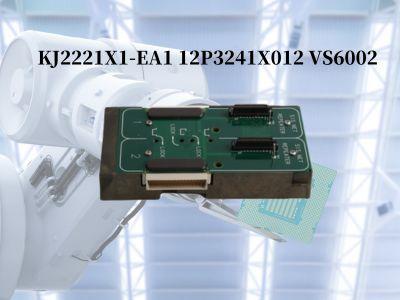
  • Emerson KJ2221X1-EA1 12P3241X012 VS6002: High-Performance Module for Industrial Automation and Control
    Emerson KJ2221X1-EA1 12P3241X012 VS6002: High-Performance Module for Industrial Automation and Control
    September 13, 2024

    The KJ2221X1-EA1 12P3241X012 VS6002 is a high-performance industrial component widely used in various process control and automation applications. Manufactured by Emerson, this module plays a critical role in ensuring reliable and efficient operation in industrial environments, especially for industries such as oil and gas, power generation, and chemical processing. 1. Key Features High reliability: Designed to withstand harsh industrial conditions, the KJ2221X1-EA1 module offers excellent durability and performance. Compact Design: This component is designed with space optimization in mind, making it easy to integrate into various control systems. Seamless Integration: It supports seamless connectivity with other control devices and systems, offering flexible installation options. Advanced Communication Capabilities: The module ensures fast and efficient data transmission, enhancing system performance and operational control. 2. Applications The KJ2221X1-EA1 12P3241X012 VS6002 module is ideal for a wide range of industrial automation applications, including: Process Control Systems: It helps monitor and control key processes in industries such as chemical, petrochemical, and oil refining. Power Generation: The module is often used in power plants to enhance control systems, ensuring smooth and efficient operations. Manufacturing Automation: It plays a role in automated manufacturing processes, helping to maintain precision and operational efficiency. 3. Why Choose the KJ2221X1-EA1 12P3241X012 VS6002? Longevity: The KJ2221X1-EA1 model is built to last, with robust materials that ensure a long service life even in challenging environments. Compatibility: It is designed to integrate easily with other devices in Emerson’s control system lineup, ensuring flexibility and scalability for different industrial needs. Efficient Performance: This module guarantees optimal communication and processing speed, reducing downtime and enhancing system productivity. 4. Technical Specifications Model Number: KJ2221X1-EA1 Part Number: 12P3241X012 Series: VS6002 Brand: Emerson Operating Temperature: Designed for industrial use in extreme temperature ranges. Power Requirements: Minimal power consumption for efficient operation.

    Read More
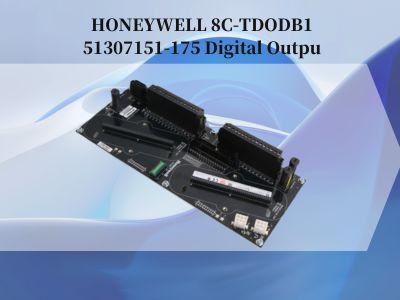
  • HONEYWELL 8C-TDODB1 51307151-175 Digital Output redundant IOTA, coated
    HONEYWELL 8C-TDODB1 51307151-175 Digital Output redundant IOTA, coated
    September 12, 2024

    Honeywell 8C-TDODB1 51307151-175 Digital Output Redundant IOTA with Coating: Enhancing Reliability and Performance in Critical Control Systems In industrial control systems, reliability, flexibility, and robust performance are essential to ensuring uninterrupted operations and safeguarding critical processes. The Honeywell 8C-TDODB1 51307151-175 Digital Output Redundant IOTA with coating is specifically designed to meet these stringent requirements, providing an advanced solution for digital output control in demanding industrial environments. What Is the Honeywell 8C-TDODB1 51307151-175? The 8C-TDODB1 is a Digital Output Redundant IOTA (Input/Output Terminal Assembly) designed for Honeywell’s Experion Process Knowledge System (PKS). It provides secure, redundant output capabilities to enhance the reliability and availability of digital control operations, ensuring that critical processes are continuously monitored and managed without disruption. The module includes a conformal coating to protect sensitive electronic components from harsh environmental conditions, such as moisture, dust, and corrosive substances. This additional layer of protection makes the 8C-TDODB1 suitable for applications in industries where extreme conditions could compromise the integrity of standard electronic components. Applications The Honeywell 8C-TDODB1 51307151-175 Digital Output Redundant IOTA is ideal for use in a variety of industries, including: Oil & Gas: Where operational reliability and system redundancy are critical to preventing production shutdowns. Chemical Processing: Where environmental protection is essential to shield electronics from corrosive substances. Power Generation: Where continuous control and monitoring of critical systems are required for safe, reliable operations. Manufacturing: In automated systems that rely on high-performance digital output controls to manage complex processes. Conclusion The Honeywell 8C-TDODB1 51307151-175 Digital Output Redundant IOTA with conformal coating is a robust, reliable, and high-performance solution designed to meet the needs of industrial control systems operating in demanding environments. With its redundant output capabilities and environmental protection, this module helps ensure operational continuity, enhance system uptime, and minimize maintenance efforts, making it an indispensable component for critical process control systems. Applications The Honeywell 8C-TDODB1 51307151-175 Digital Output Redundant IOTA is ideal for use in a variety of industries, including: Oil & Gas: Where operational reliability and system redundancy are critical to preventing production shutdowns. Chemical Processing: Where environmental protection is essential to shield electronics from corrosive substances. Power Generation: Where continuous control and monitoring of critical systems are required for safe, reliable operations. Manufacturing: In automated systems that rely on high-performance digital output controls...

    Read More
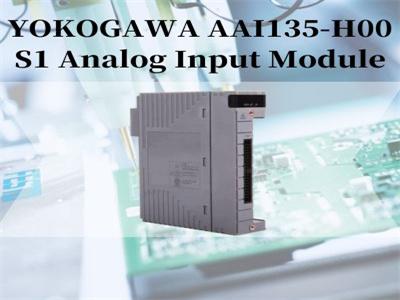
  • YOKOGAWA AAI135-H00 S1 Analog Input Module
    YOKOGAWA AAI135-H00 S1 Analog Input Module
    September 11, 2024

    The AAI135-H00 S1 is an analog input module used in Yokogawa's control systems. It is designed to receive signals from field devices such as sensors and transmitters and convert them into digital signals for processing. For the combination of AAI135/AAI835/AAP135; ATK4A; AEA4D, each input channel can be configured to either: 2-Wire Transmitter 2-Wire Input (with transmitter power supply), or 4-Wire Transmitter 2-Wire Input (without transmitter power supply). For the combination of AAI135/AAP135; ATI3A; AEA3D and the combination of AAI835; ATB3A; AEA3D, all input channels are configured as 2-Wire Transmitter 2-Wire Input (with transmitter power supply). Model: AAI135 Cable Connection: INA Input Type: 2-Wire Transmitter Input with Power Supply When the power to models AAI141, AAI143, AAI841, AAI135, or AAI835 is off or malfunctioning, the current input loop will be in an open state. Understanding the YOKOGAWA AAI135-H00 S1 Analog Input Module: Features, Applications, and Compatibility 1.What happens if the AAI135-H00 S1 loses power or experiences a failure? In the event of a power loss or failure, the current input loop may enter an open state, which could disrupt the monitoring of connected devices. 2.What is the operating temperature range for the AAI135-H00 S1 module? The AAI135-H00 S1 is designed to operate in a wide range of industrial environments, typically within standard operating temperature ranges. 3.Can the AAI135-H00 S1 be used with both 2-wire and 4-wire transmitters? Yes, the module can be configured to work with both 2-wire and 4-wire transmitters, depending on the application requirements. 4.What makes the AAI135-H00 S1 suitable for industrial applications? Its ability to handle multiple input types, provide transmitter power, and integrate seamlessly into Yokogawa's robust control systems makes it highly suitable for critical industrial applications. 5.How many input channels does the AAI135-H00 S1 module support? This module supports 16 input channels, allowing multiple signals to be monitored simultaneously. 6.What types of signals can the AAI135-H00 S1 handle? It supports a variety of analog input signals, including voltage and current, which are typically generated by 2-wire or 4-wire transmitters. Does the AAI135-H00 S1 module provide a power supply for 2-wire transmitters? Yes, the module can provide power for 2-wire transmitters, allowing it to directly power and receive signals from field transmitters. What is the primary application of the AAI135-H00 S1 module? The module is primarily used in industrial process control systems to monitor and manage critical process variables such as temperature, pressure, and flow. Is the AAI135-H00 S1 compatible with other Yokogawa control systems? Yes, it is compatible with Yokogawa systems such as CENTUM VP and ProSafe-RS for both general and safety-related applications.

    Read More
  • Woodward 8440-2052 easYgen-3200 Genset Controllers
    Woodward 8440-2052 easYgen-3200 Genset Controllers
    September 09, 2024

    The easYgen-3200 is available in various configurations, including the 8440-2052 model and CONTROL-EASYGEN-3200-5/P2, and offers an advanced solution for engine-generator control and protection, with cutting-edge peer-to-peer paralleling features in an intuitive, highly durable package. Features & Functionality Woodward's easYgen-3200™ Series paralleling genset controllers offer exceptional versatility and value for OEM switchgear manufacturers, generator packagers, and system integrators. These controllers integrate comprehensive engine-generator control and protection with advanced peer-to-peer paralleling capabilities, all within a robust, user-friendly design. The easYgen-3200 features LogicsManager™ programmable logic, providing unparalleled application flexibility, which often eliminates the need for additional PLC control. However, it can seamlessly integrate with SCADA or PLC-based control systems when needed. The easYgen-3200 is an ideal solution for standardizing genset control across various distributed power generation applications, from stand-alone emergency backup systems to parallel load sharing of up to 32 gensets in complex, segmented distribution systems with multiple utility feeds and tie breakers. Applications: Emergency standby: data centers, hospitals, commercial and industrial facilities Distributed Generation (DG): utility-dispatchable power for peak demand response Islanded prime-power: oil & gas exploration, marine applications, remote villages, rental/mobile units Microgrid: military, government, net-zero communities, universities Utility paralleling: peak shaving, demand curtailment Cogeneration (CHP): wastewater treatment, biogas production/containment Switchgear upgrades: retrofitting generator control for load sharing and paralleling Key Features: True RMS voltage and current sensing (generator, bus, and mains) to minimize harmonic susceptibility CAN network communication/control with engine ECU (supports standard SAE-J1939 protocol and several proprietary engine OEM protocols) Serial Modbus RTU (slave) communication for SCADA annunciation and external control Configuration via PC/laptop using the Woodward ToolKit service tool Connectivity with the RP-3200 Remote Panel for full annunciation, control, and configuration over CANopen protocol at up to 250 meters Compliance agency/marine approvals: CE, UL/cUL, CSA, BDEW, ABS, Lloyd’s Register (*additional marine approvals available in marine package) Automatic mains failure (AMF) detection, decoupling, and emergency run with dead bus close Automatic synchronization with phase-match, positive/negative slip-frequency, and run-up (dead field) paralleling Circuit breaker close/open control: GCB only, GCB and MCB (ATS function), or external (no control) Proportional load sharing (isochronous or droop) of up to 32 gensets, regardless of size Base loading, import/export control, and asymmetrical loading through external base load input Automatic load-dependent start/st...

    Read More
  •  GE Fanuc  IC698CHS017 Rx7i 17-Slot Rear Mount Rack
    GE Fanuc IC698CHS017 Rx7i 17-Slot Rear Mount Rack
    August 30, 2024

    Product Description The IC698CHS017 is a 17-slot rack designed for front and rear mounting, capable of supporting Series 90-70, VME, and RX7i modules. The module connectors on the rack backplane are spaced 0.8 inches (20.3 mm) apart, accommodating both single-width and double-width modules. Slot 0 of the rack is dedicated to the power supply, while slot 1 is designated for the CPU. The remaining slots can host a variety of modules, allowing for flexible configurations. The IC698CHS017 is classified as an “open equipment” rack and must be installed within an enclosure with at least an IP54 protection rating. The rack dimensions are 11.15 inches in height (283 mm), 19 inches in width (483 mm), and 7.5 inches in depth (190 mm). Additionally, a clearance of 9 inches (23 cm) is required to install a cooling fan between racks. Note that a cooling fan is necessary when certain modules are installed, and each fan is tailored for a specific power source. This rack does not require jumpers or DIP switches for addressing modules; instead, it features slot sensing for I/O modules. Input/output module point referencing is managed using CIMPLICITY Machine Edition Logic Developer-PLC software. The rack supports automatic daisy chaining of interrupt acknowledge signals and bus grant signals. The IC698CHS017 is compatible with RX7i AC power supplies and is capable of handling higher currents. J2 connectors on the rack backplane allow for 64-bit per cycle VME transfer speeds. For grounding, RX7i and Series 90-70 modules have different requirements. RX7i modules require the metal faceplates to be securely attached to the enclosure, while Series 90-70 modules use a built-in ground clip that contacts the enclosure upon installation. To properly ground the rack, use an AWG #12 (3.33 mm²) wire along with a nut and star washer to connect the side-mounted ground studs to the earth ground. Technical Specifications Module Type: Standard Rack Mounting Location: Rear Number of Slots: 15 Single Width, 8 Double Width Rack Slot Size: 0.8 inches Dimensions: 11.15 x 19.0 x 7.5 inches (H x W x D) Power Supply: RX7i Power Supply in Slot 0 Features Provides slot sensing for rack-type I/O modules Dimensions: 11.15 inches (H) x 19 inches (W) x 7.5 inches (D) Number of Slots: Slot 0: Power supply slot, 2.4 inches wide Slot 1: CPU installation slot Slots 2 through 17: 0.8 inches wide for various modules Maximum Current (from RX7i Power Supplies) 100W Power Supply: +5V: 20 Amps +12V: 2 Amps -12V: 1 Amp 350W Power Supply: +5V: 60 Amps +12V: 12 Amps -12V: 4 Amps I/O references are user-configurable using programming/configuration software. The IC698CHS017 is a versatile and robust rack solution, ideal for supporting a wide range of industrial automation needs.

    Read More
1 ... 30 31 32 33
A total of  33  pages

News & Blogs

  • How Honeywell FC-TSFIRE-1624 Field Termination Assembly Module Simplifies DCS Spare Parts Replacement Strategy 09/05

    2026

    How Honeywell FC-TSFIRE-1624 Field Termination Assembly Module Simplifies DCS Spare Parts Replacement Strategy
    Overview of FC-TSFIRE-1624 in Honeywell DCS Ecosystem The Honeywell FC-TSFIRE-1624 Field Termination Assembly Module is designed to support structured signal interfacing within industrial automation architectures. From a customer perspective, it is often evaluated as part of a broader DCS spare parts strategy, where consistent connectivity and organized field wiring are essential for stable system maintenance planning. In a typical Honeywell distributed control environment, this module is positioned as a bridge between field instrumentation and control system I/O layers. It helps operators standardize wiring layouts, which is particularly valuable when managing legacy upgrades or maintaining Distributed Control System replacement parts inventories across multiple plant sites. Role in Distributed Control System Replacement Parts Planning For plant engineers and procurement teams, long-term availability of Distributed Control System replacement parts is a critical concern. The FC-TSFIRE-1624 supports structured replacement planning by providing a repeatable termination architecture that simplifies module interchangeability during maintenance cycles. Instead of redesigning field connections during every upgrade, customers can align this assembly with existing Honeywell DCS configurations. This reduces complexity in spare part classification and allows teams to forecast DCS spare parts requirements more accurately across shutdown schedules and lifecycle planning. Benefits from a System Integration Perspective From a system integration standpoint, the FC-TSFIRE-1624 helps unify field signal organization within distributed automation projects. Engineering teams often prioritize reducing wiring ambiguity, especially in large-scale process facilities where multiple subsystems interact. By standardizing termination points, the module supports cleaner documentation and easier fault isolation during maintenance. This becomes especially useful for customers working with a DCS module supplier, as it allows consistent part mapping and simplifies coordination between procurement and engineering departments without redesigning existing control logic structures. Sourcing from a Reliable DCS Module Supplier Selecting a dependable DCS module supplier is an important part of lifecycle asset management. The FC-TSFIRE-1624 is typically sourced through authorized industrial automation channels that specialize in Honeywell ecosystems, ensuring compatibility with existing Distributed Control System frameworks. Customers often prioritize suppliers that can support both active installations and legacy system extensions. This ensures that DCS spare parts like termination assemblies remain available throughout system expansion phases, reducing delays in maintenance planning and helping maintain consistent inventory management practices. Integration Considerations in Field Termination Architecture When integrating the FC-TSFIRE-1624 into an existing control environment, engin...
    All News
  • How Does GE IC693CPU374 CPU Module Support Industrial Spare Parts Management Optimization? 30/04

    2026

    How Does GE IC693CPU374 CPU Module Support Industrial Spare Parts Management Optimization?
    Understanding the GE IC693CPU374 CPU Module The GE IC693CPU374 CPU Module is developed to meet the needs of structured industrial automation systems. It operates with a 133 MHz processor and offers 240KB of user memory, allowing users to handle control programs and data organization across multiple production stages. From a user standpoint, this module supports clear system coordination and simplifies integration into existing setups. With over 2,000 timers and counters, it enables precise sequencing, helping businesses manage different industrial automation parts within complex workflows. Why Efficiency Matters in Industrial Automation Parts In industrial environments, coordination between industrial automation parts directly impacts production flow. The GE IC693CPU374 CPU Module requires 7.4 watts at 5VDC, helping users plan energy usage within their systems. As production requirements increase, many companies look for solutions that allow system expansion without major redesign. This module supports higher workload handling, making it easier for customers to improve process efficiency while keeping current system structures. Improving Spare Parts Management Efficiency Spare parts management is essential for maintaining smooth operations and reducing downtime risks. The GE IC693CPU374 CPU Module helps standardize important components within industrial spare parts inventories, making purchasing and storage more straightforward. By including this module in spare parts planning, businesses can simplify replacement processes and reduce the number of different components they need to manage. This contributes to more organized industrial spare parts handling and better inventory visibility. System Flexibility and Integration The GE IC693CPU374 CPU Module can support up to 8 baseplates within a single system, allowing users to design configurations that match their operational needs. This makes it easier to adjust system layouts as production demands evolve. For companies working with various industrial automation parts, this flexibility reduces system complexity and supports consistent configurations across multiple production lines, improving overall coordination. Optimizing Cost and Resource Allocation Controlling costs is a key concern when managing industrial spare parts. The GE IC693CPU374 CPU Module supports better planning by combining processing capability with controlled power usage. When integrated into spare parts management strategies, it helps businesses maintain balanced inventory levels and avoid excess stock. This approach allows for more efficient allocation of resources while supporting continuous system operation. Application Areas Municipal engineering: Water supply pumping stations, sewage treatment systems, auxiliary equipment for urban rail transit. Energy and power: Control of power generation units in power plants, monitoring of substations, control of waste heat boilers. Petrochemicals: Monitoring of oil pipelines in refiner...
    All News
  • How ABB Enhances Reliability with the GJR2396200R1210 83SR51R1210 Control Module in Modern Industrial Systems 24/04

    2026

    How ABB Enhances Reliability with the GJR2396200R1210 83SR51R1210 Control Module in Modern Industrial Systems
    Understanding the Core Value of the ABB Control Module From an end-user standpoint, system dependability is critical to maintaining uninterrupted production. The ABB GJR2396200R1210 83SR51R1210 Control Module addresses this need with a practical and efficient design. Featuring 12 input channels and 2 output channels, it enables accurate signal acquisition and control without adding unnecessary system complexity. Another advantage is its minimal power consumption of only 5 W, which helps reduce energy usage over time. For customers sourcing DCS spare parts or optimizing turbine monitoring solutions, this module offers stable performance and dependable signal processing, making it a reliable addition to modern automation systems. Why Technical Specifications Matter in Real-World Applications In real industrial environments, choosing the right components goes beyond basic compatibility. As part of Distributed Control System replacement parts, the ABB 83SR51R1210 provides 500 V DC isolation, helping protect systems from electrical interference and ensuring accurate data transmission. The module also supports operation in temperatures ranging from –20 °C to +60 °C, allowing it to function reliably across different working conditions. Its extended storage range of –40 °C to +85 °C adds flexibility for inventory management. For buyers working with a DCS module supplier, these specifications translate into reduced risk and improved long-term stability. Where This Module Fits in Turbine Supervisory Systems In turbine supervisory instrumentation components, compatibility and durability are often key concerns. This ABB control module integrates efficiently into existing systems, making it suitable for both retrofitting older setups and implementing new configurations. Its design supports applications such as vibration analysis, process monitoring, and auxiliary protection systems. By including this unit in DCS spare parts planning, operators can minimize unexpected downtime and ensure faster maintenance response, which is essential in high-demand industrial environments. When to Choose ABB 83SR51R1210 for Your System Upgrade Upgrading control systems at the right time can significantly improve operational performance. This module becomes a strong candidate when existing components show signs of instability or when maintenance costs begin to rise. Its ability to handle humidity levels from 5% to 95% (non-condensing) ensures consistent operation even in challenging conditions. For industries that run continuously, such as energy production or process manufacturing, introducing reliable Distributed Control System replacement parts like this ABB module can enhance system resilience and reduce unplanned interruptions. How This Module Supports Cost-Effective Maintenance Strategies Cost control remains a major concern for most facilities. The ABB 83SR51R1210 helps address this by combining durability with low energy requirements. Its long service life reduces the ...
    All News
  • Why and How Does Honeywell CC-PAOH01 51405039-175 Analog Output Module Strengthen DCS Spare Parts Strategy and Industrial Reliability? 16/04

    2026

    Why and How Does Honeywell CC-PAOH01 51405039-175 Analog Output Module Strengthen DCS Spare Parts Strategy and Industrial Reliability?
    Understanding the Role of CC-PAOH01 in Modern DCS Environments From a customer’s perspective, the Honeywell CC-PAOH01 51405039-175 Analog Output Module is not just a hardware component—it is a critical execution point within a Distributed Control System (DCS). In many industrial plants, stable analog output determines whether field actuators respond accurately to process demands. When operators evaluate DCS spare parts, this module often becomes a priority due to its direct impact on process continuity. For facilities relying on aging infrastructure, securing reliable Distributed Control System replacement parts is a strategic decision rather than a simple maintenance task. The CC-PAOH01 provides 16-channel 4–20 mA output capability, enabling scalable control across multiple loops while reducing downtime risks associated with legacy system failure. Technical Strength Behind Stable 4–20 mA Output Performance The CC-PAOH01 module is designed around industry-standard 4–20 mA output, ensuring compatibility with a wide range of industrial actuators and instrumentation. Its ability to support 16 output channels makes it suitable for medium to large-scale process automation environments where output density matters. From a technical standpoint, features like <100 mV ripple, ±0.35% calibrated accuracy at 25°C, and low temperature drift (0.005% FS/°C) contribute to stable field performance. These parameters reduce signal noise and improve process predictability, especially in high-precision operations. For engineers sourcing from a DCS module supplier, such stability directly translates into fewer calibration cycles and lower long-term maintenance cost, which is critical for industries operating 24/7. Reliability, Drift Control, and Lifecycle Maintenance Value In real-world plant operations, reliability is often more important than peak performance. The CC-PAOH01 module is engineered to minimize output deviation over time, ensuring that process control remains consistent even under thermal and electrical stress conditions. Customers managing DCS spare parts inventories often prioritize modules with predictable drift behavior and strong readback diagnostics. With a ±4% full-scale readback accuracy, operators can detect anomalies early and prevent system-wide disruptions. This reliability reduces emergency shutdown risks and supports long-term lifecycle maintenance planning. For aging systems, maintaining a stock of Distributed Control System replacement parts like this module ensures operational resilience and reduces dependency on last-minute procurement. Integration into Existing DCS Architectures and Replacement Strategy The CC-PAOH01 module is designed for seamless integration into Honeywell-based control architectures, making it a preferred choice when upgrading or replacing legacy output modules. Its compatibility ensures minimal configuration changes during system refurbishment. From a procurement standpoint, companies often rely on a qualified D...
    All News
  • How Are ICS Triplex Spare Parts Supporting Long-Term Industrial Maintenance Strategies? 13/05

    2026

    How Are ICS Triplex Spare Parts Supporting Long-Term Industrial Maintenance Strategies?
    Why Industrial Facilities Are Prioritizing Spare Parts Planning Modern industrial plants are under constant pressure to maintain continuous operations while controlling maintenance budgets. For many companies, one of the biggest challenges is managing aging automation infrastructure without causing unexpected production interruptions. This is why more plant operators are focusing on strategic spare parts management, especially for critical control systems. In recent years, demand for DCS spare parts and Distributed Control System replacement parts has increased across industries such as oil and gas, power generation, chemical processing, and manufacturing automation. Customers are no longer looking only for emergency replacements. Instead, they want long-term sourcing strategies that support future maintenance schedules and system expansion projects. How ICS Triplex Modules Help Simplify Maintenance Planning Many industrial customers continue operating legacy automation systems that require compatible replacement modules. Instead of replacing entire control platforms, companies are increasingly choosing practical upgrade solutions using existing infrastructure. This approach helps reduce engineering complexity and allows maintenance teams to manage plant shutdown schedules more effectively. The ICS Triplex T8193 is frequently included in maintenance inventory programs because customers need reliable access to control system components during planned outages. By securing important Distributed Control System replacement parts in advance, industrial operators can avoid long procurement delays during critical maintenance periods. At the same time, companies are also searching for experienced DCS module supplier partners that can support technical coordination, spare inventory planning, and international logistics management. The Growing Importance of Distributed Control System Replacement Parts As industrial automation systems continue operating for decades, sourcing compatible replacement modules becomes more difficult. Many factories still rely on older DCS architectures that require ongoing maintenance support. For this reason, Distributed Control System replacement parts have become essential for long-term operational planning. The ICS Triplex T9833 is often selected by facilities that are modernizing automation systems in stages. Rather than replacing all equipment at once, customers prefer gradual migration strategies that help maintain production continuity while updating key control components. This phased upgrade model has become especially common in industries where production downtime directly affects supply chain commitments. By working with a specialized DCS module supplier, customers can secure replacement modules that match existing system configurations without requiring large-scale redesigns. How Customers Benefit from Strategic Spare Parts Inventory For many industrial companies, maintenance planning is no longer reactive. Customers...
    All Blogs
  • When Is the Right Time to Replace TSI Industrial Automation Spare Parts in Plant Operations? 08/05

    2026

    When Is the Right Time to Replace TSI Industrial Automation Spare Parts in Plant Operations?
    Understanding the Right Timing for Replacing TSI Spare Parts in Industrial Plants For most plant operators, the biggest challenge is not whether TSI spare parts will eventually wear out, but when they should be replaced without disrupting production. From a customer’s perspective, the goal is simple: avoid unplanned downtime while keeping asset performance stable. In real operations, waiting for a complete failure is rarely a cost-effective strategy, especially for critical Turbine Supervisory Instrumentation components. Many plants now rely on condition-based maintenance and digital monitoring of TSI modules to identify early warning signs. Instead of following a fixed replacement schedule, operators increasingly focus on performance trends such as signal drift, unstable readings, or intermittent communication errors. These subtle indicators often signal that replacement should be planned rather than delayed. Common Failure Indicators in Turbine Supervisory Instrumentation Components In industrial environments, Turbine Supervisory Instrumentation components play a critical role in ensuring turbine safety and efficiency. However, these systems often degrade gradually, making early detection essential. Customers frequently report issues such as inconsistent vibration readings, temperature inaccuracies, or alarm delays as early warning signs. From a maintenance perspective, these symptoms should never be ignored. In modern facilities, engineers also track degradation patterns in TSI modules through diagnostic tools integrated into control systems. When performance deviation becomes consistent, it is often more economical to replace TSI spare parts rather than recalibrate repeatedly. This approach reduces operational risk and improves long-term reliability. Operational Risks of Delayed Replacement in Critical Systems Delaying replacement of aging components can significantly increase operational risk, especially in high-load turbine environments. A failing sensor or module can lead to incorrect supervisory data, which directly impacts safety decisions and plant efficiency. In some cases, even a minor delay can escalate into unplanned shutdowns or expensive repairs. For example, systems using GE UR7KH protection and monitoring modules rely heavily on accurate input from surrounding instrumentation. If connected TSI modules begin to degrade, the entire protective logic chain may become less responsive. From a customer standpoint, the cost of unexpected downtime often far exceeds the investment in proactive replacement of TSI spare parts, making timely action a critical business decision. Evaluating Lifecycle Strategy for TSI Modules and Plant Assets A well-structured lifecycle strategy helps plant operators avoid reactive maintenance. Instead of focusing only on failures, many facilities now analyze usage cycles, environmental conditions, and historical performance of TSI modules. This allows maintenance teams to forecast when replacement should occur...
    All Blogs
  • Why are global plants accelerating upgrades to HIMA safety automation spare parts? 28/04

    2026

    Why are global plants accelerating upgrades to HIMA safety automation spare parts?
    Aging assets pushing safety systems closer to operational limits Across many process industries, existing automation systems are reaching or exceeding their intended service life. From an operator’s perspective, the concern is no longer only maintenance cost, but the increasing probability of unexpected downtime or safety loop instability. Even minor performance deviations can lead to costly interruptions in continuous production. This situation is driving more attention toward DCS spare parts planning at the plant level. Instead of handling failures when they occur, engineering teams are building structured replacement schedules. The objective is to secure long-term reliability and reduce unplanned shutdown risks in critical operations. Obsolescence challenges in legacy control environments One of the key issues plant engineers face today is hardware obsolescence. As automation platforms age, sourcing compatible components becomes more difficult, and delivery times are often unpredictable. This creates pressure on maintenance teams who must balance uptime requirements with limited spare availability. To manage this risk, many operators are adopting a lifecycle-based approach using Distributed Control System replacement parts. Rather than replacing individual failed items in isolation, they are aligning spare strategies with system-wide upgrades. This helps reduce compatibility issues and improves maintenance predictability during scheduled outages. Preference for HIMA systems in safety-critical modernization projects In safety automation upgrades, many end users continue to rely on HIMA due to its established track record in high-integrity applications. From a customer standpoint, the key advantage is system stability combined with long-term upgrade flexibility. Platforms such as HIMA HIMAX are often selected as part of phased modernization projects. Instead of replacing entire control architectures, plants upgrade selected layers while maintaining overall system structure. This minimizes engineering disruption while still improving diagnostics, reliability, and safety performance in critical processes. Selecting the right modules for stable system performance Spare part selection is a critical factor in ensuring uninterrupted operation of safety systems. Engineers typically evaluate compatibility, redundancy behavior, and long-term support availability before finalizing replacement components. Commonly used modules such as HIMAX X-AO1601, HIMAX X-DI3201, and HIMAX X-CPU01 are often chosen for upgrade consistency. These components help maintain system alignment while simplifying integration work. For maintenance teams, standardization also reduces configuration effort and improves troubleshooting efficiency during plant turnaround periods. Supply reliability and the role of trusted sourcing channels Global supply chain instability has made procurement planning more complex for industrial operators. Delays in receiving critical automation compone...
    All Blogs
  • How Digitalization Is Transforming PLC Spare Parts Management 22/04

    2026

    How Digitalization Is Transforming PLC Spare Parts Management
    The Growing Challenge of Managing Industrial Spare Parts Running a modern production facility means dealing with constant pressure. The old ways of handling industrial spare parts no longer work—unexpected machine stops, long shipping waits, and poor team coordination create daily headaches. These issues drain budgets and push deadlines back. Too many shops still rely on paper logs or basic spreadsheets, leaving them stuck in a reactive mode. Without solid forecasting, they either hoard too much stock or face desperate shortages when a key part is needed. Why Digitalization Matters in Spare Parts Management Bringing digital tools into spare parts management changes the game by shifting decisions from guesswork to real data. Connected platforms let firms track part usage, monitor how components hold up, and set up automatic reorder points. For the customer, this means far fewer unexpected events and a much clearer maintenance schedule. Digital methods help stretch the life of industrial automation parts, so teams can fix issues before a breakdown stops the line. Real-Time Inventory Visibility and Control Knowing your inventory down to the minute gives any operation a serious edge. Modern digital dashboards offer live tracking of industrial spare parts, showing exactly what is on the shelf and which bin it sits in. This speed makes emergency response much smoother. For example, when a critical SIEMENS 6SL3055-0AA00-4CA5 fails, the team can instantly spot a replacement and get production rolling again. Good visibility also keeps different shifts and warehouses on the same page. Smart Procurement and Supplier Integration Buying parts has gotten smarter thanks to digital links between buyers and sellers. These systems simplify how companies source industrial automation parts and remove a lot of old paperwork. With a connected platform, ordering something like 6SL3320-1TE33-1AA3 takes just a few clicks. These tools also shine a light on real pricing, honest delivery dates, and which suppliers actually deliver on time, helping buyers avoid bad deals and unexpected delays. Predictive Maintenance and Reduced Downtime One of the strongest gains from going digital is catching equipment trouble before it stops work. Smart sensors and analysis software spot small warning signs in industrial spare parts long before a crash happens. Take a drive like 6SL3210-1PE31-8UL0—tracking its temperature and vibration lets a crew swap it during a planned stop, not at 2 AM on a Sunday. This forward-looking method kills surprise breakdowns, keeps output high, and trims repair bills over time. Building a Future-Ready Spare Parts Strategy Staying ahead means rethinking how you handle spare parts management from the ground up. Rolling out digital systems, cleaning up messy workflows, and teaching staff new skills are all must-dos. From the customer’s chair, the goal stays simple: get reliability, cut downtime, and hold the line on costs. By putting digital technology to work, ...
    All Blogs
leave a message
If you are interested in our products and want to know more details,please leave a message here,we will reply you as soon as we can.
submit

Our hours

Mon 11/21 - Wed 11/23: 9 AM - 8 PM
Thu 11/24: closed - Happy Thanksgiving!
Fri 11/25: 8 AM - 10 PM
Sat 11/26 - Sun 11/27: 10 AM - 9 PM
(all hours are Eastern Time)
Contact Us:+86 18030235313

Home

Products

whatsApp

Contact Us